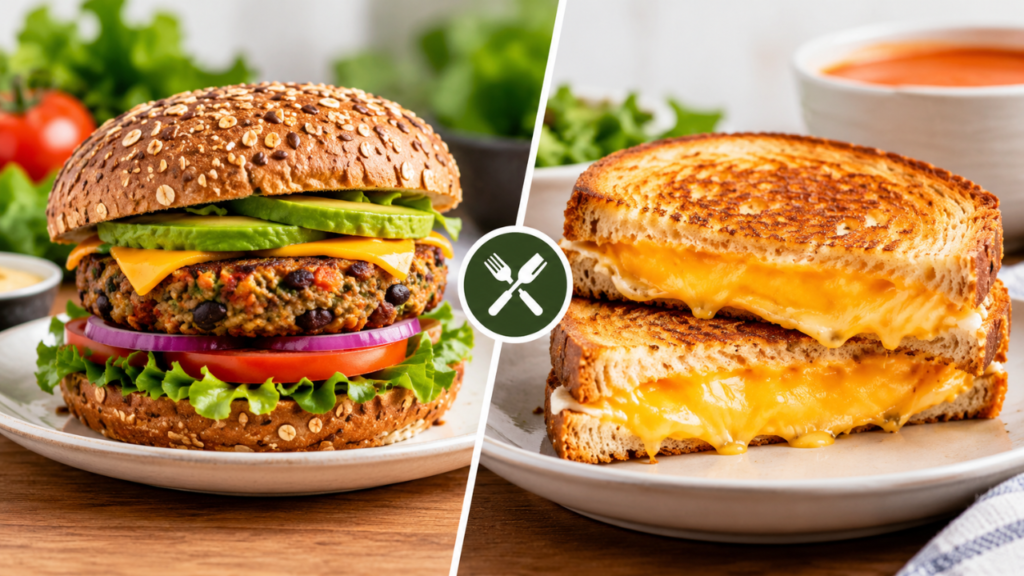
American comfort food offers plenty of satisfying vegetarian options, and veggie burgers and grilled cheese sandwiches are two popular favorites. Both are warm, filling, and easy to customize, but they differ in protein, calories, fat, and overall nutritional value. A veggie burger can provide vegetables, beans, grains, and plant-based protein, while a grilled cheese sandwich delivers the familiar combination of toasted bread and melted cheese. So which one is actually the better choice? Let’s compare them.
What Is a Veggie Burger?
A veggie burger is a meat-free alternative to a traditional hamburger. Its patty may be made from black beans, chickpeas, lentils, mushrooms, vegetables, grains, soy protein, or other plant-based ingredients. Some varieties are designed to resemble the taste and texture of beef, while others focus on whole-food ingredients.
Veggie burgers are commonly served on hamburger buns with lettuce, tomato, onions, pickles, cheese, and sauces. Depending on the patty, they can provide fiber, protein, vitamins, and minerals. However, some restaurant versions contain large amounts of cheese, mayonnaise, and oil, while highly processed patties may be high in sodium.
What Is Grilled Cheese?
Grilled cheese is a classic American sandwich made with bread, cheese, and butter or oil. The sandwich is cooked on a skillet or griddle until the bread becomes golden and crispy and the cheese melts.
It is simple, comforting, and easy to prepare at home. Cheese provides protein and calcium, while bread supplies carbohydrates for energy. However, traditional grilled cheese can be relatively high in saturated fat and sodium, especially when prepared with generous amounts of butter and cheese.
Whole-grain bread, moderate portions of cheese, and less butter can improve its nutritional profile without sacrificing too much flavor.
Nutrition Comparison
The figures below are approximate estimates for one typical serving and vary depending on ingredients, portion size, and preparation.
| Feature | Veggie Burger | Grilled Cheese |
|---|---|---|
| Calories | About 250–450 | About 300–500 |
| Protein | About 10–25 g | About 12–20 g |
| Carbohydrates | About 30–50 g | About 25–45 g |
| Fat | About 8–20 g | About 15–30 g |
| Fiber | About 4–10 g | About 1–4 g |
| Sodium | About 400–900 mg | About 500–1,000 mg |
| Main ingredients | Vegetables, beans, grains, or plant protein | Bread, cheese, butter or oil |
| Texture | Firm, juicy, or crispy | Crispy bread with melted cheese |
These are illustrative ranges, not standardized nutrition values. A large restaurant veggie burger with sauces and toppings may contain more calories than a simple homemade grilled cheese sandwich.
Where Veggie Burgers Win
Veggie burgers often have the advantage when it comes to fiber, particularly when their patties contain beans, lentils, chickpeas, or whole grains. Fiber supports digestive health and can help you feel full for longer.
They can also provide a wider variety of plant-based nutrients. Depending on the ingredients, a veggie burger may contain iron, folate, potassium, and other beneficial nutrients. Soy-based patties and some commercial plant-protein burgers can provide substantial amounts of protein.
Another advantage is versatility. You can add lettuce, tomatoes, onions, mushrooms, avocado, or other vegetables to increase the variety of ingredients in your meal.
The downside is that not every veggie burger is automatically healthy. Refined buns, creamy sauces, large portions of cheese, and high-sodium patties can increase calories and sodium. Checking the ingredients and nutrition label can help you choose a better option.
Where Grilled Cheese Wins
Grilled cheese stands out for its simplicity, affordability, and comforting flavor. It requires only a few ingredients, making it an easy vegetarian lunch or quick dinner.
Cheese provides complete protein and calcium, which support normal muscle function and bone health. Using whole-grain bread can increase the sandwich’s fiber content, while adding tomatoes, spinach, or mushrooms can improve its nutritional variety.
Grilled cheese can also be adjusted to suit different preferences. Using a moderate amount of cheese, lightly brushing the bread with oil instead of adding lots of butter, and serving the sandwich with vegetable soup or a side salad can create a more balanced meal.
Its main disadvantage is that traditional recipes may contain substantial amounts of saturated fat and sodium. White bread also generally provides less fiber than whole-grain bread.
The Verdict: Which Is the Better Comfort Food?
For people looking for more fiber and a wider range of plant-based nutrients, a veggie burger made with beans, lentils, or vegetables is often the better choice. It can offer a satisfying combination of protein and fiber, especially when served on a whole-grain bun with fresh toppings.
Grilled cheese is a great choice when you want a simple, comforting meal, and it can provide useful amounts of protein and calcium. Choosing whole-grain bread, using a moderate amount of cheese, and adding vegetables can make it more balanced.
Neither dish is automatically healthier in every situation. Ingredients, portion sizes, and cooking methods matter. A homemade veggie burger can be a nutritious everyday option, while an occasional grilled cheese sandwich can easily fit into a balanced diet.
Tips for Choosing a Healthier Vegetarian Meal
- Choose veggie patties made with beans, lentils, chickpeas, or other protein-rich ingredients.
- Look for whole-grain bread or burger buns to increase fiber intake.
- Add fresh vegetables such as lettuce, tomatoes, spinach, onions, or mushrooms.
- Use butter, mayonnaise, cheese, and creamy sauces in moderate amounts.
- Compare sodium levels when buying packaged veggie patties.
- Pair your sandwich with vegetable soup, a side salad, or fresh fruit instead of always choosing fries.
- Check serving sizes and total calories when ordering from restaurants.
Frequently Asked Questions
1. Is a veggie burger healthier than grilled cheese?
A veggie burger made with beans, vegetables, and whole grains often provides more fiber and a wider range of plant-based nutrients. However, the result depends on the patty, bun, toppings, and portion size.
2. Which has more protein, a veggie burger or grilled cheese?
Both can provide useful amounts of protein. Soy-based or legume-based veggie patties may offer substantial protein, while grilled cheese gets most of its protein from cheese. Exact amounts depend on the ingredients and serving size.
3. Are veggie burgers good for weight management?
They can be. Veggie burgers containing fiber-rich ingredients may help with fullness. However, large buns, cheese, mayonnaise, and high-calorie toppings can increase the total energy content of the meal.
4. Is grilled cheese a good source of calcium?
Yes. Cheese provides calcium, which supports bone health. The amount varies depending on the type and quantity of cheese used.
5. Can I eat veggie burgers every day?
A veggie burger can be part of a regular vegetarian diet, especially when made with nutritious ingredients and served with vegetables. Varying your meals and choosing different protein sources, such as beans, lentils, tofu, nuts, and seeds, helps provide a broader range of nutrients.