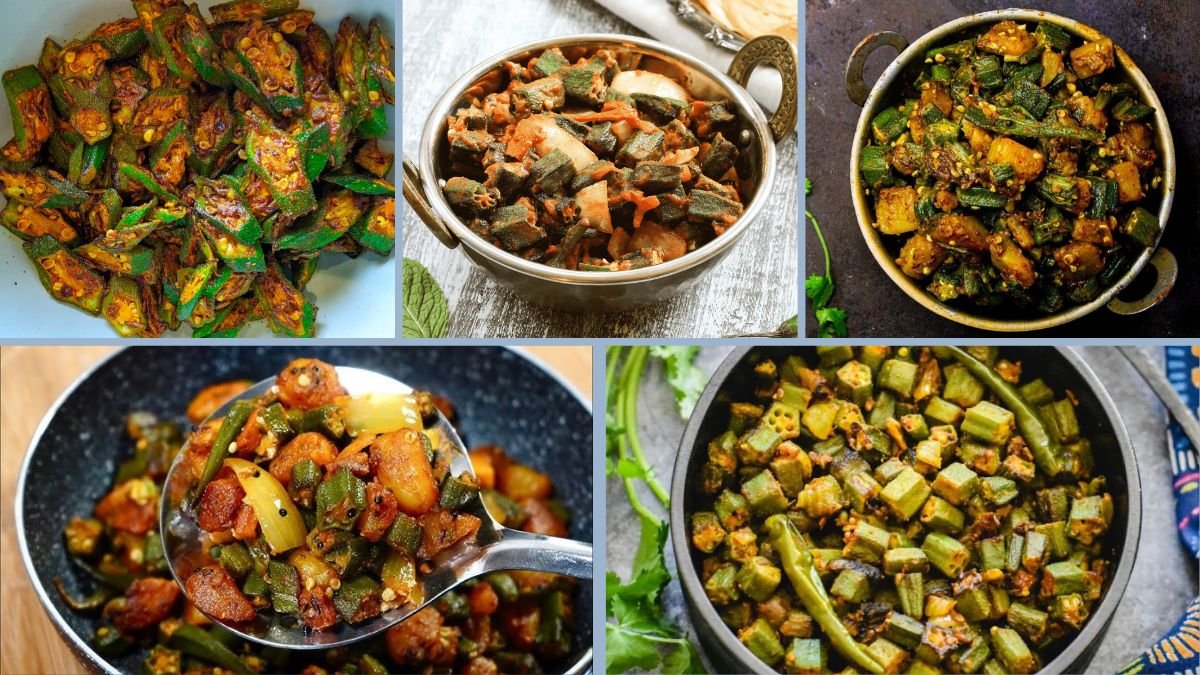
Bhindi masala (okra in spiced onion‐tomato gravy) is a beloved dish in Indian homes. It’s nutritious, flavorful, and a perfect side for rotis, naan, or rice. But too often, we use more oil than needed, making it heavy. Here’s how to make it without extra oil, yet still rich, vibrant, and satisfying.
Introduction: Why Cut Back on Oil?
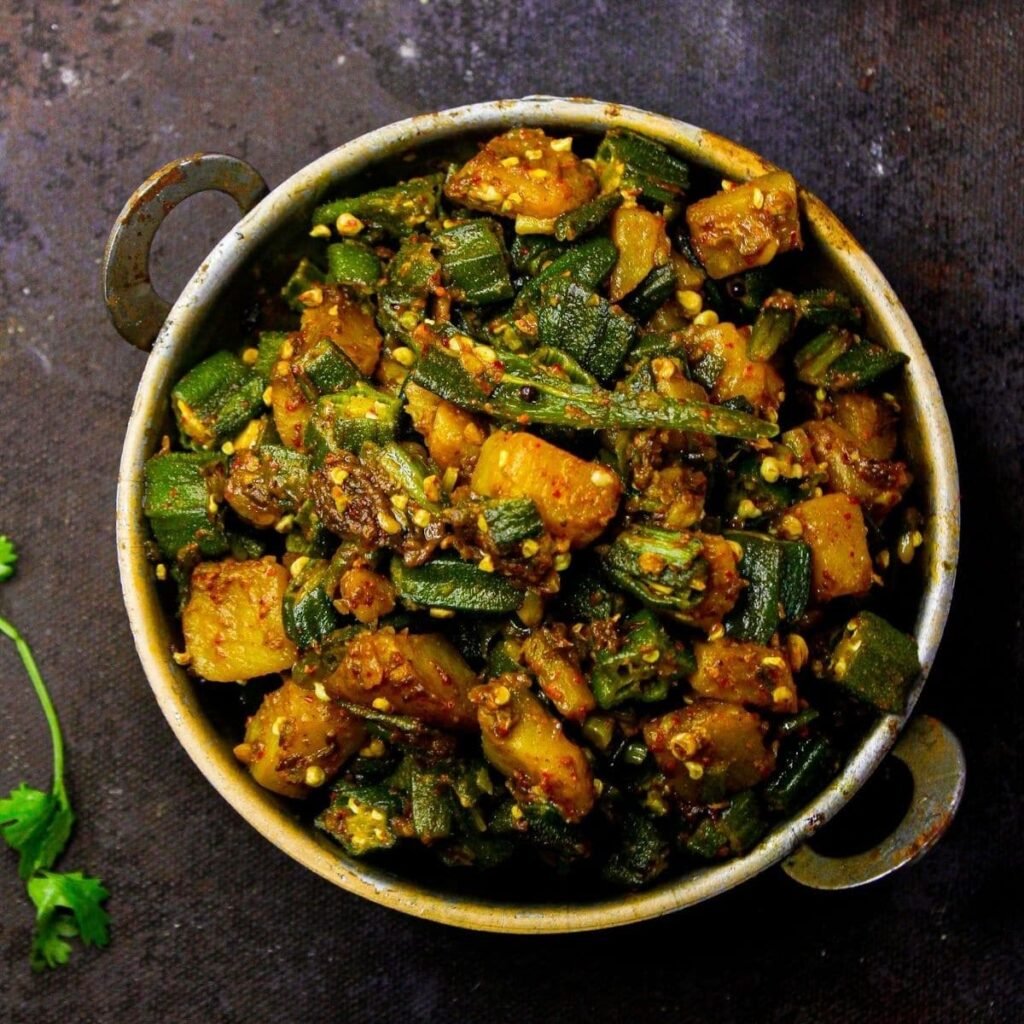
- Health benefits: Less oil means fewer calories and less saturated fat. It helps digestion and keeps cholesterol in check.
- Modern taste: Many prefer lighter textures, letting the natural flavors of okra, onions, spices, and tomatoes shine.
- Economical: Oil costs money—and less oil means less expense.
You can keep all the taste—without sacrificing texture or satisfaction—by smart techniques.
Ingredients You’ll Need
A precise, fresh ingredient list will make the process smooth. For 4 servings, plan for:
| Ingredient | Quantity | Purpose |
|---|---|---|
| Fresh bhindi (okra) | 300–400 grams | The star of the dish |
| Onions | 2 medium, finely chopped | For sweetness & base flavour |
| Tomatoes | 2 large, finely chopped or pureed | Adds tang & moisture |
| Green chili | 1–2 (to taste), slit or chopped | For heat (optional) |
| Ginger‑garlic paste | 1 tsp (fresh) | Aroma & depth |
| Turmeric powder | ½ tsp | Colour & earthiness |
| Coriander powder | 1 tsp | Mild, fragrant spice |
| Cumin powder | ½ tsp | Warmth |
| Red chili powder or paprika | ¼‑½ tsp (to taste) | Colour, heat |
| Garam masala | a pinch | Finishing spice |
| Salt | to taste | |
| Lemon juice | ½ tsp (or as desired) | Freshness & brightness |
| Fresh coriander leaves | handful, chopped | For garnish |
To reduce oil:
- Use nonstick or well‑seasoned cookware.
- Use minimal oil, just enough to cook onions and spices.
- Add water or tomatoes to prevent sticking rather than oil.
Step 1: Prepare the Bhindi Properly
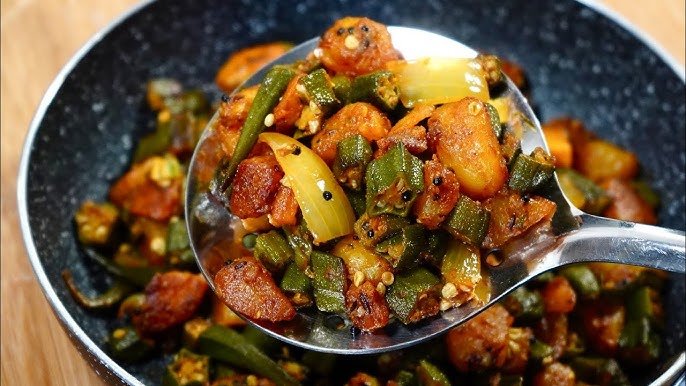
- Choose fresh, firm okra: Look for small to medium pods, bright green, no brown spots.
- Wash and dry well: After washing, dry each pod thoroughly with kitchen towels; moisture leads to sliminess.
- Trim and cut: Remove the stem and tail ends; slice into 1 cm pieces, or lengthwise, as you prefer.
- Optional pre‑treatment: Some cooks toss the cut okra with a pinch of salt and lemon juice, then leave for 10 minutes—this helps reduce slime and keeps colour.
Step 2: Heat the Pan, Use Minimal Oil
- Use a non‑stick pan (Teflon, ceramic, or well‑seasoned iron skillet). This helps avoid sticking while using less oil.
- Heat the pan on medium heat. Once warm, add just 1 teaspoon of oil (or even less, if using a nonstick). If you like, you can use a cooking spray to lightly grease the pan instead of pouring oil.
Step 3: Sauté Onions, Ginger & Garlic
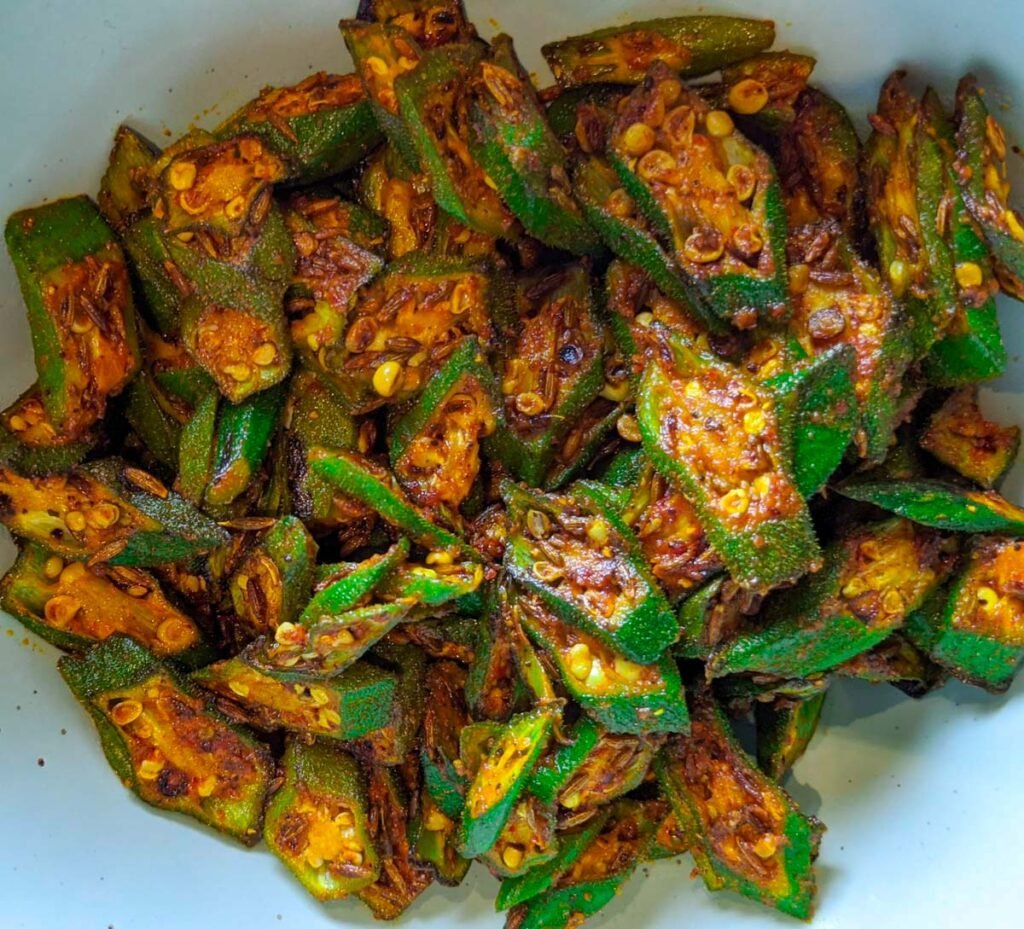
- Add the finely chopped onions. Sauté them gently, allowing them to soften and turn translucent. Do this on medium heat and stir occasionally to prevent browning too fast.
- When onions are nearly done, push them aside and add ginger‑garlic paste (again, very little oil helps avoid burning). Cook until raw smell disappears.
These aromatics build the flavour base; patience here gives rewards.
Step 4: Add Tomatoes and Spices
- Add the chopped or pureed tomatoes. Stir and cook until they break down and oil starts to appear around edges (you’ll see a sheen). If tomatoes are dry, add a splash of water, not oil.
- Stir in turmeric, cumin, coriander, red chili powder. Cook for a couple of minutes so spices “bloom” (releasing aroma). This step is essential—skipping it makes the dish bland or raw‑spiced.
- Add salt to taste.
Step 5: Cook the Bhindi
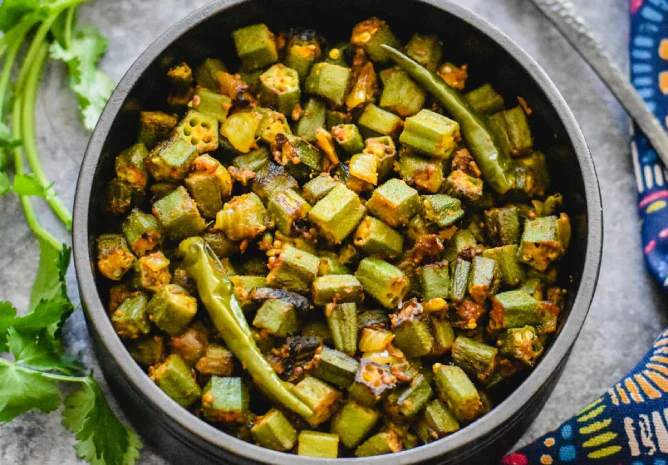
- Now add the cut okra pieces. Mix well so they get coated with the onion‑tomato‑spice mixture.
- Lower heat slightly and cover the pan. Steam the okra gently, stirring occasionally. This ensures even cooking without burning. If needed, add 1‑2 tablespoons of water to keep moisture and for “gravy” texture.
- Cooking time: approx 8‑10 minutes, or until okra is tender but not mushy.
Step 6: Adjust Texture & Finish
- Once the okra is cooked, you may uncover and cook on slightly higher heat to evaporate excess moisture if you like your bhindi masala drier.
- Sprinkle a pinch of garam masala at this stage to lift the aroma.
- Add lemon juice or a dash of amchur (dry mango powder) if you like tang. This not only adds taste but helps reduce any bitterness or dampness.
Step 7: Garnish and Serve
- Garnish with fresh coriander leaves, chopped finely. It offers colour contrast and fragrance.
- Serve hot with whole wheat rotis, chapatis, naan, or even steamed rice. Alternatively, it works well as a side with dal or curd to balance the meal.
Tips, Variations & Common Mistakes
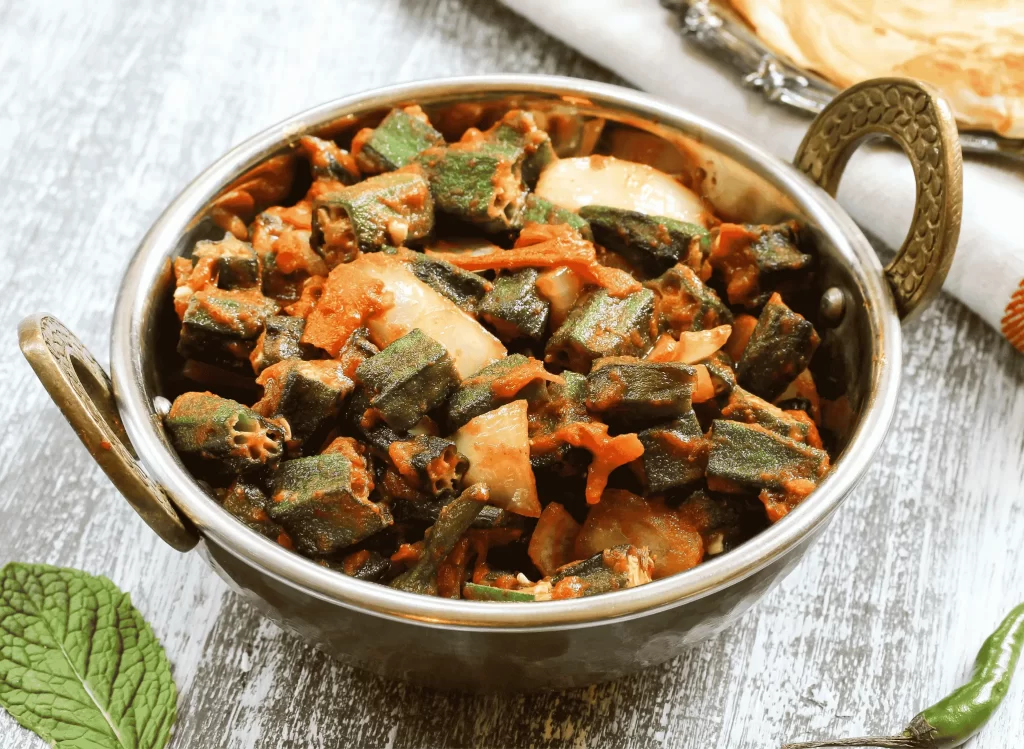
To make your bhindi masala even better, here are some suggestions and things to avoid:
- Avoid overcrowding the pan: If you put too much okra at once, moisture increases, leading to sogginess instead of crisp‑tender texture.
- Don’t skip drying the bhindi: Wet okra causes sliminess and reduces browning.
- Use fresh spices: Old coriander powder, cumin, or red chili powder lose flavour. Fresh spices make a difference.
- Experiment with variation:
- Add kasuri methi (dried fenugreek leaves) at the end for additional fragrance.
- Use onion rings instead of chopped onions for a different texture.
- Add a spoonful of yogurt or curd near the end for a creamy touch (optional).
- Control heat: High heat can burn the onion‑tomato base or cook the okra too fast, making it rubbery. Medium or medium‑low heat is safer.
- Adjust consistency: Some like it wet (with gravy), some dry. Use water judiciously.
Summary
Making Bhindi Masala without extra oil is completely feasible without sacrificing taste. Here’s the quick checklist:
- Select & prep fresh okra, dry well.
- Heat pan, minimal oil (nonstick helps).
- Sauté onions & aromatics for flavour base.
- Add tomatoes & spices, cook well.
- Cook okra covered, with occasional stirring.
- Finish with spice & tang, adjust texture.
- Garnish & serve hot with accompaniment.
With these 7 steps, you get a dish that’s:
- Healthy (less oil, more nutrients)
- Tasty (balanced spices, natural okra flavour)
- Versatile (goes with many Indian breads & rice)