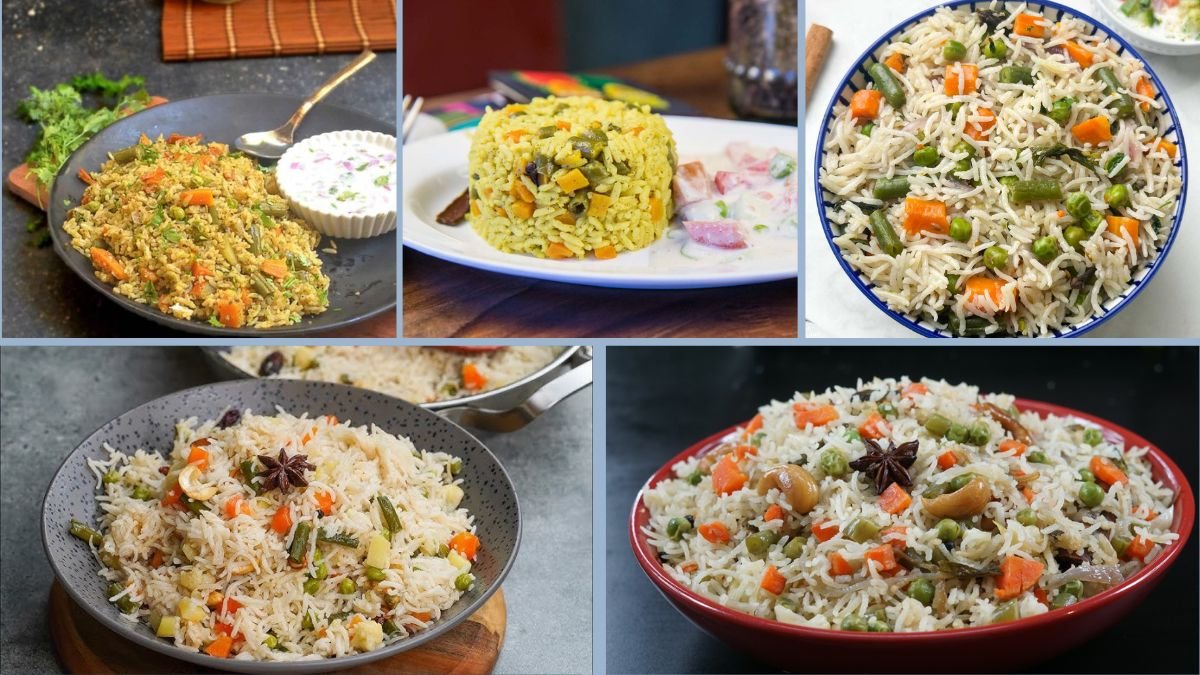
Rice-based dishes hold a special place in Indian cuisine, offering comfort, versatility, and nourishment. Among these, vegetable pulao is cherished for its simplicity and vibrant flavors. When cooked with coconut milk, the pulao takes on a delightful creaminess and subtle sweetness that elevate it to a whole new level. This South Indian–inspired dish is wholesome, aromatic, and entirely vegetarian—free from any non-veg ingredients—making it suitable for family meals, festive spreads, or even lunchboxes.
This article presents a 7-step guide to preparing Vegetable Pulao with Coconut Milk. Along with the recipe, you’ll also learn about its nutritional benefits, variations, serving suggestions, and practical tips to make your pulao both delicious and healthy.
Why Choose Vegetable Pulao with Coconut Milk?
Before jumping into the recipe, let’s understand what makes this dish so special:
- Balanced meal: Combines rice for energy, vegetables for vitamins and fiber, and coconut milk for healthy fats.
- Aromatic and flavorful: Infused with whole spices and herbs.
- Suitable for all ages: Mild, creamy taste makes it kid-friendly.
- Quick and versatile: Ideal for busy weekdays or festive occasions.
- Completely vegetarian: Aligns with plant-based and satvik diets.
Ingredients
Main Ingredients
- 1 ½ cups basmati rice (or long-grain rice)
- 1 cup coconut milk (fresh or canned)
- 2 ½ cups water
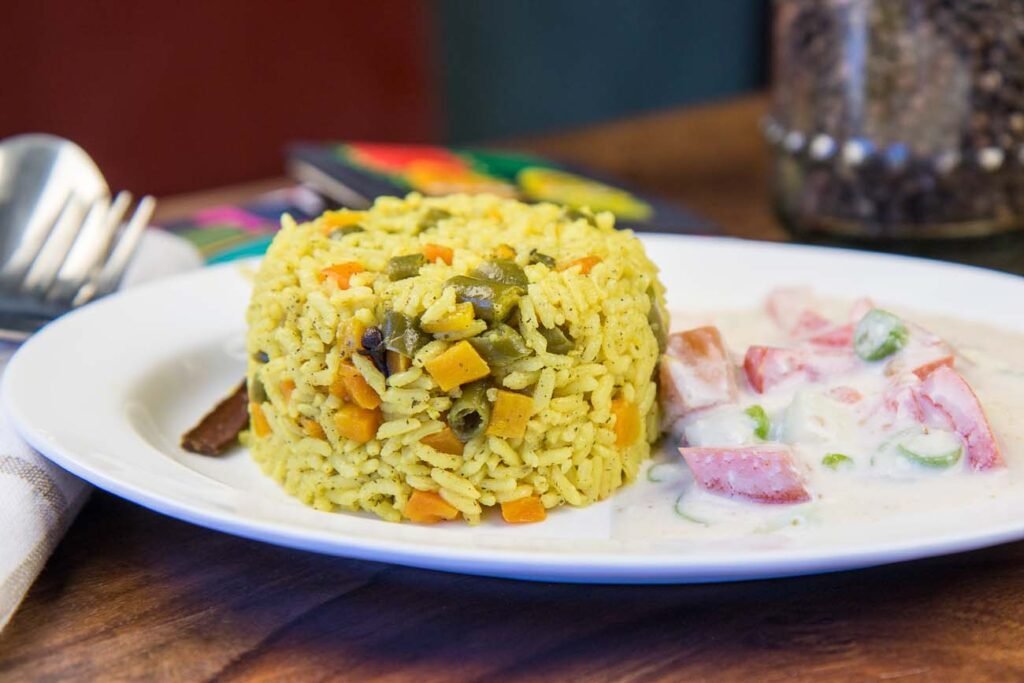
- 1 cup mixed vegetables (carrot, beans, peas, capsicum, cauliflower, etc.)
- 1 medium onion, thinly sliced
- 1 medium tomato, finely chopped
- 2 green chilies, slit
- 1 tablespoon ginger-garlic paste
- Salt, to taste
Whole Spices
- 1 bay leaf
- 1-inch cinnamon stick
- 3–4 cloves
- 2 green cardamoms
- 1 star anise (optional)
- ½ teaspoon cumin seeds
Garnish
- Fresh coriander leaves, chopped
- Fresh mint leaves, chopped (optional)
- Fried cashews or raisins (optional, for festive touch)
Step-by-Step Recipe
Step 1: Prepare the Rice and Vegetables
- Rinse basmati rice under running water until the water runs clear to remove excess starch.
- Soak the rice for 20–30 minutes, then drain completely.
- Wash, peel, and chop all vegetables into even, bite-sized pieces. This ensures uniform cooking.
Step 2: Prepare the Flavor Base
- Heat a heavy-bottomed pot or pressure cooker (non-stick or thick steel works best).
- Add cumin seeds and whole spices such as bay leaf, cinnamon, cloves, and cardamom. Dry-roast them briefly until aromatic.
- Add sliced onions and sauté with a sprinkle of water until translucent.
- Mix in ginger-garlic paste and slit green chilies. Cook until raw aroma fades.
- Add chopped tomatoes and cook until they soften into a masala base.
Step 3: Add the Vegetables
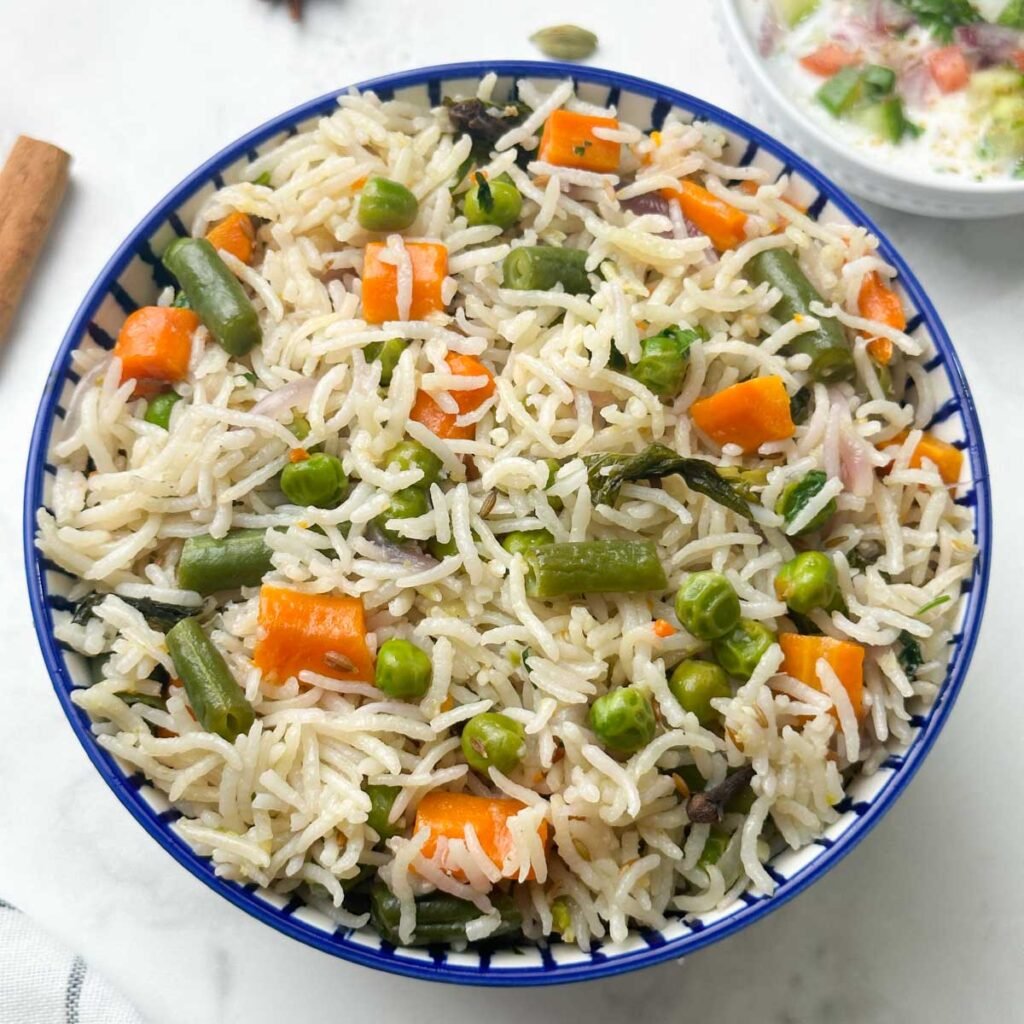
- Add the chopped vegetables to the masala base.
- Sprinkle a pinch of salt and sauté for 2–3 minutes to enhance their flavor.
- Stir gently to avoid breaking delicate vegetables like cauliflower or beans.
Step 4: Mix in the Rice
- Add the soaked and drained rice to the pot.
- Stir carefully to coat the grains with the masala and vegetables.
- This step ensures that the rice absorbs the aromatic flavors and stays non-sticky.
Step 5: Add Coconut Milk and Water
- Pour in 1 cup coconut milk and 2 ½ cups water.
- Add salt as per taste. Stir gently to combine.
- Let the mixture come to a boil on medium flame.
Tip: Always maintain a rice-to-liquid ratio of about 1:2.5 for perfectly cooked pulao when using coconut milk.
Step 6: Cook the Pulao
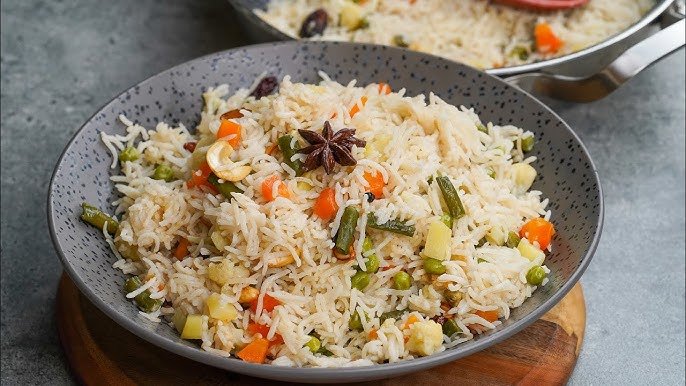
- Once it starts boiling, reduce the flame to low, cover with a tight lid, and cook for 12–15 minutes.
- If using a pressure cooker, cook for 1 whistle on medium flame and let the pressure release naturally.
- Avoid stirring frequently to prevent breaking the rice grains.
Step 7: Garnish and Serve
- Once cooked, fluff the rice gently with a fork.
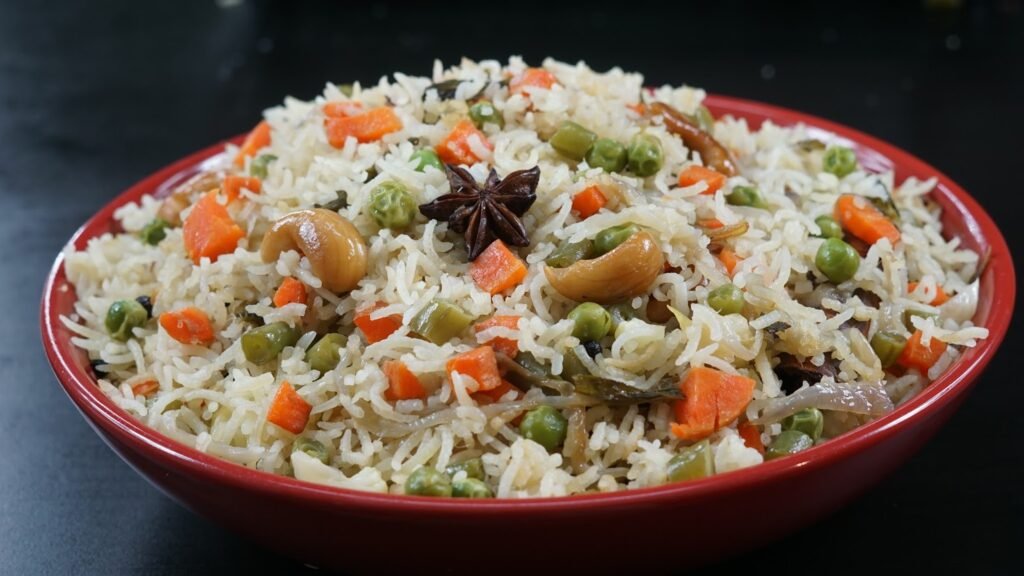
- Garnish with fresh coriander leaves, mint, or fried cashews for extra richness.
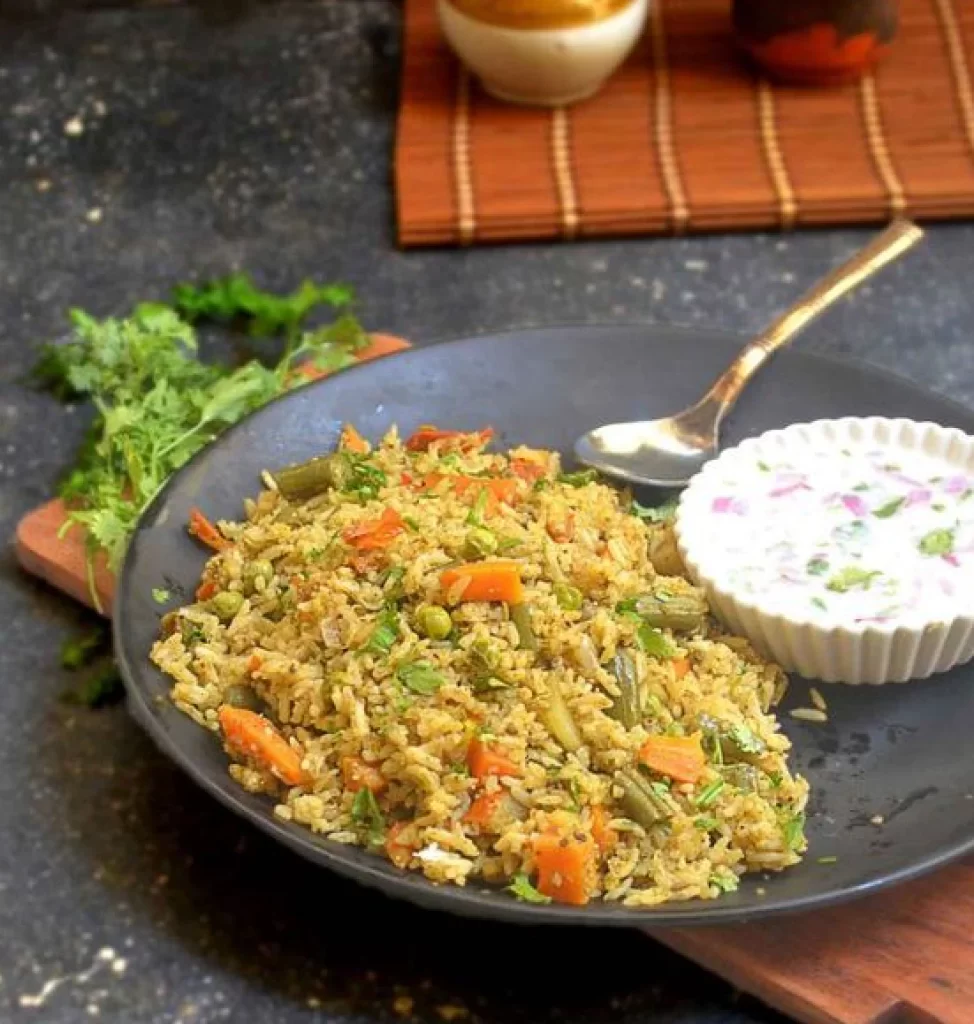
- Serve hot with raita, pickle, or papad for a complete meal.
Nutritional Benefits
- Energy-rich: Basmati rice provides complex carbohydrates for sustained energy.
- Vitamin boost: Carrots, beans, peas, and cauliflower add essential vitamins and minerals.
- Healthy fats: Coconut milk offers medium-chain triglycerides (MCTs) that support digestion and metabolism.
- Fiber content: Vegetables enhance satiety and aid digestion.
- Protein pairing: Serve with curd, raita, or dal to make the meal protein-balanced.
Variations of Vegetable Pulao with Coconut Milk
- Spicy version: Add more green chilies or a pinch of red chili powder.
- South Indian style: Use curry leaves and black pepper for a regional twist.
- Nutty flavor: Add fried cashews, almonds, or raisins for festive meals.
- One-pot pressure cooker method: Speeds up cooking, making it perfect for busy schedules.
- Brown rice version: Substitute basmati with brown rice for higher fiber; adjust water and cooking time accordingly.
Tips for Perfect Coconut Milk Pulao
- Use good-quality, thick coconut milk for best flavor. If using canned, shake well before measuring.
- Don’t skip soaking the rice; it ensures fluffy, separate grains.
- Always cook on low heat after the initial boil for even cooking.
- Do not overmix the rice after cooking—it can turn mushy.
- Pair with a cooling raita to balance the richness of coconut milk.
Serving Suggestions
- Serve with boondi raita, cucumber raita, or onion-tomato raita for balance.
- Add a crunchy element with papad or a pickle on the side.
- Pair with dal tadka or vegetable kurma for festive meals.
- Works well as a standalone dish for lunchboxes or quick dinners.
Conclusion
Vegetable Pulao with Coconut Milk is more than just a rice dish—it’s a harmonious blend of flavors, textures, and nutrition. By following this 7-step recipe, you can recreate an aromatic, creamy pulao that is both comforting and celebratory.
Its vibrant vegetables, fragrant spices, and rich coconut milk make it a versatile choice, whether for everyday meals or special occasions. Moreover, being a completely vegetarian and oil-optional dish, it aligns perfectly with healthy, mindful eating practices.
By embracing recipes like this, you not only enjoy delicious food but also appreciate the traditional wisdom of Indian cooking, which balances taste with nourishment. Next time you want to prepare something wholesome yet indulgent, remember this pulao—it’s the perfect dish to satisfy both your appetite and your soul.