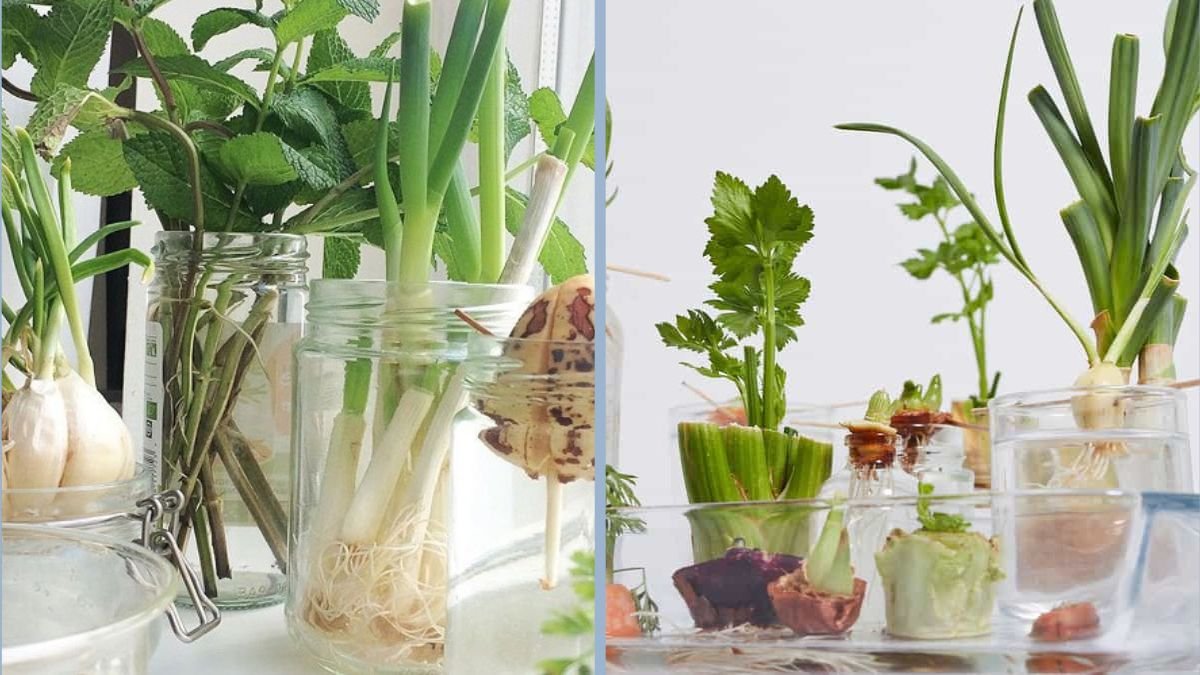
In recent years, sustainable living and plant-based diets have gained momentum, prompting gardeners and home cooks to explore innovative ways to reduce food waste. One effective strategy is regrowing fruits and vegetables from kitchen scraps. Many common fruits and vegetables can sprout new growth from roots, stems, or leaves, providing a continuous supply of fresh produce with minimal effort. This practice not only promotes sustainability but also enhances the flavor and nutrient density of homegrown food. This article explores seven fruits and vegetables that regrow from scraps, detailing techniques, care instructions, and sustainable practices suitable for plant-based kitchens.
1. Green Onions (Scallions)
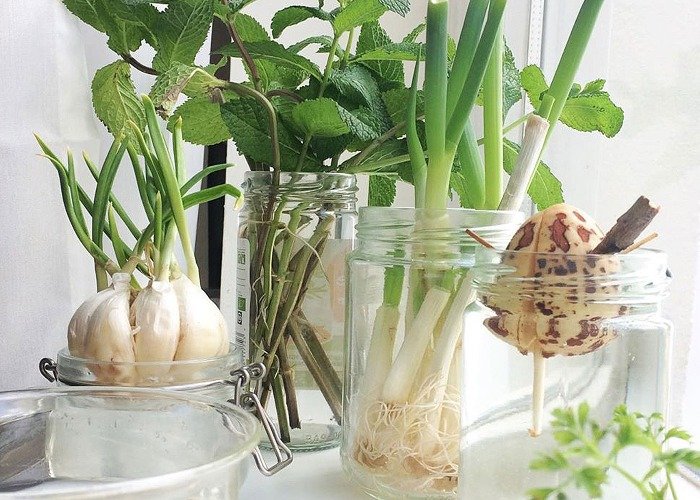
Green onions are among the easiest vegetables to regrow:
- Regrowing Method:
- Cut the white roots with about 2–3 cm of stem intact.
- Place the roots in a small glass of water, ensuring the cut ends are submerged.
- Keep the glass on a sunny windowsill or under grow lights.
- Growth: New green shoots appear within a few days; roots regenerate continuously.
- Care: Change water every 2–3 days to prevent odor and bacterial growth.
- Harvesting: Snip green shoots as needed; leave roots intact for repeated regrowth.
- Uses: Add to salads, soups, stir-fries, or plant-based sauces for a fresh, mild onion flavor.
Green onions are a low-maintenance option for kitchen scrap gardening and provide a continuous culinary supply.
2. Lettuce
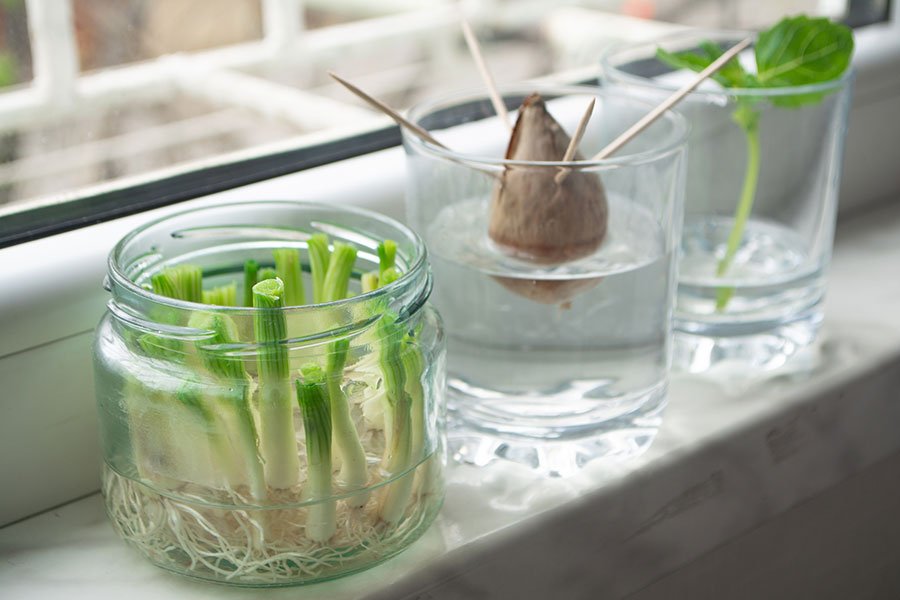
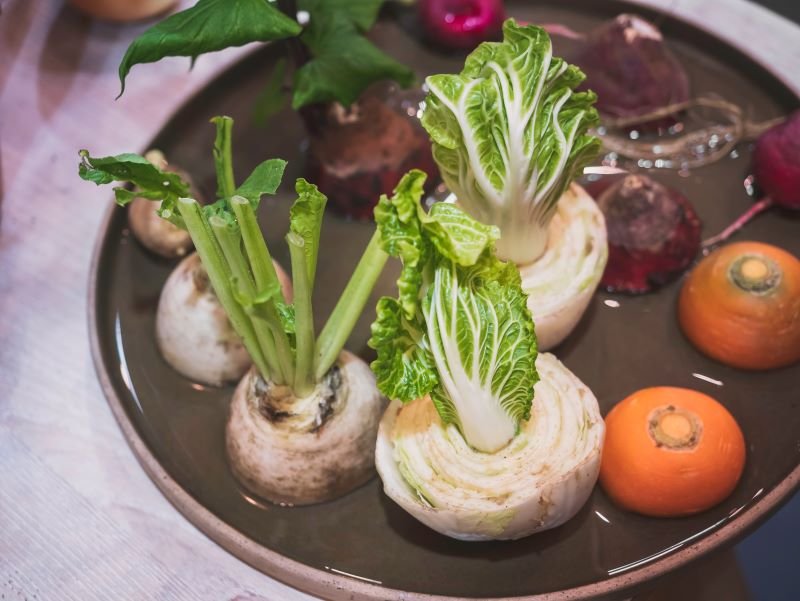
Lettuce scraps can produce new leaves from the base:
- Regrowing Method:
- Save the bottom 3–4 cm of a head of lettuce after using leaves.
- Place the base in a shallow bowl with water, cut side up.
- Position in indirect sunlight; change water every 1–2 days.
- Growth: Fresh leaves emerge from the center within a week.
- Care: Once roots are developed, transplant to soil for longer-term growth.
- Harvesting: Remove outer leaves gradually while allowing the center to regenerate.
- Uses: Add to salads, sandwiches, or wraps for fresh, crisp greens.
Lettuce regrowing from scraps reduces waste and extends the life of a single head of lettuce.
3. Celery
Celery regenerates quickly from its base:
- Regrowing Method:
- Trim the base of the stalks, leaving about 3–5 cm intact.
- Place the base in a shallow dish of water, cut side up.
- Keep in a bright area, replacing water every 2–3 days.
- Growth: Small leaves emerge from the center in a few days.
- Care: For larger growth, transplant to soil once roots form.
- Harvesting: Snip stalks as needed; leaves can also be harvested for flavor.
- Uses: Enhance soups, stews, plant-based broths, and salads.
Celery regrowth is a practical method to extend produce life and provide continuous kitchen herbs.
4. Carrots
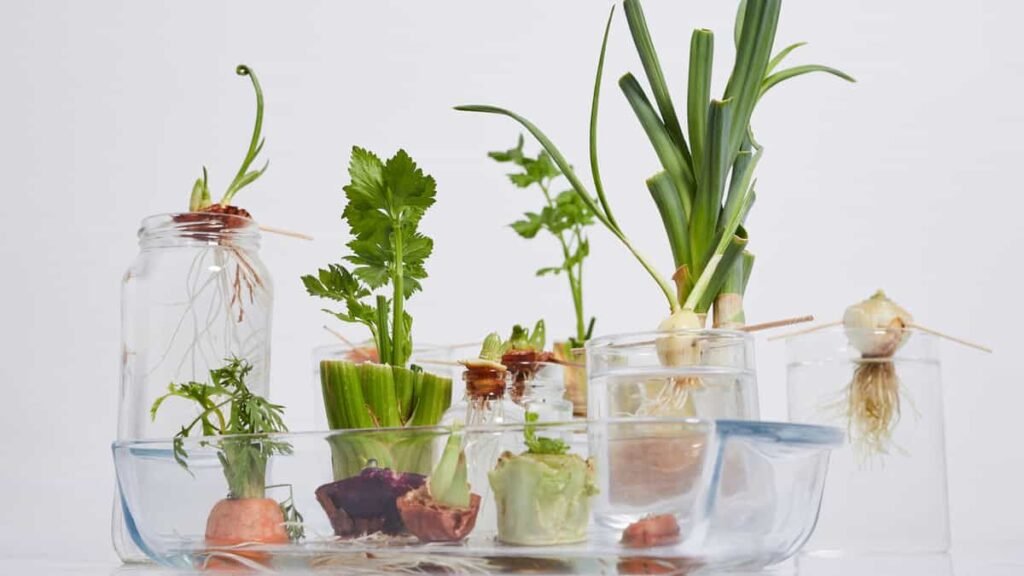
While the roots themselves don’t regrow, carrot greens can be harvested:
- Regrowing Method:
- Cut the top 2–3 cm of the carrot, ensuring the green crown remains intact.
- Place the carrot tops in a shallow dish of water with the cut side down.
- Position near a sunny window or under grow lights.
- Growth: Lush green leaves appear in 1–2 weeks.
- Care: Replace water every 2–3 days.
- Harvesting: Snip leaves as needed; they are edible and nutrient-rich.
- Uses: Use carrot greens in salads, pestos, soups, and plant-based sauces.
Carrot top regrowth highlights the value of plant-based edible scraps that are often discarded.
5. Garlic
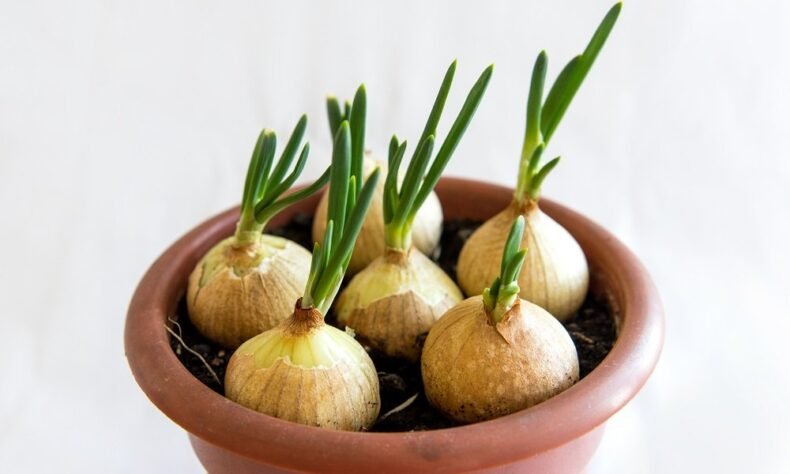
Garlic cloves can sprout green shoots suitable for culinary use:
- Regrowing Method:
- Separate individual garlic cloves and place them in a glass with the root end submerged in water.
- Keep in a sunny location.
- Growth: Green shoots, known as garlic greens, appear within 1–2 weeks.
- Care: Refill water as needed; for long-term growth, plant cloves in soil.
- Harvesting: Cut green shoots for cooking; cloves can later be replanted for new bulbs.
- Uses: Add to stir-fries, sauces, salads, or plant-based spreads.
Garlic regrowth is a simple way to maximize culinary value from kitchen scraps while producing fresh greens.
6. Pineapple
Pineapple tops can develop roots and produce new plants:
- Regrowing Method:
- Remove the leafy crown from the fruit, stripping lower leaves to expose about 2–3 cm of stem.
- Place the crown in water or directly into well-draining soil.
- Keep in a bright location, avoiding direct scorching sunlight.
- Growth: Roots develop in 2–3 weeks; new leaves emerge soon after.
- Care: Maintain consistent moisture and warm conditions; patience is required as fruiting takes 2–3 years.
- Harvesting: While fruit production takes time, leaves can enhance indoor greenery.
- Uses: Young leaves can be used as decorative plants; mature fruit supports sustainable home gardening.
Pineapple regrowth emphasizes long-term sustainability and self-sufficiency in urban kitchens.
7. Ginger
Ginger rhizomes can sprout new growth for repeated harvests:
- Regrowing Method:
- Choose a fresh ginger root with visible “eyes” or buds.
- Place the rhizome in a shallow dish of water or directly into soil with eyes facing upward.
- Keep in indirect sunlight, maintaining consistent moisture.
- Growth: Shoots appear in 2–3 weeks; roots develop concurrently.
- Care: Transplant to soil for long-term growth; maintain humidity and warmth.
- Harvesting: Snip young shoots for flavor; mature rhizomes can be harvested after 8–10 months.
- Uses: Add fresh ginger to teas, plant-based dishes, sauces, and smoothies.
Ginger regrowth demonstrates the potential for multi-season cultivation from a single root.
Sustainable Practices for Regrowing Scraps
- Water Efficiency: Use minimal water and recycle it when appropriate for other plants.
- Organic Soil: Incorporate compost or plant-based fertilizers to support healthy growth.
- Energy Conservation: Utilize natural sunlight before supplemental lighting to reduce energy use.
- Composting: Reuse leaves or non-edible scraps for composting to close the nutrient loop.
- Minimal Waste: Regrowing scraps minimizes food waste, reduces grocery costs, and supports plant-based living.
Sustainable practices enhance both productivity and environmental responsibility in the kitchen.
Culinary Applications of Regrown Produce
Regrown fruits and vegetables enhance plant-based meals in numerous ways:
- Green Onions and Garlic: Add flavor to soups, stir-fries, and sauces.
- Lettuce and Celery: Provide fresh leaves for salads, wraps, and sandwiches.
- Carrot Greens: Incorporate into pestos, dips, or soups for nutrient-rich greens.
- Pineapple Tops: Serve as indoor décor while waiting for fruiting; can be propagated further.
- Ginger Shoots: Infuse teas, smoothies, sauces, and dressings with flavor.
Regrown scraps integrate seamlessly into plant-based kitchens, increasing freshness, nutrition, and sustainability.
Troubleshooting Common Challenges
- Mold or Rot: Remove affected parts immediately; ensure proper drainage and airflow.
- Slow Growth: Check light exposure and water consistency; supplement with grow lights if necessary.
- Browning Leaves: May indicate overwatering or nutrient deficiency; adjust watering and soil composition.
- Leggy Growth: Rotate plants for uniform light exposure and prune as necessary.
Proactive monitoring ensures healthy regrowth and maximizes yield from kitchen scraps.
Conclusion
Regrowing fruits and vegetables from kitchen scraps is a simple, sustainable, and plant-based practice that reduces food waste and provides continuous access to fresh produce. Green onions, lettuce, celery, carrots, garlic, pineapple, and ginger demonstrate the wide variety of produce that can be revitalized from discarded parts. Proper techniques—including selecting high-quality scraps, providing adequate water and light, and using sustainable soil and fertilizer practices—ensure successful regrowth. Beyond culinary applications, regrowing scraps encourages self-sufficiency, promotes environmental responsibility, and enhances the overall sustainability of plant-based kitchens. By adopting these techniques, home gardeners can transform everyday waste into a productive and rewarding resource, fostering greener, more resilient urban kitchens.