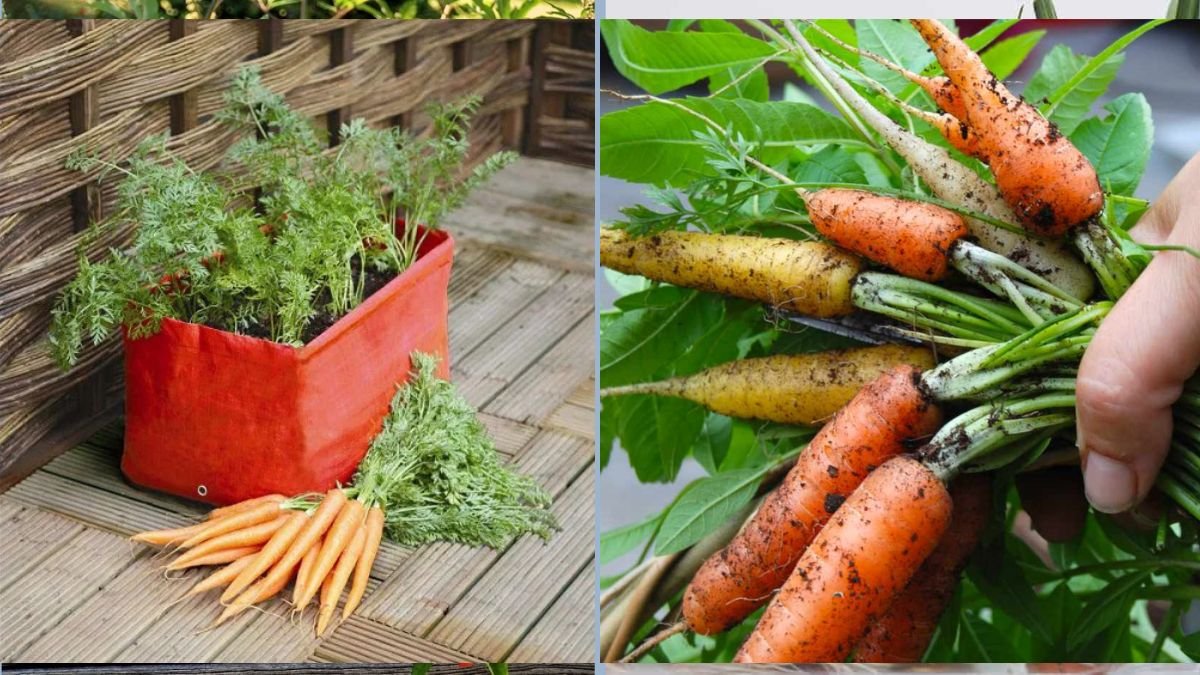
Carrots are among the most popular and nutritious vegetables, celebrated for their vibrant color, sweet flavor, and high content of beta-carotene, fiber, and vitamins. While traditionally grown in garden beds, carrots can thrive in containers, particularly miniature varieties that are ideal for urban spaces, balconies, and small patios. Growing miniature carrots in containers allows gardeners to enjoy fresh, homegrown produce year-round while maximizing space and minimizing maintenance. This article provides a comprehensive guide on selecting varieties, preparing soil and containers, planting, nurturing, and harvesting miniature carrots in container gardens.
Why Grow Miniature Carrots in Containers?
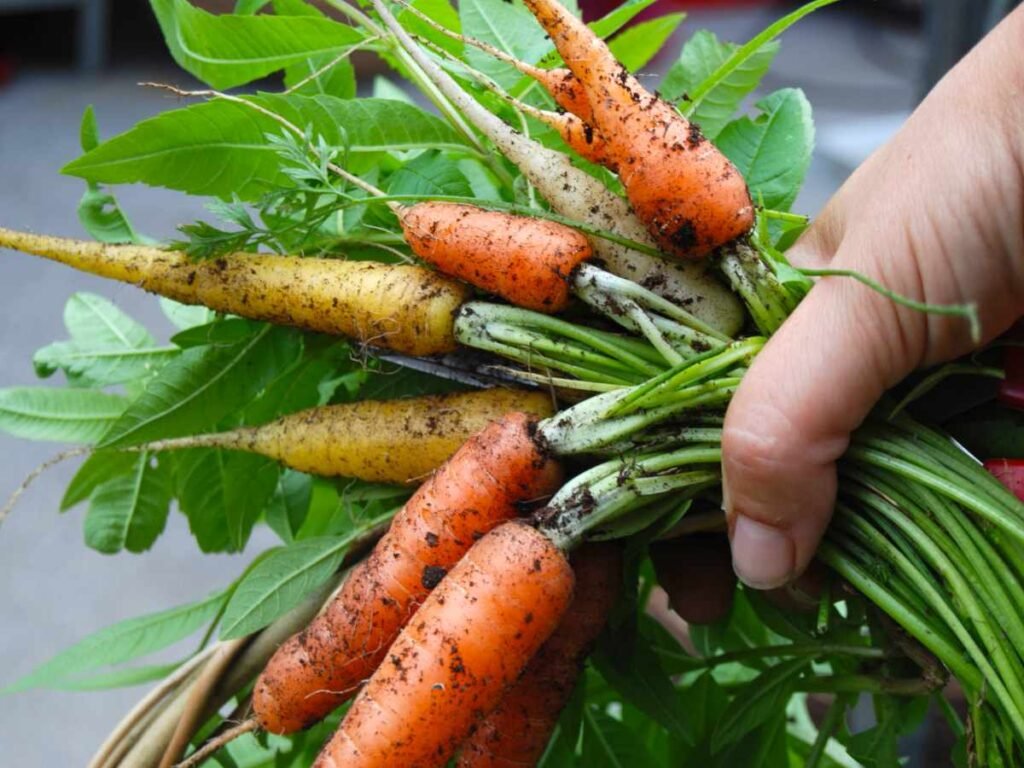
Container gardening offers several advantages, especially for growing miniature carrots:
- Space Efficiency: Containers are perfect for small urban gardens, balconies, and indoor setups.
- Better Soil Control: Gardeners can provide loose, nutrient-rich soil tailored for root vegetables.
- Pest Reduction: Elevated containers reduce exposure to ground-dwelling pests.
- Ease of Harvest: Container-grown carrots are easier to monitor and harvest without digging through dense garden soil.
- Year-Round Production: With the right varieties and indoor or protected environments, miniature carrots can be grown throughout the year.
These benefits make container gardening an accessible and productive method for cultivating carrots at home.
Selecting the Right Miniature Carrot Varieties
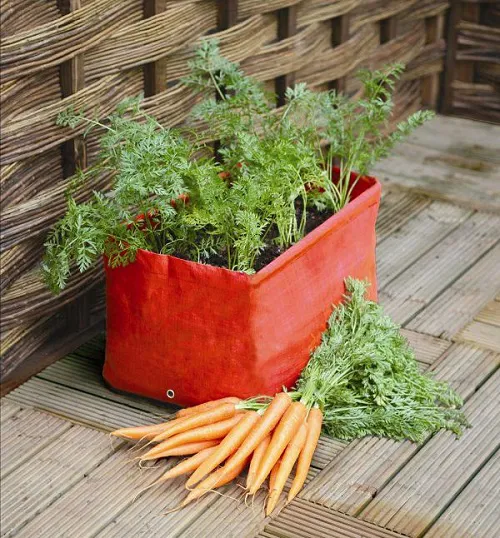
Choosing the right carrot variety is crucial for container success:
- Thumbelina: A very small, round variety that matures quickly and grows well in shallow containers.
- Paris Market: A globe-shaped carrot ideal for shallow pots and containers.
- Little Finger: Slender, finger-shaped carrots suitable for narrow and deep containers.
- Nantes Petite: A small version of the classic Nantes carrot, producing sweet, tender roots.
Selecting compact, fast-growing varieties ensures successful container cultivation and a steady harvest.
Choosing Containers and Soil
Miniature carrots thrive in deep, well-draining containers:
- Container Size: Minimum depth of 8–12 inches; larger containers allow multiple plants and deeper root growth.
- Material: Plastic, ceramic, or clay pots are suitable; ensure proper drainage holes to prevent waterlogging.
- Soil Requirements: Use loose, sandy, or loamy soil enriched with organic compost. Avoid heavy clay soils, which can impede root development.
- pH Level: Slightly acidic to neutral soil with a pH of 6.0–7.0 is optimal.
Well-prepared soil and appropriate containers promote strong root development and tender, flavorful carrots.
Planting Miniature Carrots
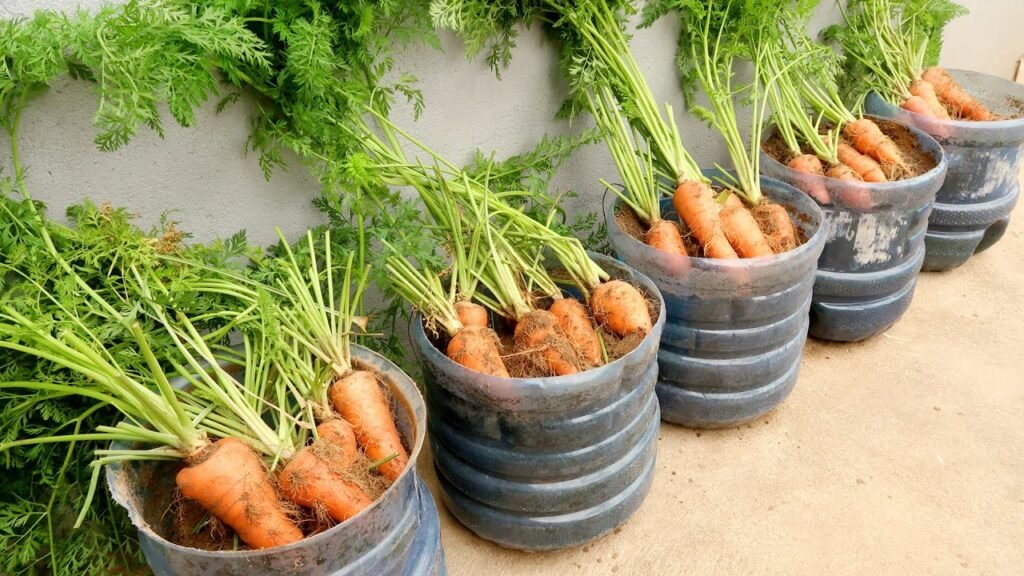
Proper planting ensures healthy growth and optimal root development:
- Seed Sowing: Sow seeds directly in containers, spacing them 1–2 inches apart. Cover lightly with ¼ inch of soil.
- Thinning: Thin seedlings to 2–3 inches apart once they develop true leaves to prevent overcrowding and encourage uniform growth.
- Watering: Water lightly after sowing to settle soil. Keep soil consistently moist during germination.
- Timing: Miniature carrots can be grown year-round in indoor containers; outdoors, plant during spring or fall for cooler temperatures.
Following these planting techniques minimizes competition and encourages strong, straight roots.
Light and Temperature Requirements
Miniature carrots require adequate light and moderate temperatures for optimal growth:
- Sunlight: Provide 6–8 hours of direct sunlight per day. For indoor setups, use LED grow lights to supplement natural light.
- Temperature: Carrots prefer cooler conditions, around 60–70°F. Excessive heat may cause roots to become woody or bitter.
- Indoor Conditions: Maintain consistent light, moderate temperatures, and proper ventilation to promote healthy growth.
Providing suitable light and temperature conditions ensures tender, sweet, and flavorful roots.
Watering and Humidity Management
Consistent moisture is essential for root development:
- Frequency: Water regularly to maintain evenly moist soil, avoiding waterlogging.
- Deep Watering: Ensure water reaches the root zone to encourage deep root growth.
- Mulching: Apply a thin layer of straw or coconut coir to retain moisture, regulate temperature, and prevent soil crusting.
Proper watering techniques prevent root splitting, maintain tenderness, and support consistent growth.
Fertilization and Nutrient Management
Container-grown carrots benefit from regular feeding to ensure strong root development:
- Pre-Planting Enrichment: Mix compost or well-rotted manure into soil before sowing.
- Nitrogen Management: Moderate nitrogen promotes leaf growth; avoid excessive nitrogen late in growth to prevent forked or thin roots.
- Potassium and Phosphorus: Support strong root development and improve flavor and sweetness.
- Frequency: Apply liquid organic fertilizers every 3–4 weeks during active growth.
Balanced nutrition ensures uniform, sweet, and healthy miniature carrots.
Pest and Disease Management
While container-grown carrots are less prone to pests than garden beds, vigilance is necessary:
- Common Pests: Aphids, carrot flies, and root-knot nematodes.
- Organic Controls: Neem oil, insecticidal soap, or floating row covers protect young seedlings.
- Disease Prevention: Avoid overhead watering, ensure good drainage, and remove any diseased leaves promptly.
Regular inspection and preventive care minimize crop loss and ensure healthy carrots.
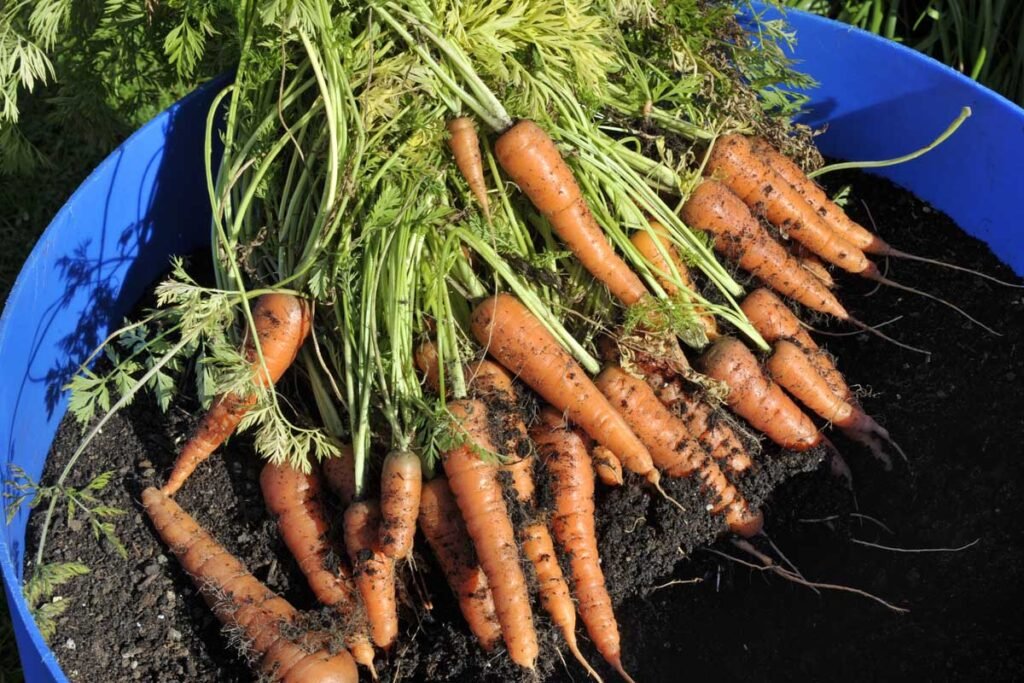
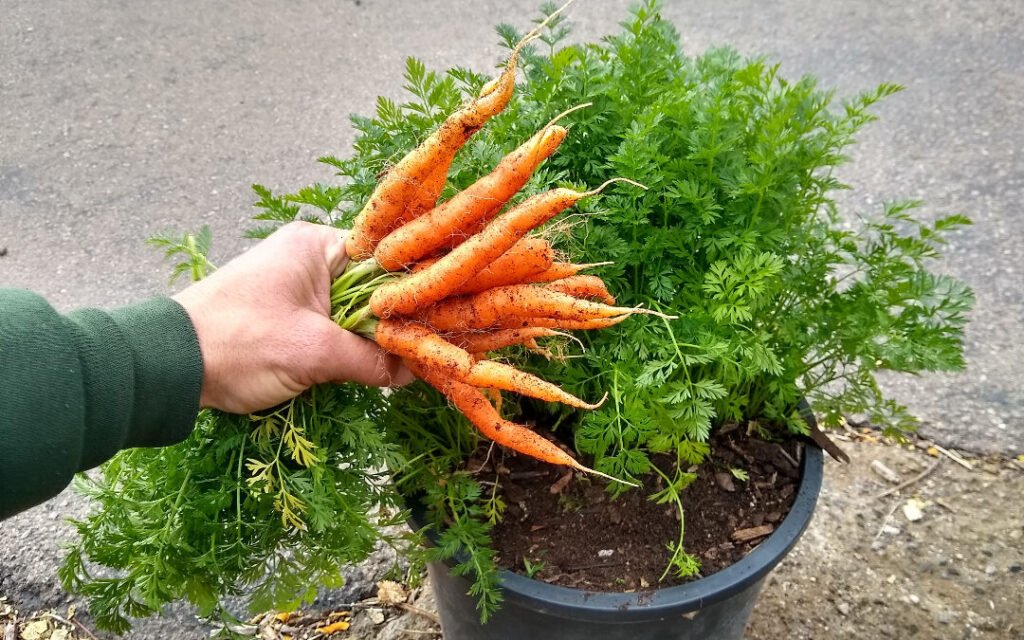
Harvesting Miniature Carrots
Proper harvesting ensures maximum flavor and continuous production:
- Timing: Harvest miniature carrots 50–70 days after sowing, depending on variety.
- Indicators: Roots should be firm, colorful, and of the desired size.
- Technique: Gently loosen soil around the root and pull carrots carefully to avoid breaking.
- Continuous Production: Sow new seeds every few weeks to maintain a year-round harvest.
Harvesting at peak maturity ensures sweet, tender, and flavorful roots.
Space Optimization and Companion Planting
Optimizing container space and using companion planting techniques improves yield and plant health:
- Vertical Stacking: Use tiered containers or shelves to grow multiple crops in limited space.
- Companion Crops: Plant leafy greens or herbs alongside miniature carrots to maximize container usage.
- Succession Planting: Stagger sowing every few weeks for continuous harvest.
Efficient space management ensures productive and aesthetically pleasing container gardens.
Indoor and Balcony Cultivation Tips
Miniature carrots adapt well to indoor or balcony cultivation:
- Indoor Light: Place containers near south- or west-facing windows or use grow lights for supplemental lighting.
- Wind and Airflow: Ensure adequate airflow to prevent fungal infections.
- Temperature Control: Maintain cooler indoor temperatures, particularly during root development stages.
- Container Rotation: Rotate pots periodically to ensure even light exposure and consistent growth.
These tips help urban gardeners enjoy fresh, tender carrots without outdoor soil or large garden space.
Conclusion
Growing miniature carrots in containers is a simple, rewarding, and space-efficient gardening practice. By selecting appropriate varieties, using nutrient-rich soil, maintaining consistent watering, and providing adequate light and temperature, gardeners can enjoy a continuous supply of sweet, tender, and healthy carrots. Container gardening reduces pest risks, allows precise soil and nutrient management, and makes harvesting easier, even in small urban spaces. Through careful planning, indoor or balcony gardeners can cultivate vibrant, productive miniature carrot gardens year-round, contributing to a sustainable, nutritious, and enjoyable homegrown food supply.