
Roasting root vegetables is a simple yet versatile cooking method that enhances flavor, texture, and nutritional value while requiring minimal effort. This paper explores methods for preparing roasted root vegetables using fresh, seasonal ingredients and simple seasonings. Emphasis is placed on vegetarian-friendly preparation, nutrient retention, and practical cooking techniques. The study highlights ingredient selection, preparation methods, roasting techniques, flavor enhancements, and the nutritional and culinary benefits of root vegetables. Roasted root vegetables are shown to be a healthful, versatile, and satisfying dish suitable for everyday meals, special occasions, and balanced vegetarian diets.
Introduction

Root vegetables such as carrots, beets, parsnips, sweet potatoes, turnips, and radishes are nutrient-dense staples in vegetarian cuisine. Roasting is a preferred cooking method because it intensifies natural flavors, caramelizes natural sugars, and creates a pleasing texture without requiring complex techniques.
Roasted root vegetables can be prepared with minimal ingredients and effort while producing a visually appealing and flavorful dish. By using fresh, seasonal produce, cooks maximize the nutritional value, sweetness, and aroma of these vegetables. This paper examines how to efficiently prepare roasted root vegetables at home, emphasizing ease of preparation, flavor enhancement, and the health benefits of root vegetable consumption.
Nutritional Benefits of Root Vegetables
Root vegetables offer multiple health advantages:
- Vitamins and Minerals: Carrots, beets, and parsnips provide vitamins A, C, and K, potassium, and folate.
- Dietary Fiber: Promotes digestive health, regulates blood sugar, and supports satiety.
- Complex Carbohydrates: Provide sustained energy with a low glycemic index, especially in sweet potatoes and carrots.
- Antioxidants: Beets, carrots, and sweet potatoes contain carotenoids and betalains that reduce oxidative stress.
- Low in Fat: Roasting with minimal healthy oil preserves flavor while keeping calorie content moderate.
Regular inclusion of roasted root vegetables enhances nutrient intake while supporting heart health, immunity, and digestive function.
Selecting Fresh Root Vegetables
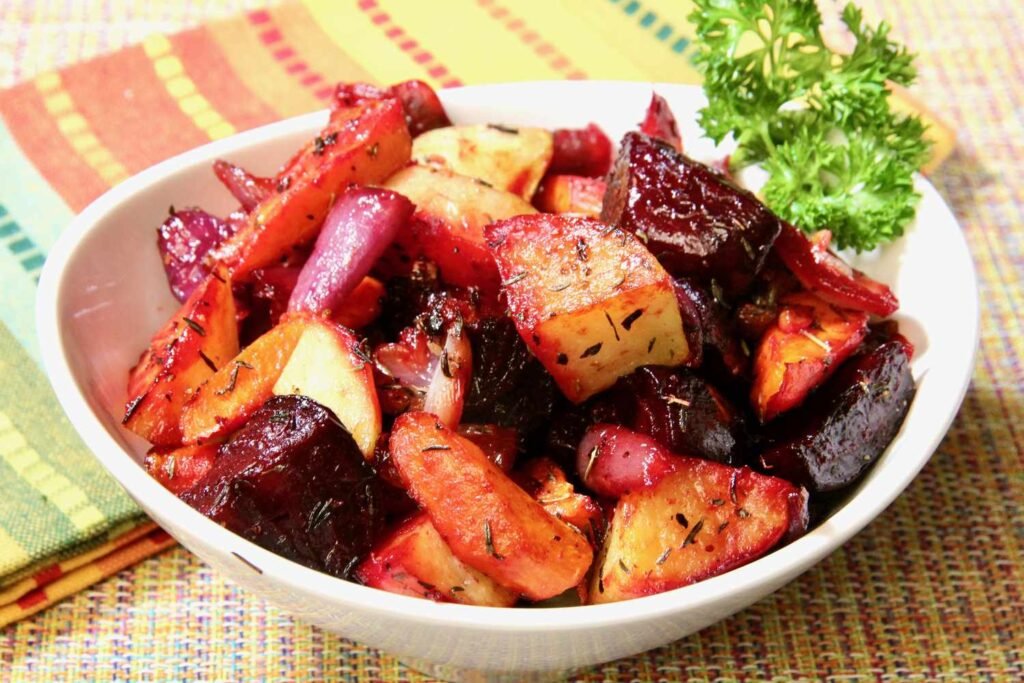
Choosing the right vegetables ensures optimal flavor, texture, and nutritional content:
- Carrots: Sweet, crisp, and rich in beta-carotene.
- Beets: Earthy flavor and vibrant color; high in folate and antioxidants.
- Parsnips: Mild, slightly sweet, ideal for roasting.
- Sweet Potatoes: Naturally sweet, dense, and rich in vitamins.
- Turnips and Rutabaga: Mildly sweet and earthy, perfect for roasting.
- Radishes: Slightly peppery, excellent for quick roasting.
Selecting fresh, firm, and blemish-free vegetables ensures even roasting and enhanced flavor.
Preparation Techniques
- Washing and Peeling: Clean root vegetables thoroughly; peel if desired.
- Uniform Cutting: Cut vegetables into similar-sized pieces to ensure even cooking.
- Seasoning: Toss vegetables with olive oil, salt, black pepper, and optional herbs like rosemary, thyme, or sage.
- Arranging on Baking Tray: Spread vegetables in a single layer to avoid steaming and promote caramelization.
- Roasting: Bake at 200–220°C (390–425°F) for 25–45 minutes depending on vegetable type and size, turning halfway for even browning.
- Finishing Touches: Garnish with fresh herbs, a squeeze of lemon, or a drizzle of balsamic glaze for extra flavor.
Basic Minimal-Effort Roasted Root Vegetable Recipe
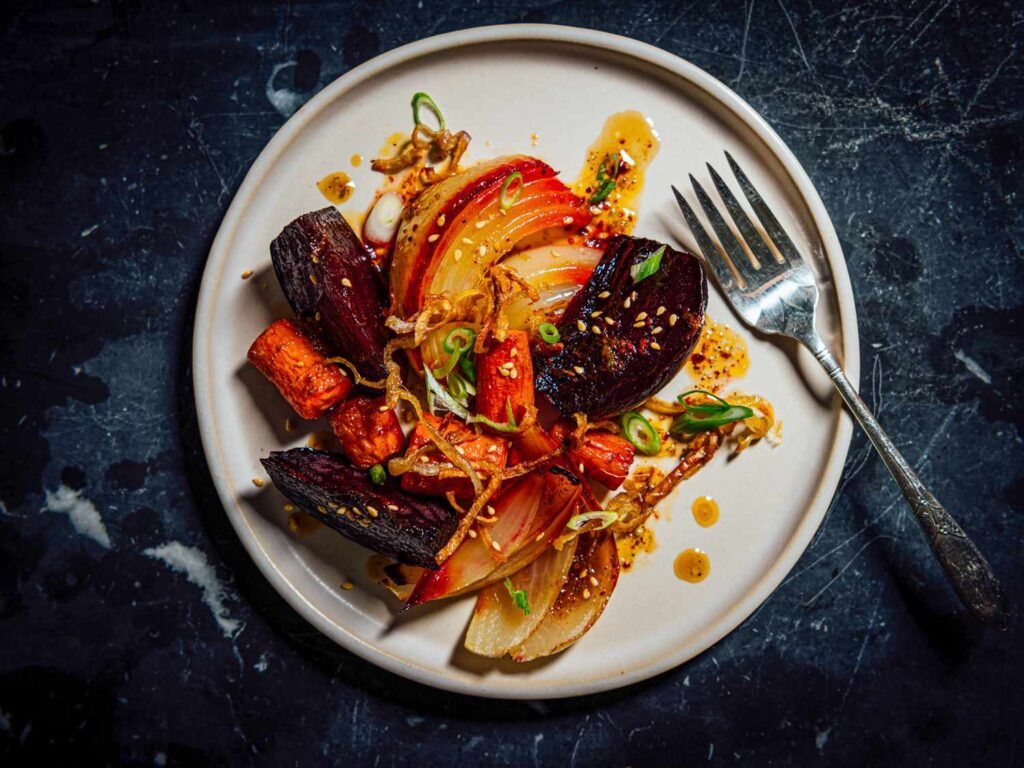
Ingredients:
- 2 carrots, cut into sticks
- 2 parsnips, sliced
- 1 medium beet, cubed
- 1 sweet potato, cubed
- 2 tbsp olive oil
- Salt and black pepper to taste
- Fresh rosemary or thyme
Preparation:
- Preheat oven to 210°C (410°F).
- Toss vegetables in olive oil, salt, pepper, and fresh herbs.
- Spread evenly on a baking sheet in a single layer.
- Roast for 30–35 minutes, turning halfway, until tender and golden brown.
- Serve warm as a side dish or main course with grains or legumes.
Serving Suggestions: Pair with quinoa, brown rice, or a fresh green salad for a complete vegetarian meal.
Flavor Variations
- Sweet and Spicy: Add a sprinkle of cinnamon, paprika, or chili flakes to enhance sweetness and depth.
- Herb-Infused: Use rosemary, thyme, sage, or parsley for aromatic, earthy flavors.
- Citrus Zest: Add orange or lemon zest before serving for brightness.
- Garlic and Onion: Toss with whole garlic cloves or thinly sliced onions for a savory punch.
- Balsamic Glaze: Drizzle balsamic vinegar reduction for a tangy-sweet finish.
These variations allow customization with minimal additional effort.
Tips for Perfect Roasted Root Vegetables
- Cut Uniformly: Ensures vegetables cook evenly and achieve consistent texture.
- Avoid Overcrowding: Leaves room for caramelization instead of steaming.
- Use High-Quality Oil: Olive or avocado oil enhances flavor and nutrient absorption.
- Monitor Oven Temperature: Avoid burning while ensuring vegetables are tender inside.
- Mix Varieties: Combining sweet, earthy, and mildly spicy vegetables creates a balanced flavor profile.
- Timing: Harder vegetables like beets and carrots may require longer roasting; softer vegetables like radishes or zucchini require less time.
Health and Culinary Benefits
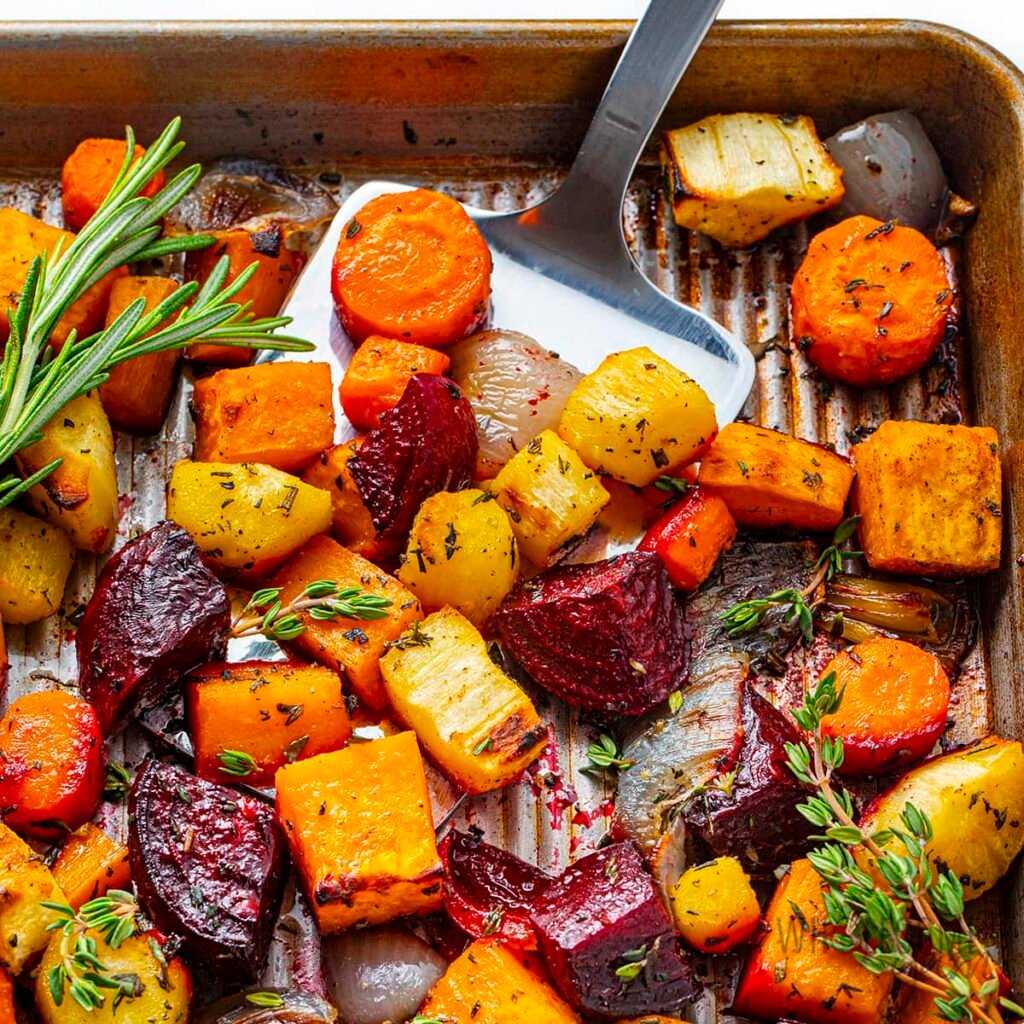
- Nutrient-Dense: Provides fiber, vitamins, antioxidants, and complex carbohydrates.
- Low-Effort Preparation: Minimal chopping, seasoning, and baking yield flavorful results.
- Versatile Dish: Can be served hot, at room temperature, or incorporated into salads, grain bowls, and wraps.
- Supports Seasonal Eating: Encourages use of locally grown, in-season root vegetables.
- Enhances Culinary Creativity: Simple additions like herbs, spices, and citrus elevate flavors without complex cooking techniques.
Discussion

Roasting root vegetables demonstrates how minimal effort can yield maximum flavor and nutritional value. The natural sugars in root vegetables caramelize during roasting, creating a satisfying sweetness that complements earthy and savory notes. Using fresh herbs enhances aroma, depth, and visual appeal.
This cooking method promotes plant-based eating by emphasizing whole, minimally processed ingredients. Roasted root vegetables are suitable for a variety of dietary needs, including vegetarian, vegan, and gluten-free diets. They offer versatility in meal planning, serving as a side dish, a main vegetarian course, or a component of salads and grain bowls. The combination of simplicity, health benefits, and flavor makes roasted root vegetables an ideal addition to everyday cooking.
Conclusion
Roasted root vegetables with minimal effort provide a flavorful, nutritious, and visually appealing vegetarian dish. Utilizing fresh, seasonal produce and simple seasonings ensures maximum taste and nutrient retention. From carrots, beets, and parsnips to sweet potatoes and turnips, root vegetables can be roasted in endless combinations to create satisfying meals.
By following straightforward preparation and roasting techniques, home cooks can create a versatile dish suitable for everyday meals, special occasions, or meal prep. Flavor variations using herbs, spices, citrus, or balsamic glaze further elevate this simple dish. Roasted root vegetables exemplify how minimal effort, fresh ingredients, and basic culinary techniques can produce a wholesome, delicious, and versatile vegetarian meal.