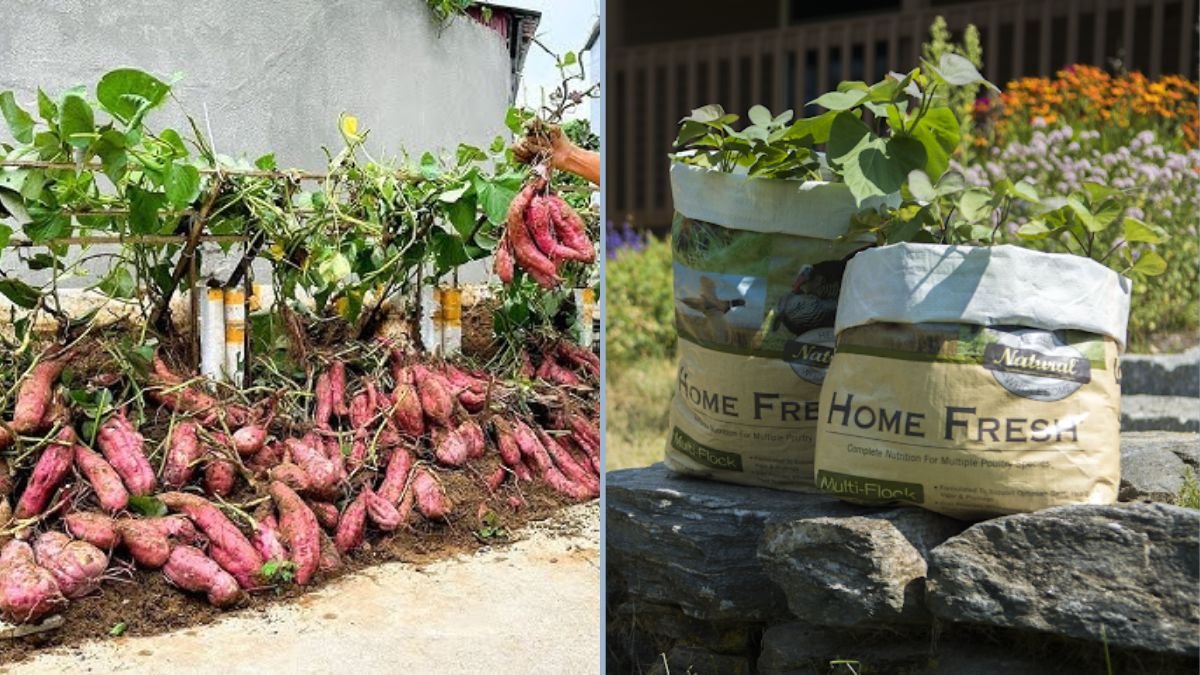
Sweet potatoes are one of the most versatile, nutritious, and easy-to-grow root vegetables. Rich in vitamins, fiber, and natural sweetness, they are perfect for roasting, boiling, mashing, or even making chips. Traditionally grown in garden beds, sweet potatoes can also thrive in grow bags, making them an ideal choice for urban gardeners, balcony growers, or anyone with limited space.
In this guide, we’ll show you step by step how to grow sweet potatoes in grow bags, from planting to harvest, with practical tips for maximum yield.
Why Grow Sweet Potatoes in Grow Bags?
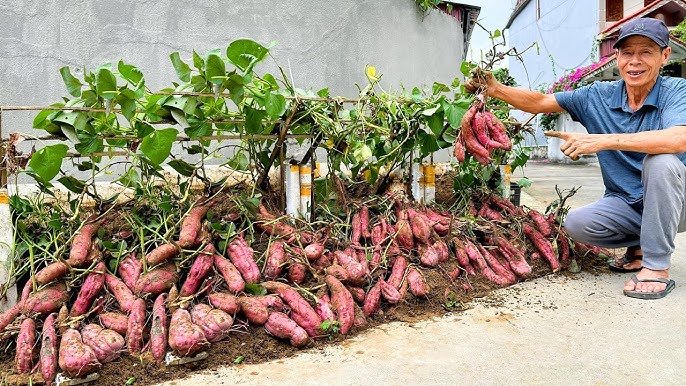
Growing sweet potatoes in grow bags has several advantages:
- Space-saving: Grow bags can fit on balconies, terraces, rooftops, or patios.
- Improved drainage: Properly prepared grow bags prevent waterlogging, which can rot roots.
- Root-friendly environment: Loose, well-draining soil in a grow bag allows sweet potato tubers to grow large and healthy.
- Mobility: Grow bags can be moved to optimize sunlight or avoid extreme temperatures.
- Urban gardening friendly: You don’t need a backyard to enjoy homegrown sweet potatoes.
With just a few grow bags, soil, and slips (young shoots from sweet potatoes), you can enjoy a bountiful harvest of this nutritious root vegetable.
Materials You’ll Need
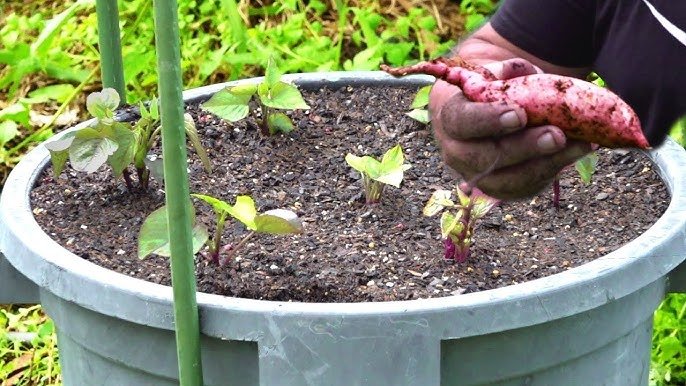
Before you start, gather the following items:
- Grow bags: Choose bags that are at least 15–20 inches deep to accommodate tuber growth. Larger bags can support multiple plants.
- Soil mix: Loose, fertile, and well-draining soil. A mix of garden soil, compost, and sand or perlite works well.
- Sweet potato slips or sprouts: You can buy these from nurseries or grow them from a healthy sweet potato tuber.
- Fertilizer or compost: Organic fertilizer to encourage root development.
- Watering can or hose: For gentle, consistent watering.
- Mulch (optional): Straw, dried leaves, or coconut husk to retain moisture.
Step 1: Preparing Grow Bags
Choose sturdy grow bags that can hold enough soil for tuber development. Sweet potatoes develop underground, so depth is important. Make sure the bags have adequate drainage holes at the bottom.
Fill the grow bag with your prepared soil mix, leaving 2–3 inches from the top for watering. Lightly compact the soil to remove large air pockets but keep it loose enough for roots to expand easily.
Step 2: Preparing Sweet Potato Slips
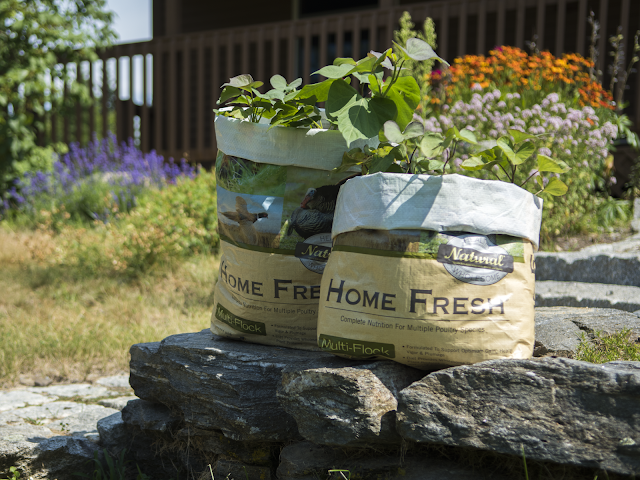
Sweet potatoes are usually grown from slips — shoots produced from a mature tuber. To prepare slips:
- Place a healthy sweet potato partially submerged in water or in moist soil.
- Allow sprouts to grow until they are 6–8 inches long.
- Gently twist off the slips, keeping roots attached if possible.
These slips are then ready for planting directly into the grow bag.
Step 3: Planting the Slips
Plant slips in the grow bag as follows:
- Make a hole about 3-4 inches deep in the soil.
- Place the slip in the hole, burying the roots and lower stem.
- Cover lightly with soil and firm gently.
- Water immediately to settle the soil.
You can plant 1–2 slips per grow bag depending on bag size. Give each plant enough space to develop tubers without overcrowding.
Step 4: Sunlight and Placement
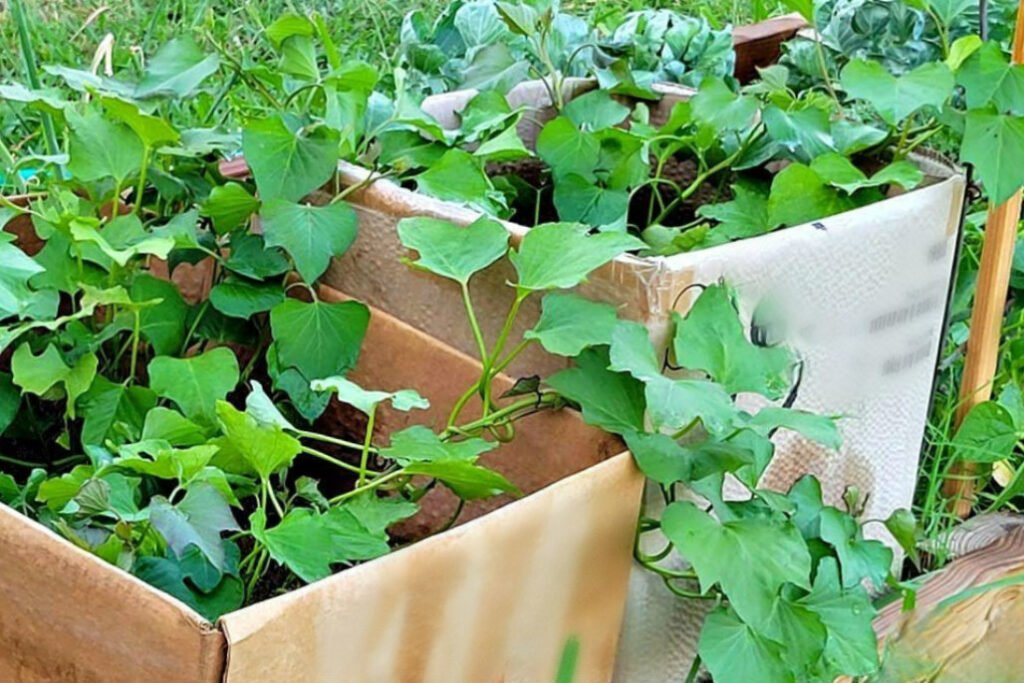
Sweet potatoes thrive in full sun, requiring at least 6–8 hours of sunlight daily. Place your grow bags in a sunny spot on a balcony, terrace, or rooftop.
In hot climates, provide light afternoon shade to prevent heat stress and excessive soil drying. Grow bags are portable, so you can adjust placement as needed.
Step 5: Watering and Moisture Management
Consistent watering is key to sweet potato growth:
- Keep soil evenly moist but not waterlogged. Overwatering can lead to root rot.
- Underwatering can stunt tuber growth or produce small, tough roots.
- Water in the early morning or late afternoon to reduce evaporation.
Mulching helps retain soil moisture, regulates temperature, and suppresses weeds.
Step 6: Fertilizing Sweet Potatoes
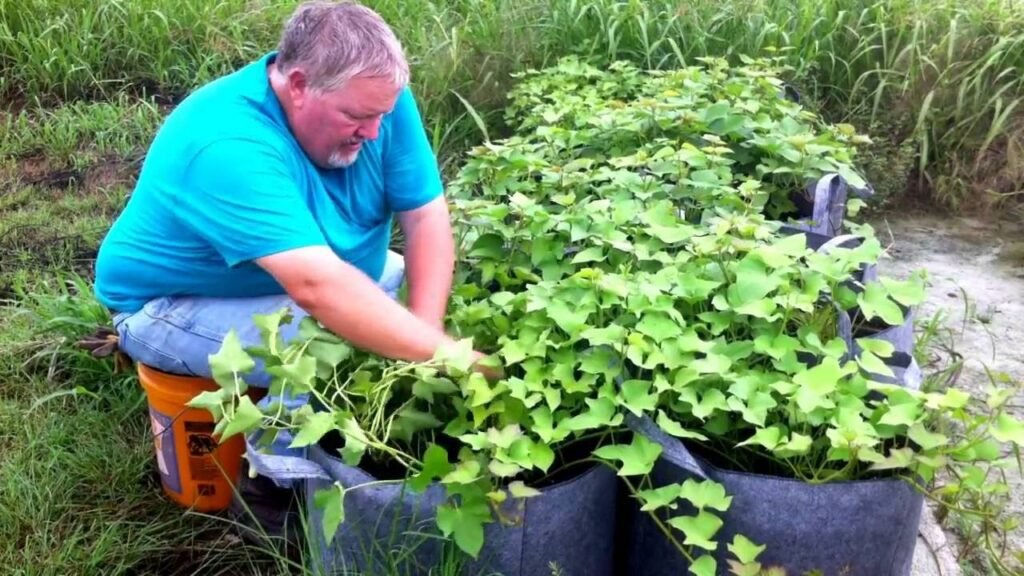
Sweet potatoes are heavy feeders, so nutrients are essential for producing large tubers:
- Mix compost or organic fertilizer into the soil at planting.
- Side-dress with balanced fertilizer once or twice during the growing season.
- Avoid high-nitrogen fertilizers that promote leafy growth at the expense of tuber development.
Consistent fertilization ensures strong vine growth and healthy underground tubers.
Step 7: Caring for the Vines
Sweet potatoes grow as vines that spread over the soil surface. Caring for the vines involves:
- Supporting growth: Allow vines to trail naturally over the soil or edges of the grow bag.
- Pruning: Occasionally trim excessive vine growth to redirect energy into tuber development.
- Pest management: Check leaves regularly for pests like aphids, caterpillars, or weevils. Use organic sprays or neem oil if needed.
- Air circulation: Ensure the grow bag isn’t overcrowded to reduce fungal disease risk.
Step 8: Monitoring Growth
Sweet potatoes are slow-growing, usually taking 90–150 days to reach maturity depending on variety and climate. During this period:
- Keep soil consistently moist.
- Watch for signs of stress, such as yellowing leaves or wilting.
- Check for tuber development by gently loosening the soil around the plant without disturbing roots.
Step 9: Harvesting Sweet Potatoes
Sweet potatoes are ready to harvest when the vines begin to yellow and die back, typically 3–5 months after planting.
To harvest:
- Gently loosen the soil around the base of the plant.
- Carefully lift the tubers to avoid damage.
- Shake off excess soil.
Do not wash tubers immediately; allow them to cure in a warm, dry, and shaded area for a week or two. Curing enhances sweetness and extends storage life.
Leaves are also edible and can be harvested while vines are still growing. They are rich in vitamins and make a nutritious addition to meals.
Common Problems and Solutions
- Small or misshapen tubers: Usually caused by overcrowding or poor soil. Ensure proper spacing and use loose, nutrient-rich soil.
- Leafy growth with few tubers: Excess nitrogen can encourage vines over root growth. Use a balanced fertilizer.
- Root rot: Waterlogged soil can damage tubers. Ensure proper drainage and avoid overwatering.
- Pests: Aphids, weevils, and caterpillars can damage leaves. Regular inspection and organic treatments help.
- Cracking or splitting: Sudden changes in soil moisture can cause tubers to split. Maintain consistent watering.
Tips for Success
- Choose the right variety: Some sweet potato varieties are better suited for container growing, such as ‘Beauregard’, ‘Jewel’, or ‘Georgia Jet’.
- Use deep grow bags: At least 15–20 inches deep to accommodate tubers.
- Mulch and soil care: Mulching reduces moisture loss and stabilizes soil temperature.
- Succession planting: Stagger plantings every few weeks for a continuous supply.
- Avoid overcrowding: One or two plants per grow bag is usually ideal.
- Support vine growth: Let vines trail naturally or train them to prevent tangling and maximize sunlight exposure.
Why Grow Sweet Potatoes in Grow Bags
Grow bags are perfect for sweet potatoes because they:
- Allow root development without constraints.
- Provide proper drainage and aeration.
- Can be moved to optimize sunlight or avoid harsh weather.
- Save space for urban or balcony gardening.
- Reduce soil-borne diseases and pests compared to ground planting.
Even large, sprawling sweet potato vines can thrive in grow bags with proper care.
Seasonal Considerations
Sweet potatoes prefer warm weather and cannot tolerate frost. In most climates:
- Plant slips after the last frost in spring.
- In tropical regions, plant at the start of the warm season.
- Avoid extremely hot periods, which can stress the plants and stunt tuber growth.
Grow bags provide flexibility to move plants indoors or to a shaded area in case of temperature extremes.
Final Thoughts
Growing sweet potatoes in grow bags is easy, space-efficient, and rewarding. From planting slips to harvesting sweet, nutritious tubers, this method allows urban gardeners to enjoy fresh produce without needing a large backyard.
With proper soil, consistent watering, and adequate sunlight, your grow bag sweet potatoes can thrive and yield delicious tubers. The added bonus is the edible greens, making this a dual-purpose crop.
Whether you’re a beginner or an experienced gardener, grow bags offer an accessible, practical, and productive way to grow sweet potatoes. Start today, and in a few months, you’ll enjoy the satisfaction of homegrown, flavorful sweet potatoes right from your balcony or terrace.