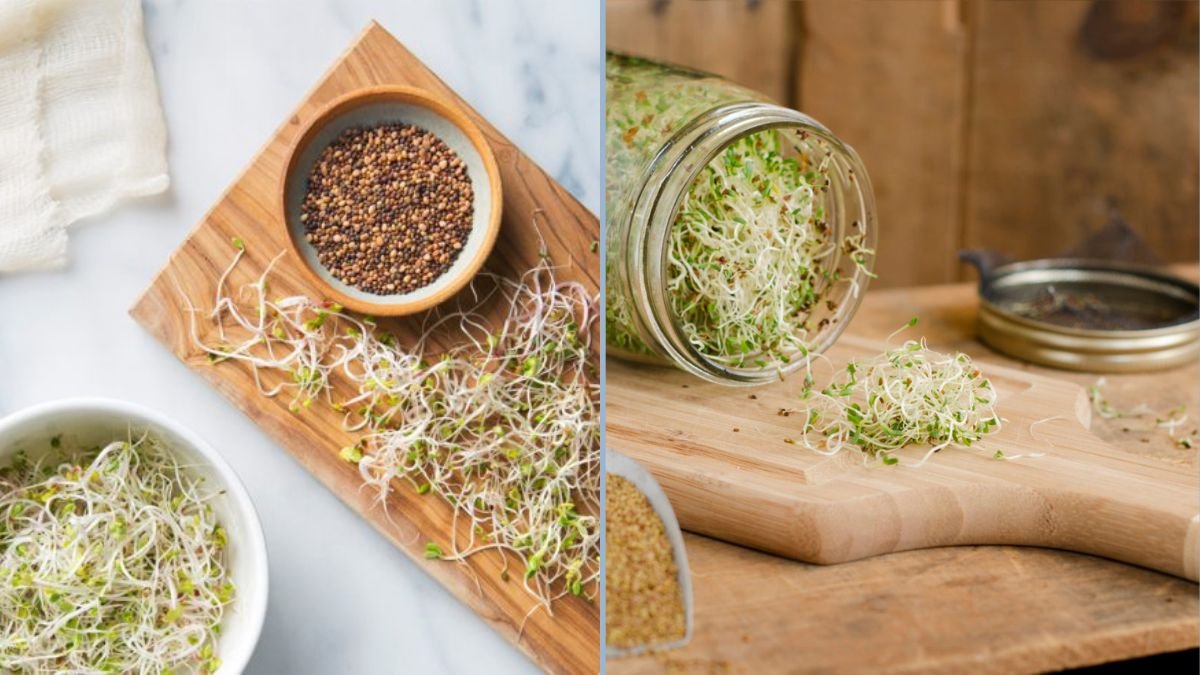
Have you ever wanted to grow your own crunchy, fresh alfalfa sprouts right in your kitchen? These tiny green shoots are packed with nutrition and take only a few days to grow—no soil, no sunlight, and no mess!
In this post, we’ll explore two simple ways to grow alfalfa sprouts at home: the jar method and the tray method. We’ll break down the pros and cons of each, show you step-by-step how to sprout successfully, and share helpful tips for clean, safe, and abundant growth.
By the end, you’ll be ready to harvest your own fresh sprouts—perfect for salads, sandwiches, wraps, or smoothies.
What Are Alfalfa Sprouts?
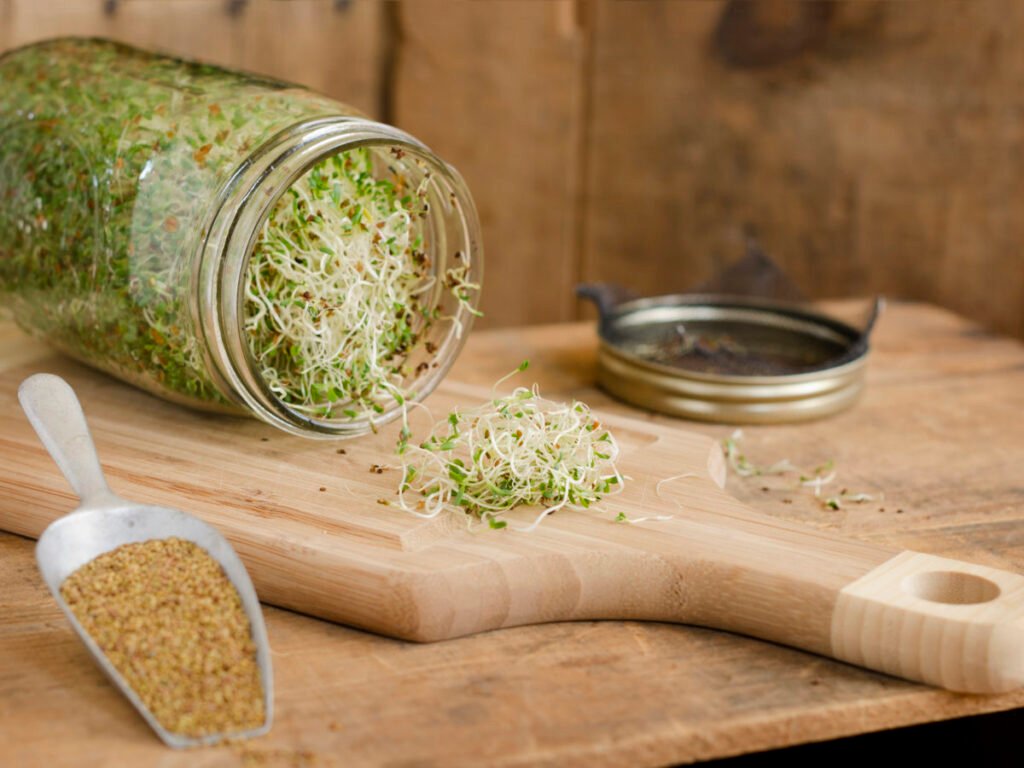
Alfalfa (Medicago sativa) is a nutrient-dense legume that’s been cultivated for thousands of years as both food and fodder. When germinated, its seeds produce delicate, thread-like sprouts that are crisp, slightly nutty, and refreshing.
Alfalfa sprouts are commonly used as a raw topping for salads, burgers, and wraps, and they also blend beautifully into green smoothies.
Nutritional Value
Alfalfa sprouts are considered one of nature’s true superfoods. They are:
- Low in calories but high in protein and fiber
- Rich in vitamins A, C, E, and K
- A source of iron, calcium, magnesium, and zinc
- Packed with antioxidants that help combat inflammation and oxidative stress
Adding a handful of fresh alfalfa sprouts to your meals can help improve digestion, boost immunity, and promote overall wellness.
Why Grow Alfalfa Sprouts at Home?
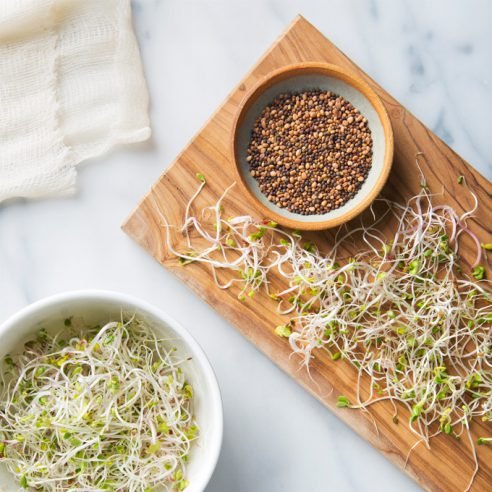
Growing alfalfa sprouts at home is easy, affordable, and rewarding. Here’s why so many people love doing it:
- Freshness Guaranteed – Homegrown sprouts are crisp, flavorful, and harvested just minutes before eating.
- Cost-Effective – A few tablespoons of seeds can yield several cups of sprouts.
- Hygienic & Safe – You control the environment, ensuring clean and healthy sprouts.
- Eco-Friendly – No packaging waste, no shipping—just pure, local food from your countertop.
- Fast Growth – Ready to eat in just 4–6 days!
Now, let’s go over the two easiest methods: Jar vs. Tray.
Method 1: Growing Alfalfa Sprouts in a Jar
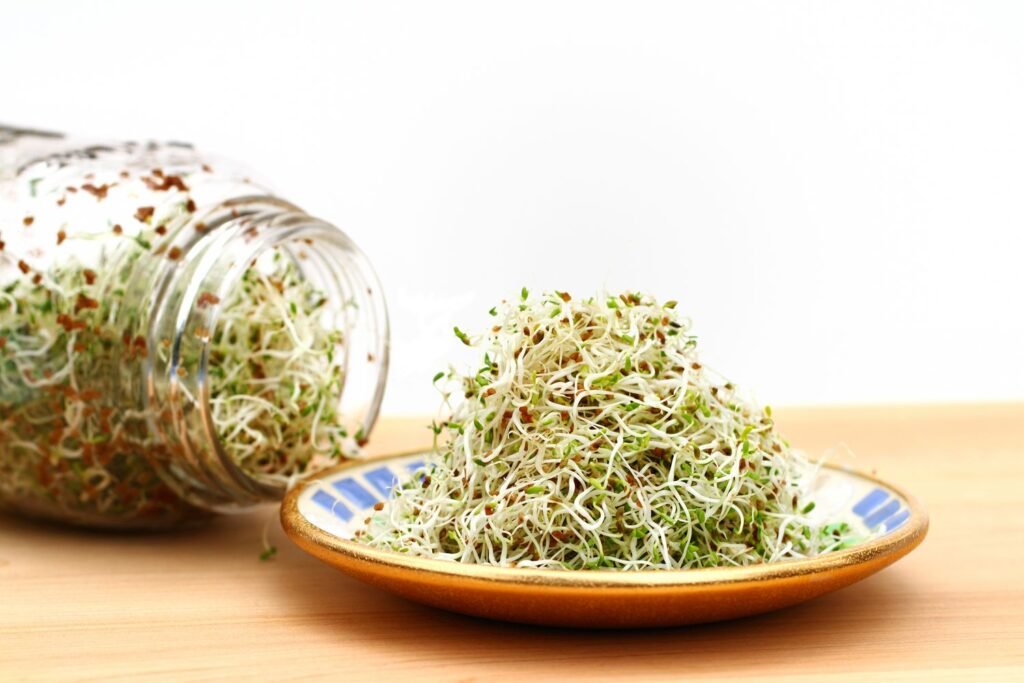
This is the most common and convenient way to sprout alfalfa seeds. You only need a few simple tools and minimal space.
What You’ll Need
- 2 tablespoons of alfalfa seeds (organic, untreated)
- 1 wide-mouth glass jar (1-liter capacity)
- A sprouting lid or a piece of breathable mesh (cheesecloth or muslin)
- A rubber band to secure the cover
- Clean, filtered water
Step-by-Step: Jar Method
Step 1: Rinse and Soak
Start by rinsing 2 tablespoons of alfalfa seeds in cool water to remove any dust or debris.
Place the seeds in your jar and fill it with about 2 cups of water. Let them soak overnight (8–12 hours). Soaking activates the seeds and kickstarts germination.
Step 2: Drain and Rinse
After soaking, drain the water through the sprouting lid or cloth.
Rinse the seeds with fresh water and drain again thoroughly.
Remember: moist but not waterlogged is the goal—too much water can cause mold or rot.
Step 3: Position the Jar
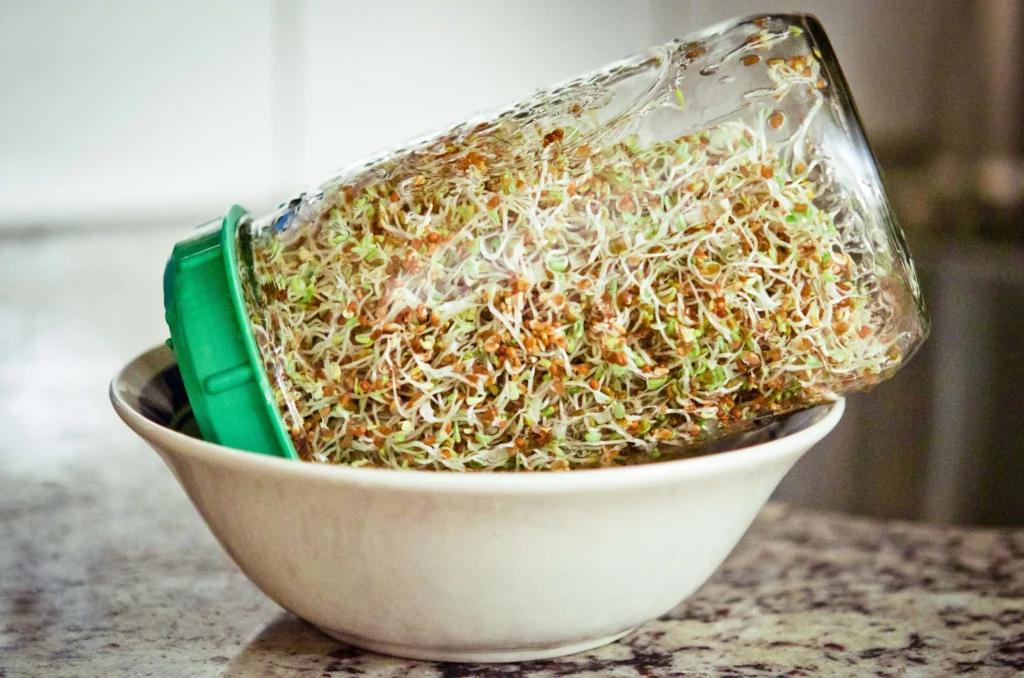
Place the jar at a 45° angle, mouth down, in a dish rack or bowl to allow excess water to drain and air to circulate.
Keep it in a dark, cool place like a cupboard. Alfalfa seeds sprout best at temperatures around 20–25°C (68–77°F).
Step 4: Rinse Twice Daily
Rinse and drain the sprouts twice a day (morning and evening).
Each rinse removes bacteria, keeps the sprouts moist, and encourages healthy growth. You’ll see tiny white tails within 24–36 hours.
Step 5: Move to Indirect Light
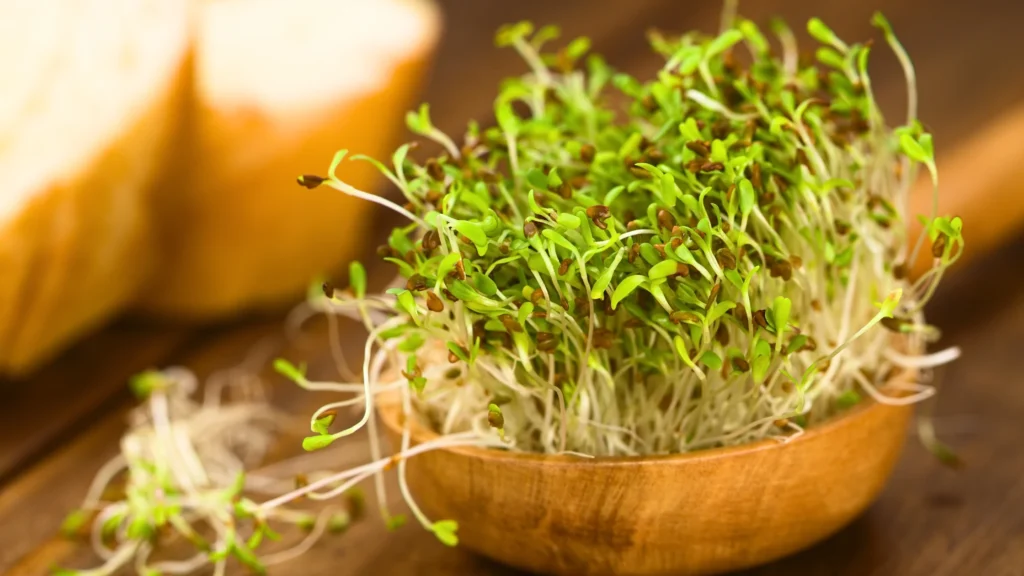
After about 3–4 days, when the sprouts are about 2 inches long, place the jar near indirect sunlight for a few hours. This helps the sprouts develop chlorophyll and turn green.
Avoid direct sunlight—it can make sprouts dry and bitter.
Step 6: Harvest and Store
By day 5 or 6, your alfalfa sprouts will be lush and ready to harvest.
Rinse one final time to remove any unsprouted seeds or seed hulls (they float to the surface). Drain thoroughly and let them dry for an hour.
Store your fresh sprouts in an airtight container in the refrigerator. They’ll stay fresh for up to 5 days.
Advantages of the Jar Method
Easy and beginner-friendly
Requires minimal space and tools
Great for small batches
Disadvantages
Limited airflow can lead to moisture buildup
Needs careful rinsing to avoid odor or mold
Method 2: Growing Alfalfa Sprouts in a Tray
If you want to grow larger quantities of sprouts or prefer more airflow, the tray method is an excellent alternative.
What You’ll Need
- A sprouting tray or any shallow tray with drainage holes
- Alfalfa seeds (2 tablespoons per tray)
- Filtered water
- A lid or damp cloth to cover the tray
Step-by-Step: Tray Method
Step 1: Soak Seeds
As with the jar method, start by soaking your alfalfa seeds for 8–12 hours.
After soaking, drain and rinse them well.
Step 2: Spread Seeds Evenly
Place the drained seeds evenly across the tray’s surface. Avoid overcrowding—leave space for air circulation and root expansion.
Step 3: Maintain Moisture
Cover the tray with a lid or damp cloth to keep the environment dark and humid during the first 2 days.
Mist the seeds lightly with water twice daily to keep them moist but not soggy.
Step 4: Provide Air and Light
Once sprouts begin to grow, remove the cover and move the tray to indirect sunlight or a bright room.
Continue misting once or twice a day to prevent drying out. The sprouts will develop green leaves within a couple of days.
Step 5: Harvest
By day 5 or 6, the alfalfa sprouts will be about 3–4 inches long and ready to harvest.
Gently cut or pull them from the tray, rinse, and let them dry before storing.
Advantages of the Tray Method
Allows better airflow and prevents moisture buildup
Ideal for larger batches
Easier to inspect and clean
Disadvantages
Takes up more counter space
Requires gentle handling to prevent root damage
Jar vs. Tray: Which Is Better?
| Feature | Jar Method | Tray Method |
|---|---|---|
| Best For | Beginners & small batches | Larger harvests |
| Airflow | Limited | Excellent |
| Moisture Control | Needs careful draining | Easier to manage |
| Space Required | Very little | Moderate |
| Harvest Ease | Slightly messy | Easy to collect |
Verdict:
If you’re new to sprouting or live in a small apartment, go with the jar method.
If you want to produce larger, fluffier sprouts regularly, the tray method is worth the investment.
Safety Tips for Sprouting
Because sprouts grow in warm, moist environments, they can be prone to bacterial contamination if not handled properly. Follow these hygiene tips:
- Use clean equipment every time.
- Rinse seeds before soaking to remove debris.
- Rinse twice daily to maintain freshness.
- Keep at cool temperatures during sprouting (avoid excessive heat).
- Refrigerate immediately after harvesting.
If sprouts develop a sour smell or slimy texture, discard them immediately.
Creative Ways to Enjoy Alfalfa Sprouts
Once you’ve harvested your crisp, green sprouts, try these delicious serving ideas:
Sandwiches and Wraps – Add a handful for crunch and freshness.
Salads – Mix with lettuce, cucumber, and tomato for a nutrient boost.
Soups and Stir-Fries – Toss in just before serving for extra texture.
Smoothies – Blend a small handful for added vitamins and enzymes.
Egg Dishes – Sprinkle over omelets or scrambled eggs for color and flavor.
Health Benefits of Alfalfa Sprouts
Regularly consuming alfalfa sprouts offers many health benefits:
- Supports digestion with natural enzymes and fiber
- Improves heart health by lowering LDL (“bad”) cholesterol
- Boosts immunity with antioxidants
- Promotes healthy skin and hair through vitamin E
- Balances hormones and supports detoxification
They’re also an excellent low-calorie addition for anyone looking to lose weight naturally.
Final Thoughts: Grow Your Own Superfood in Just a Week
Growing alfalfa sprouts at home—whether in a jar or a tray—is one of the easiest and most rewarding kitchen gardening projects you can try.
In less than a week, you can transform a handful of tiny seeds into fresh, living food bursting with nutrients, flavor, and vitality.
So, grab a jar or a tray, some clean water, and a bit of curiosity—and discover the joy of growing your own alfalfa sprouts the easy way. Once you start, you’ll never go back to store-bought again!