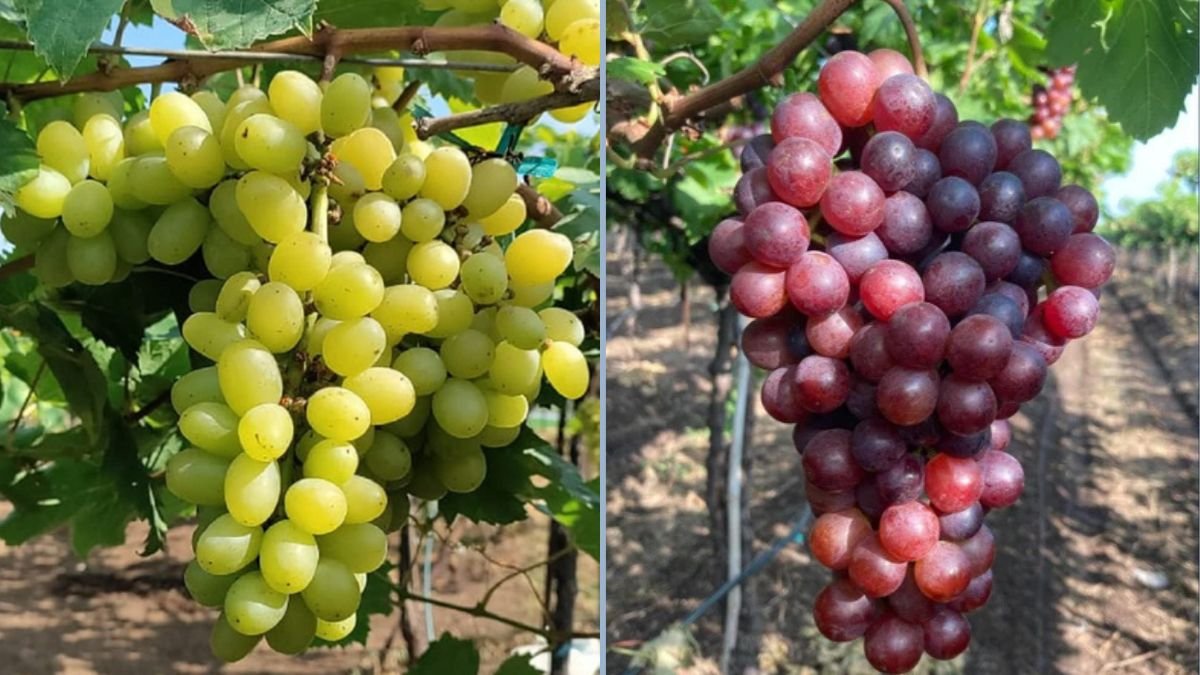
If you’ve ever dreamed of plucking fresh, juicy grapes straight from your garden but don’t have much space, growing Flame Seedless Grapes in containers is the perfect solution. These vibrant red grapes are not only delicious but also incredibly rewarding to grow at home. Whether you have a small balcony, terrace, or backyard, container gardening allows you to enjoy the beauty and bounty of grapevines in even the tiniest spaces.
In this post, we’ll walk through everything you need to know about growing Flame Seedless Grapes in containers—from selecting the right pot and soil to pruning, fertilizing, and harvesting sweet clusters right from your kitchen garden.
What Are Flame Seedless Grapes?
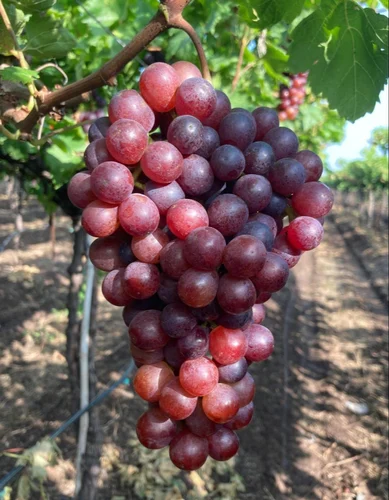
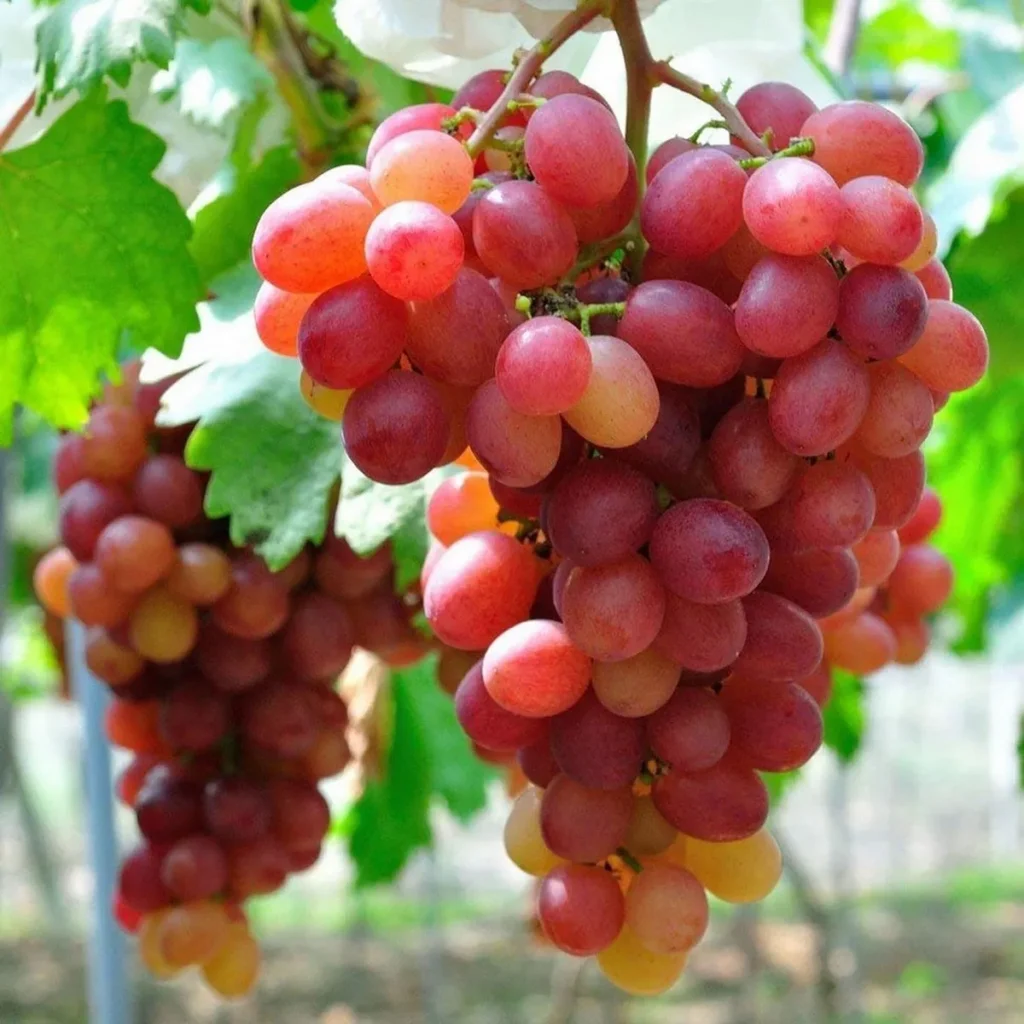
Flame Seedless Grapes are one of the most popular table grape varieties in the world. Known for their bright red color, crisp texture, and sweet flavor, they’re often seen in supermarkets and fruit baskets. Unlike seeded grapes, these are easy to eat fresh or use in salads, juices, and desserts.
Originally developed in California, Flame Seedless is a hybrid variety derived from Thompson Seedless, Cardinal, and other grape cultivars. The plant is a vigorous grower and can adapt well to warm, sunny conditions—making it ideal for container gardening in most climates.
Why Grow Flame Seedless Grapes in Containers?
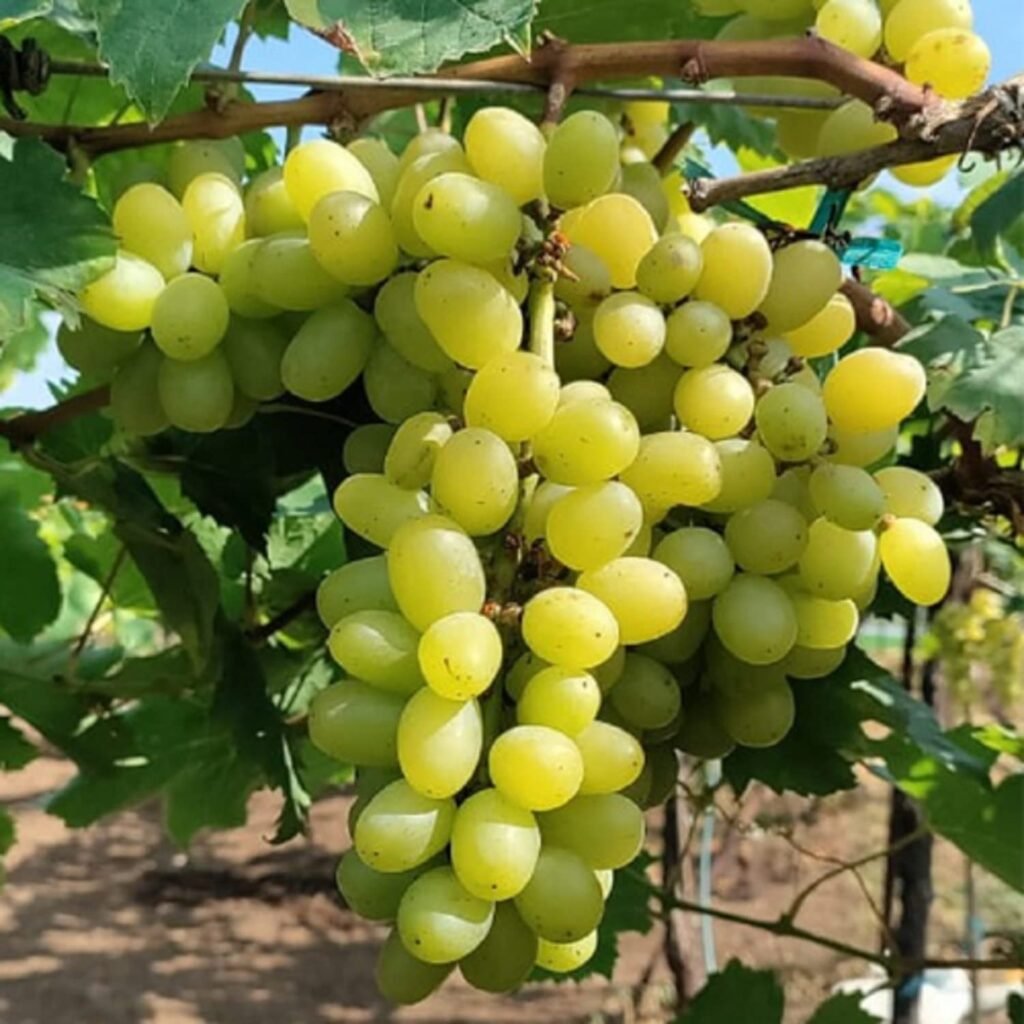
You might wonder—why grow grapes in containers when they’re traditionally vineyard plants? The answer is space and control.
Here are some key benefits:
- Space-saving: Perfect for small gardens, balconies, patios, and rooftops.
- Mobility: You can move containers to maximize sunlight exposure.
- Soil control: Adjust pH and nutrients easily for optimal grape growth.
- Pest management: Containers help minimize soil-borne pests and diseases.
- Aesthetic appeal: A trained grapevine adds greenery and elegance to your kitchen garden.
Step-by-Step Guide: Growing Flame Seedless Grapes in Containers
1. Choose the Right Container
The container you choose plays a crucial role in the success of your grapevine.
- Size: Start with at least a 20 to 25-gallon container (60–75 liters). Grapevines have deep root systems that need ample space.
- Material: Terracotta, ceramic, or food-grade plastic pots are ideal.
- Drainage: Ensure the pot has multiple drainage holes to prevent waterlogging, which can cause root rot.
You can also use large grow bags or wine barrels for a rustic garden look.
2. Select the Right Soil Mix
Flame Seedless grapes prefer well-draining, loamy soil that is rich in organic matter.
Here’s a good potting mix recipe:
- 40% garden soil
- 30% compost or well-rotted manure
- 20% coco peat
- 10% river sand or perlite
Check the pH level—it should be between 6.0 and 6.5 for optimal grape growth. You can add a handful of bone meal or vermicompost to enrich the mix with phosphorus and micronutrients.
3. Planting the Grapevine
You can start your plant from a nursery-bought sapling, a cutting, or a grafted plant.
Steps:
- Fill the container with soil, leaving 2–3 inches at the top.
- Place the grapevine in the center and gently spread the roots.
- Backfill with soil and firm it around the base.
- Water thoroughly after planting.
Tip: If planting multiple vines, maintain at least 3 feet of distance between pots for proper airflow and sunlight.
4. Provide a Support Structure
Flame Seedless grapes are climbing vines that need strong support to grow vertically.
Install:
- A trellis, stake, or wire system to guide the vine.
- Train new shoots to climb by loosely tying them with garden twine.
Proper support not only keeps the vine organized but also enhances fruit exposure to sunlight—essential for sweet grapes.
5. Watering and Mulching
Grapevines don’t like soggy roots, but they do need consistent moisture, especially during flowering and fruiting.
- Water deeply once or twice a week, depending on weather conditions.
- Allow the top inch of soil to dry between waterings.
- Add a layer of mulch (dry leaves, straw, or coco chips) to retain moisture and regulate soil temperature.
Avoid overwatering, as it can lead to fungal problems like root rot and powdery mildew.
6. Fertilizing for Healthy Growth
Feed your container grapevine regularly to encourage strong vines and sweet fruit.
Fertilizer schedule:
- During the growing season (spring–summer), apply a balanced NPK fertilizer (10-10-10) every 4–6 weeks.
- Before flowering, switch to a low-nitrogen, high-phosphorus fertilizer to boost blooms and fruit set.
- Add organic compost or vermicompost twice a year to improve soil structure.
Avoid excessive nitrogen, as it promotes leafy growth over fruit production.
7. Pruning and Training
Proper pruning is essential for grapevine health and fruit yield.
When to prune:
- Major pruning: Late winter or early spring before new growth begins.
- Light pruning: During summer to remove unwanted shoots.
How to prune:
- Remove weak, damaged, or tangled branches.
- Leave a few strong canes (called fruiting canes) that will bear next season’s clusters.
- Train the vine along your support structure for neat, airy growth.
Tip: Pruning improves air circulation, prevents disease, and helps grapes ripen evenly.
8. Sunlight and Temperature Requirements
Flame Seedless grapes love full sunlight—they need at least 6 to 8 hours of direct sun daily.
- Ideal temperature: 25°C to 35°C (77°F–95°F)
- Protect the vine from extreme heat or frost. In colder climates, move the container indoors or cover it with a frost blanket during winter.
Sunlight is the key factor that determines fruit sweetness and color intensity.
9. Pest and Disease Management
Even container-grown grapes can face common garden pests like:
- Aphids
- Mealybugs
- Spider mites
- Powdery mildew
Organic remedies:
- Spray neem oil or insecticidal soap every 15 days during the growing season.
- Maintain airflow by pruning and spacing containers properly.
- Avoid water splashing on leaves to reduce fungal spread.
Healthy soil and good pruning habits are your best defenses against most grape diseases.
10. Harvesting Flame Seedless Grapes
Flame Seedless grapes typically take 120–150 days after flowering to ripen. You’ll know they’re ready when:
- Clusters turn bright red.
- The grapes feel plump and taste sweet.
- The stems start to brown slightly.
Cut the entire cluster with pruning shears instead of plucking individual grapes to avoid damaging the vine.
Once harvested, grapes can be stored in the refrigerator for up to a week—or enjoyed fresh straight from the vine!
Bonus Tips for Success
- Don’t expect fruit in the first year—grapevines usually start producing from the second or third year.
- Rotate your container every few weeks to ensure even sunlight exposure.
- Add Epsom salt (1 tbsp per gallon of water) once a month for magnesium boost and stronger growth.
- Keep weeds away from the base of the vine.
- Regularly check ties and supports—loosen them as the vine thickens to prevent damage.
Common Problems and Solutions
| Problem | Cause | Solution |
|---|---|---|
| Yellowing leaves | Overwatering or poor drainage | Improve drainage, reduce watering |
| No fruit production | Excess nitrogen or poor pollination | Reduce nitrogen, prune correctly |
| Small or sour grapes | Lack of sunlight or nutrients | Move container to full sun, add compost |
| Mold on grapes | High humidity or overcrowding | Increase airflow, apply neem oil spray |
Conclusion
Growing Flame Seedless Grapes in containers is a rewarding and enjoyable experience for any gardening enthusiast. With just a bit of patience and care, you can transform your kitchen garden or balcony into a mini vineyard bursting with flavor and color.
These grapevines not only provide delicious fruit but also add a beautiful, rustic charm to your living space. Remember the essentials: use a large pot, give plenty of sunlight, prune regularly, and water moderately. Before long, you’ll be harvesting sweet, seedless grapes right from your own container garden.
So go ahead—grab a pot, plant your vine, and enjoy the magic of homegrown Flame Seedless Grapes!