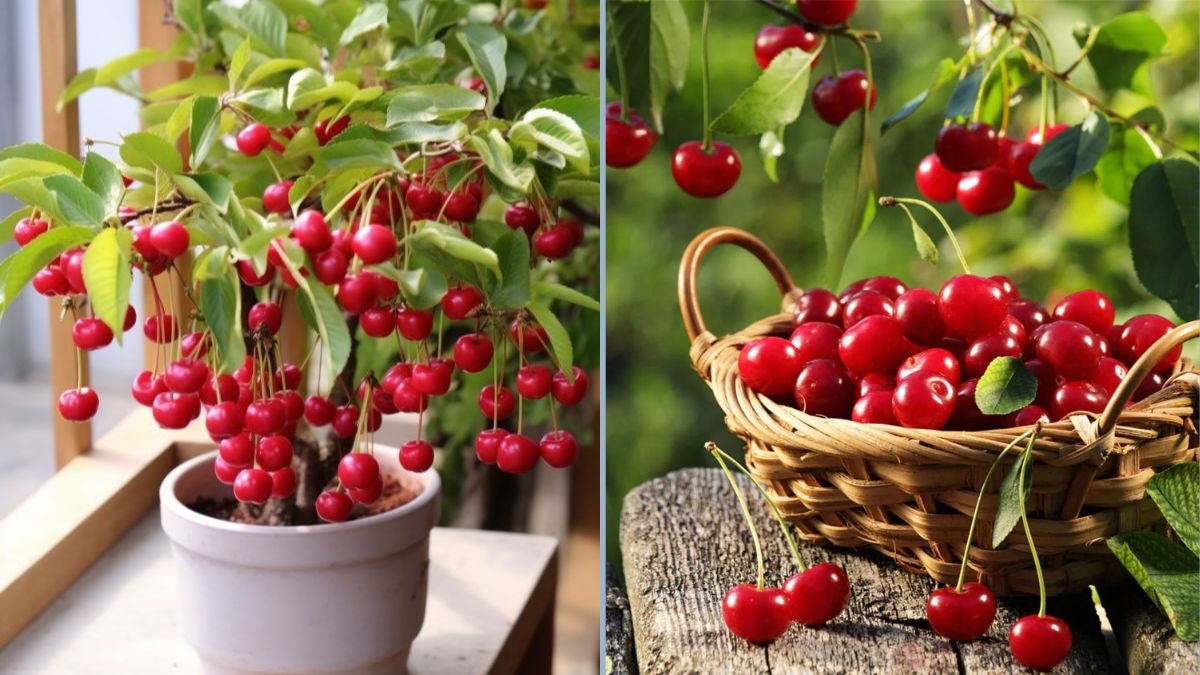
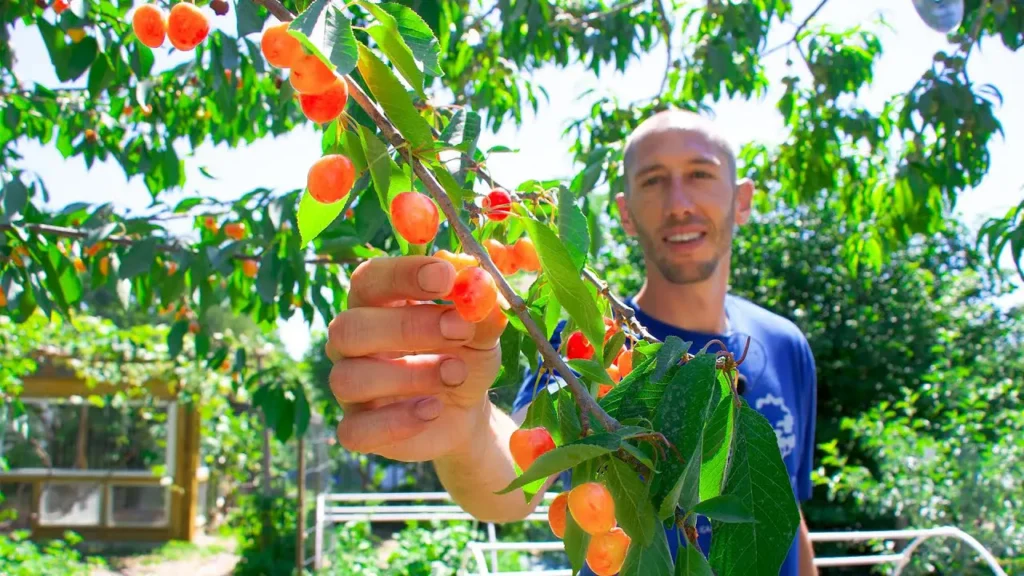
There’s something magical about harvesting fresh cherries straight from your own backyard. The sweetness of organic Rainier cherries, the vibrant colors, and the satisfaction of growing your own fruit make cherry picking a delightful experience for gardeners and families alike. Recently, I had the pleasure of picking cherries from my backyard garden, where a 3-in-One Jubilee Cherry Tree is thriving alongside organic Rainier cherries. In this post, we’ll explore the joys of backyard cherry picking, the benefits of growing a multi-grafted cherry tree, and tips for cultivating sweet, healthy cherries organically.
1. The Joy of Backyard Cherry Picking
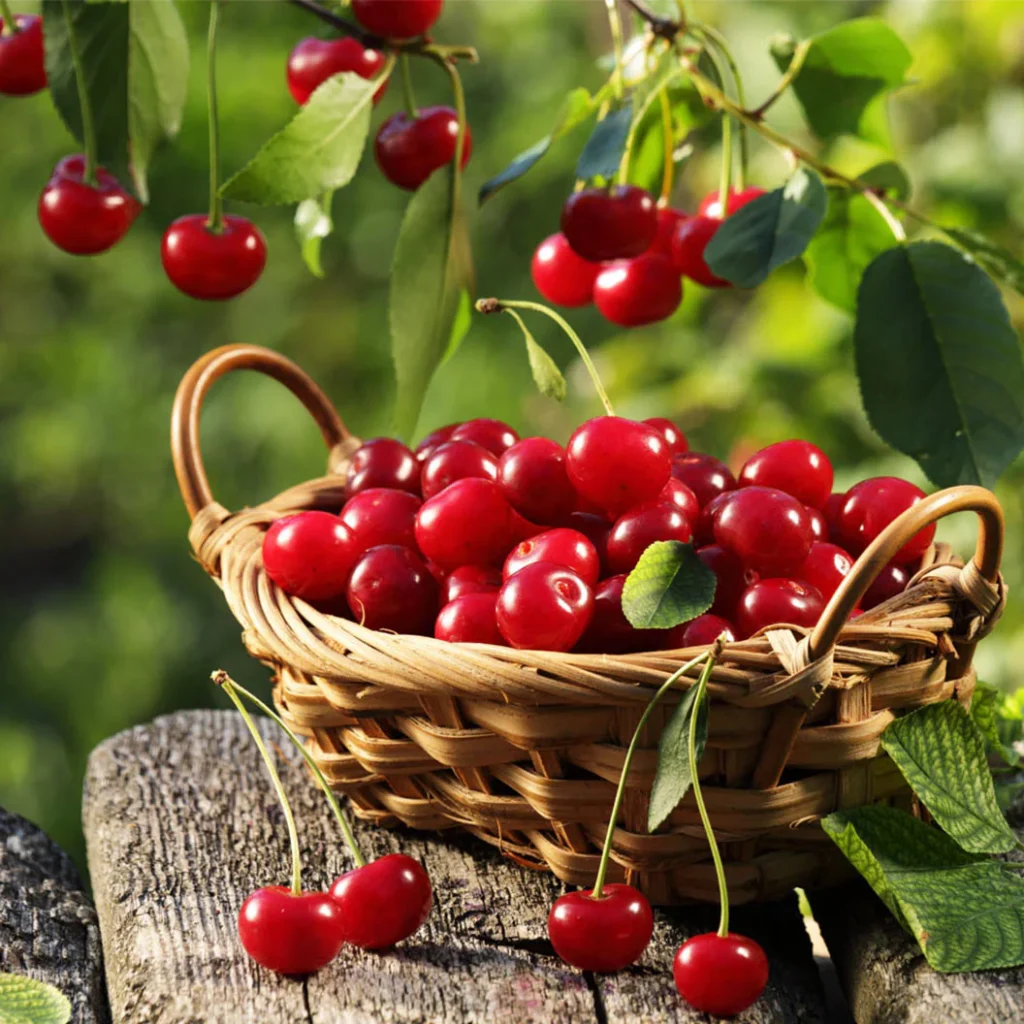
Cherry picking is not just a pastime; it’s an experience that connects us with nature, teaches patience, and rewards effort with delicious fruit. Unlike store-bought cherries, backyard-picked cherries are fresher, more flavorful, and free from synthetic chemicals if grown organically.
For gardeners, there’s a sense of pride in nurturing trees from tiny saplings to fruit-bearing plants. Each harvest season becomes a celebration of growth, care, and the natural cycles of life. Families enjoy cherry picking as a bonding activity, sharing the excitement of filling baskets with the vibrant, juicy fruits.
2. Introducing the 3-in-One Jubilee Cherry Tree

One of the stars of my backyard is the 3-in-One Jubilee Cherry Tree. Multi-grafted cherry trees, like this one, combine three different cherry varieties on a single tree. This means a single tree can produce cherries with slightly different flavors, colors, and ripening times, extending the harvest period.
Key Features of the Jubilee Cherry Tree
- Multi-Grafted: Three cherry varieties on one tree, often including a mix of sweet and semi-sweet cherries.
- Extended Harvest: Since each variety ripens at a slightly different time, you can enjoy cherries for several weeks.
- Space-Saving: Ideal for backyard gardens where space is limited, a single tree provides diversity without needing multiple planting spots.
- Self-Pollinating Varieties: Many 3-in-One trees include self-pollinating cherries, reducing the need for additional trees to produce fruit.
Benefits for Backyard Gardeners
- Maximizes fruit production in limited space.
- Provides visual appeal with mixed-colored cherries on a single tree.
- Encourages experimentation with different cherry flavors without buying multiple trees.
3. Organic Rainier Cherries: Sweet, Golden Gems
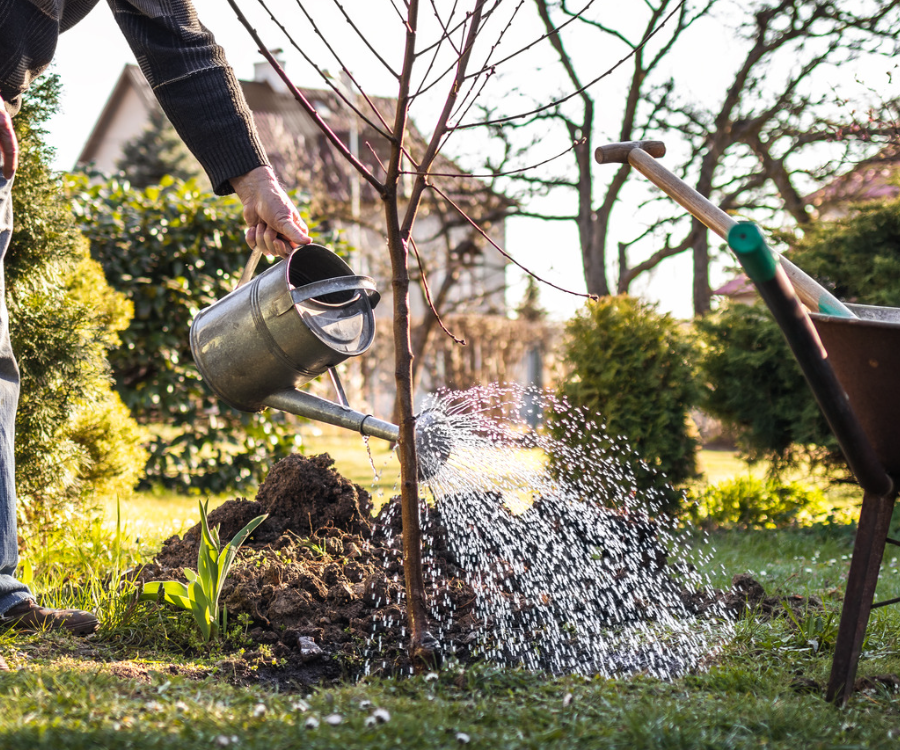
In addition to the Jubilee tree, my garden also hosts organic Rainier cherries, a popular sweet cherry variety prized for its golden-yellow skin with a pink blush. Rainier cherries are known for their exceptional sweetness and subtle tartness, making them a favorite for fresh eating and gourmet recipes.
Characteristics of Rainier Cherries
- Color: Golden-yellow with a pinkish-red blush.
- Flavor: Sweet with a mild tartness, rich and juicy.
- Texture: Firm yet tender, ideal for fresh consumption.
- Harvest Period: Typically mid to late summer, depending on climate.
Growing Rainier cherries organically ensures that the fruit is free from synthetic pesticides and chemicals, preserving both flavor and health benefits. Organic cherries are particularly appealing for families and gardeners who prioritize natural, safe produce.
4. Preparing Your Backyard for Cherry Trees
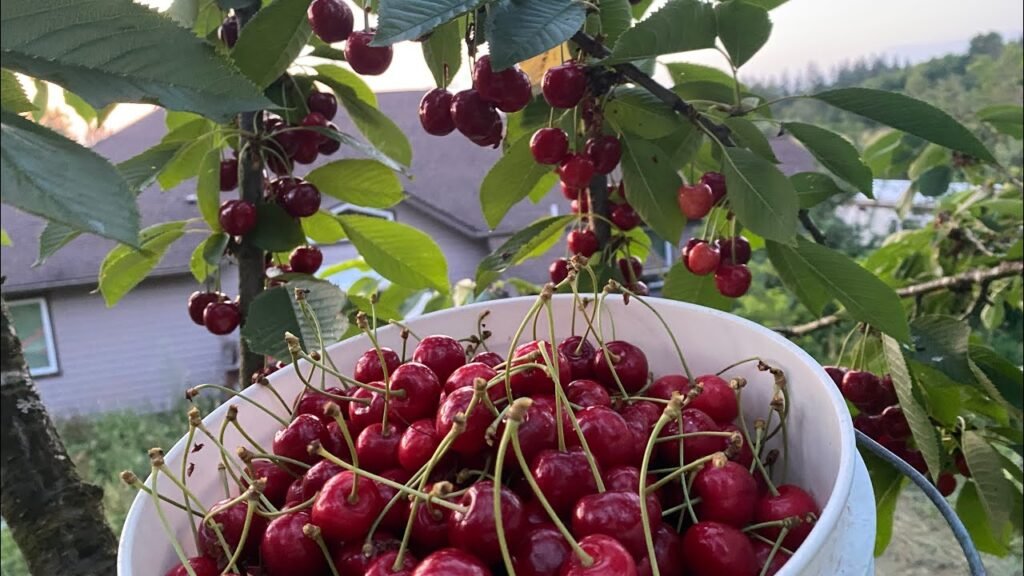
Whether planting a 3-in-One Jubilee Cherry Tree or organic Rainier cherries, preparation is key to a successful harvest.
Choosing the Right Location
- Sunlight: Cherry trees thrive in full sun, requiring at least six to eight hours of direct sunlight per day.
- Soil: Well-draining, loamy soil with slightly acidic to neutral pH is ideal. Avoid waterlogged areas, which can cause root rot.
- Air Circulation: Good airflow reduces the risk of fungal diseases, which cherries are susceptible to, especially in humid climates.
Planting Tips
- Dig a hole twice the width of the root ball but no deeper than the root system.
- Backfill with nutrient-rich soil mixed with compost to encourage strong root development.
- Water thoroughly after planting and mulch around the base to retain moisture and regulate soil temperature.
5. Caring for Your Cherry Trees
Watering
- Young trees require regular watering to establish roots.
- Mature trees benefit from deep, infrequent watering to encourage deep root growth.
- Avoid overwatering, as cherries are sensitive to waterlogged conditions.
Fertilization
- Use a balanced, slow-release fertilizer formulated for fruit trees.
- Organic options, such as compost, well-rotted manure, or seaweed extract, help maintain soil fertility naturally.
- Fertilize in early spring and again after fruit set to support healthy growth and fruit production.
Pruning
- Pruning promotes healthy structure, air circulation, and sunlight penetration.
- Remove dead, diseased, or crossing branches annually.
- Maintain an open canopy to facilitate harvesting and reduce fungal disease risk.
6. Pollination and Fruit Set
Cherry trees rely on pollination to produce fruit. While some varieties are self-pollinating, others benefit from cross-pollination with compatible varieties.
- Jubilee Tree: Often includes self-pollinating cherries, but planting near other cherry varieties can increase yield.
- Rainier Cherries: Typically require cross-pollination with another sweet cherry variety, such as Bing, for optimal fruit set.
Bees and other pollinators play a crucial role, so minimizing pesticide use and providing pollinator-friendly plants nearby enhances fruit production.
7. Harvesting Cherries
Harvesting is one of the most rewarding parts of growing cherries. Timing is critical for optimal flavor:
- Color: Cherries should be fully colored according to their variety. Rainier cherries are golden with a pink blush; Jubilee varieties may vary.
- Firmness: Fruit should be plump and firm but slightly yielding to gentle pressure.
- Picking Technique: Use your fingers or scissors to remove cherries with stems intact, reducing damage to the fruit.
- Storage: Freshly picked cherries are highly perishable. Store them in the refrigerator and consume within a week for the best flavor.
Regular harvesting also encourages more fruit production and prevents overripe fruit from attracting pests.
8. Culinary Uses for Backyard Cherries
Cherries are versatile in the kitchen, and backyard-picked cherries taste significantly better than store-bought options. Here are some ideas:
- Fresh Eating: Simply rinse and enjoy the sweet, juicy fruit.
- Desserts: Cherries are perfect in pies, tarts, crumbles, and cobblers.
- Preserves: Make jams, jellies, or cherry syrup for long-term enjoyment.
- Beverages: Use cherries in smoothies, cocktails, or infused water.
- Salads and Savory Dishes: Fresh cherries add a sweet contrast to salads, cheese plates, or roasted meats.
Organic cherries are especially flavorful because they retain the natural sugars and delicate aroma that conventional fruit sometimes lacks.
9. Challenges of Backyard Cherry Gardening
Growing cherries comes with challenges that gardeners should be prepared for:
- Pests: Birds, aphids, and cherry fruit flies can threaten your harvest. Netting, organic sprays, and companion planting help manage these pests.
- Diseases: Fungal diseases like powdery mildew or brown rot can affect cherries. Proper pruning, airflow, and organic fungicides mitigate risks.
- Weather Sensitivity: Frost during flowering or excessive rain during fruiting can reduce yield. Planting in slightly elevated areas and using frost protection helps.
Despite these challenges, careful management and observation can lead to a rewarding harvest season year after year.
10. The Satisfaction of Growing Your Own Cherries
There’s unmatched satisfaction in growing cherries in your backyard. Each step—from planting and pruning to pollination and harvesting—creates a deeper connection to the plants and the seasons. The first bite of a freshly picked Rainier cherry or the variety-filled Jubilee harvest is sweeter than anything from the store.
Backyard cherry gardening is not only about producing fruit; it’s about creating a space where nature, family, and gardening joy intersect. Whether it’s teaching children how to pick fruit or experimenting with new cherry recipes, the benefits extend beyond taste.
11. Tips for a Successful Backyard Cherry Garden
- Start with Quality Trees: Choose certified disease-free saplings, whether multi-grafted or single-variety.
- Plant Strategically: Ensure adequate sunlight, spacing, and soil conditions.
- Focus on Organic Care: Use compost, organic fertilizers, and natural pest control methods.
- Prune Regularly: Maintain an open canopy and remove unhealthy branches.
- Encourage Pollinators: Bees and beneficial insects boost fruit set.
- Harvest at Peak Ripeness: Enjoy the best flavor and quality.
- Preserve and Share: Consider making jams, sauces, or sharing fresh cherries with neighbors.
12. Conclusion
Cherry picking in your backyard is a rewarding and flavorful journey. The 3-in-One Jubilee Cherry Tree provides variety, space efficiency, and extended harvests, while organic Rainier cherries deliver sweet, golden delights that are unmatched in freshness and taste.
With proper care, attention to pollination, and organic gardening practices, your backyard can become a personal orchard where cherries flourish year after year. The joy of harvesting your own fruit, experimenting with recipes, and sharing the experience with family and friends makes backyard cherry gardening a truly fulfilling hobby.
Start planning your cherry garden today and discover the unmatched satisfaction of backyard cherry picking. There’s nothing quite like biting into a sun-warmed cherry straight from your own garden!