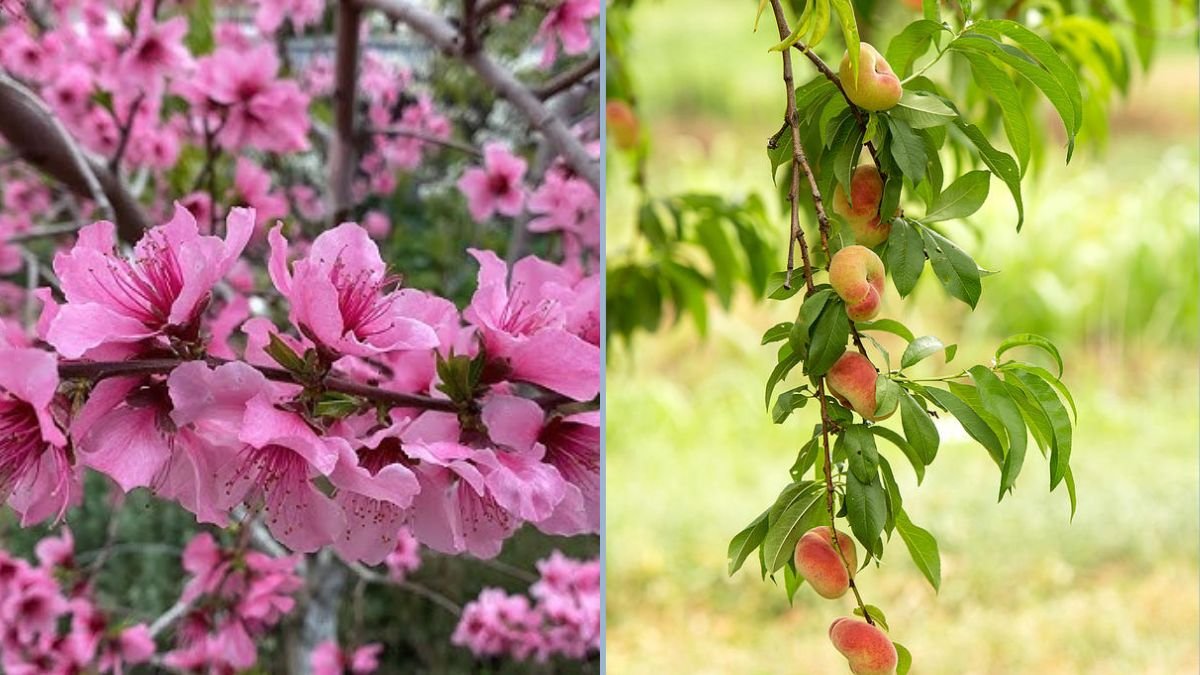
Spring is one of the most magical times of year for gardeners, and nothing exemplifies the beauty of the season like the delicate blooms of a peach tree. Among the many varieties, the Donut Peach stands out—not just for its fruit but for its stunning flowers. Often called Saturn peaches due to their flattened shape, these peaches begin their journey in spring as breathtaking pink blossoms that signal the promise of delicious fruit to come. In this post, we’ll explore the beauty of Donut Peach flowers, their growth and care, and tips for turning your backyard garden into a springtime paradise.
1. Introduction to Donut Peaches
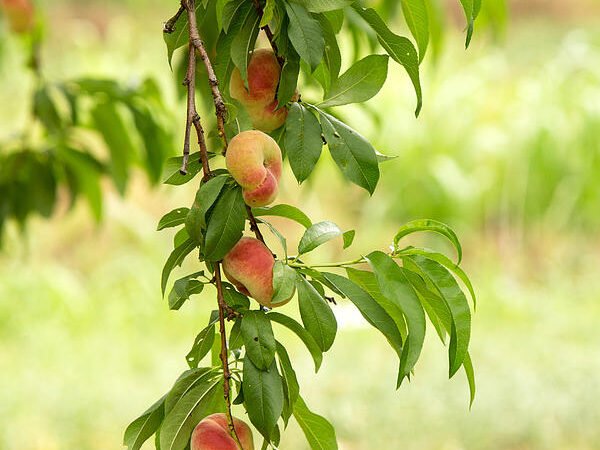
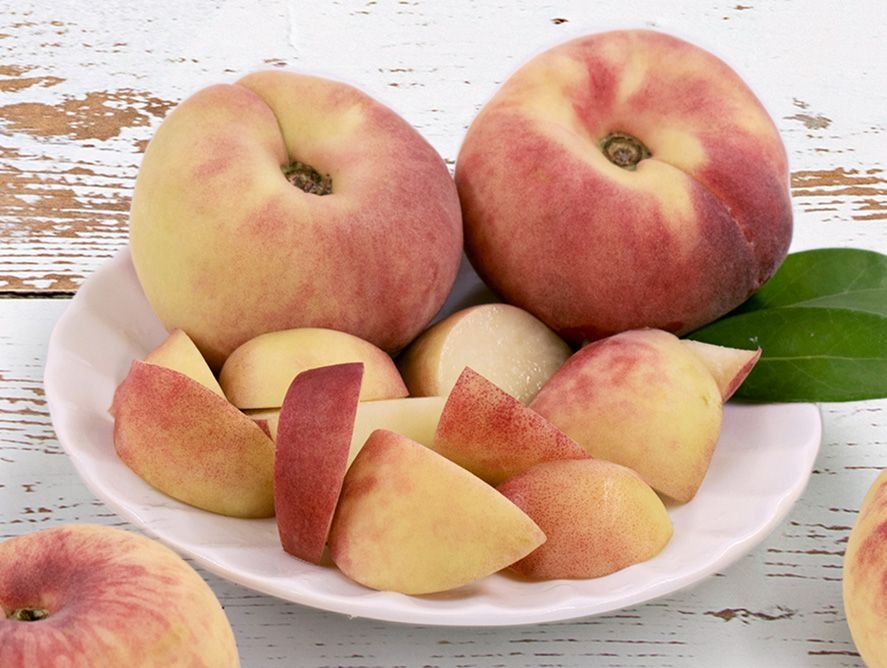
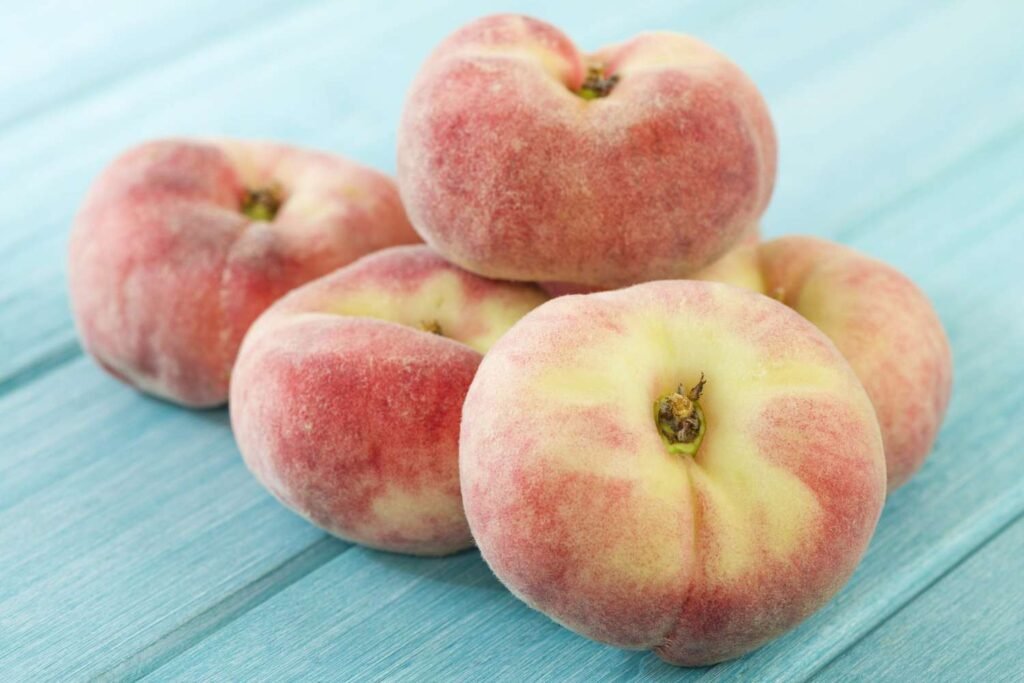
The Donut Peach (Prunus persica var. platycarpa), also known as Saturn peach, is a unique variety celebrated for its flat, sweet fruit and ornamental flowers. Originating from China and later popularized in the United States, the Donut Peach has quickly become a favorite among gardeners who value both aesthetics and flavor.
Key Features of Donut Peaches:
- Fruit: Flattened, doughnut-shaped peaches with a sweet, low-acid flavor.
- Flowers: Vibrant pink blossoms that emerge in early spring.
- Tree Habit: Small to medium-sized, making them ideal for home gardens.
- Pollination: Most varieties are self-pollinating but benefit from cross-pollination for higher yields.
While many gardeners plant peach trees primarily for fruit, the Donut Peach adds another dimension with its visually stunning blooms, transforming any garden into a spring spectacle.
2. Why Donut Peach Flowers Are So Special
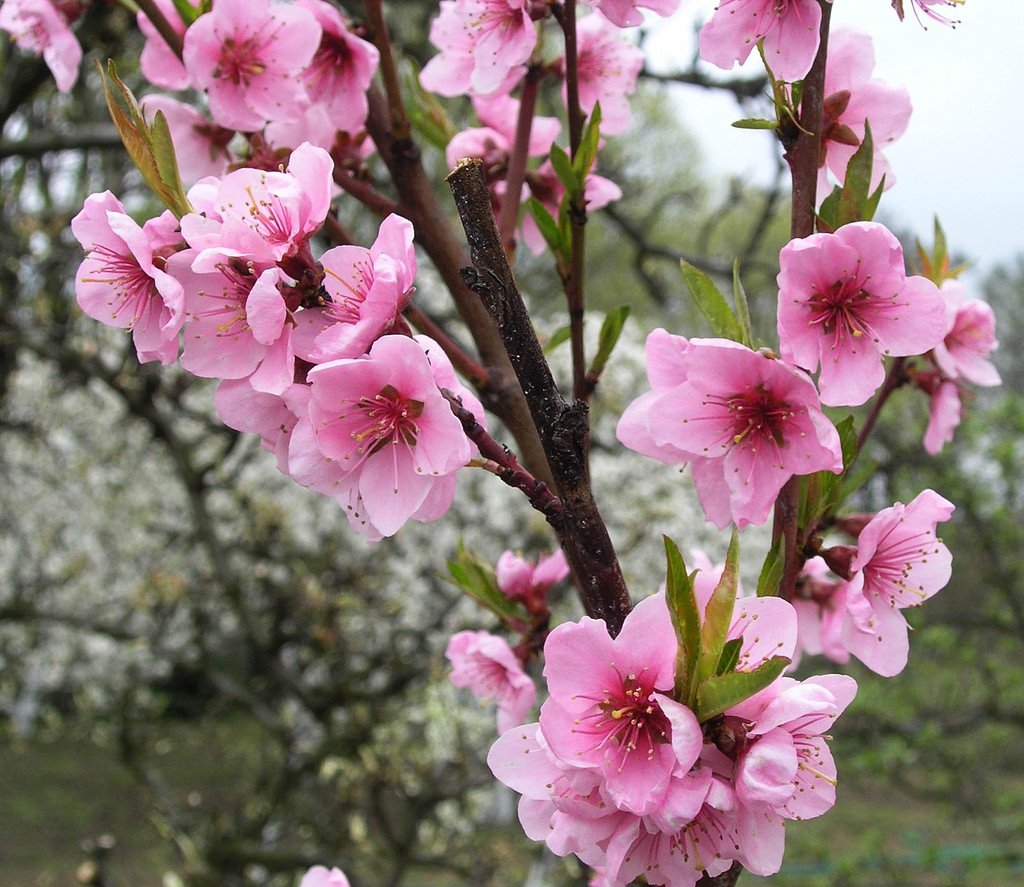
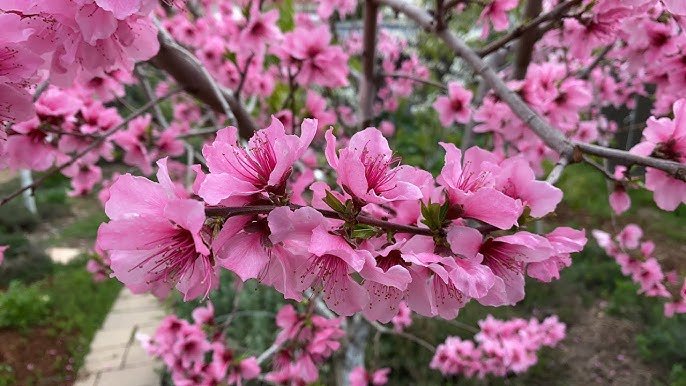
Peach flowers are already a sign of spring’s beauty, but Donut Peach flowers take it to another level. Their soft pink petals, symmetrical shape, and profusion along each branch make them one of the most attractive fruit blossoms in the garden.
Features That Stand Out:
- Color: Soft pink with subtle gradients that deepen near the center.
- Shape: Classic five-petaled blossoms with a delicate, cup-like form.
- Abundance: Trees produce flowers densely along branches, creating a visual feast in early spring.
- Fragrance: Light, sweet aroma adds sensory enjoyment alongside visual beauty.
These flowers not only delight gardeners visually but also play an essential role in attracting pollinators, such as bees and butterflies, which are crucial for fruit development.
3. When and Where Donut Peach Trees Bloom
Timing and placement are critical for ensuring the most beautiful peach flowers in your garden.
Bloom Timing:
- Donut Peach trees typically bloom in early to mid-spring, often before leaves fully emerge.
- Blooming lasts 1–2 weeks, depending on climate and weather conditions.
- Late frosts can damage blooms, so some gardeners take protective measures like frost cloths or wind barriers.
Optimal Placement:
- Plant in full sun for at least 6–8 hours a day.
- Ensure well-draining soil to prevent root rot and support healthy growth.
- Space trees appropriately to allow airflow and sunlight penetration, reducing fungal disease risk and encouraging robust blooms.
4. Caring for Donut Peach Trees for Stunning Blooms
To enjoy the most beautiful Donut Peach flowers year after year, proper tree care is essential.
Watering:
- Young trees require consistent watering to establish roots.
- Mature trees need deep, infrequent watering, especially during dry spring months, to support blossom development.
Fertilization:
- Apply a balanced fruit tree fertilizer in early spring before blooms appear.
- Avoid excessive nitrogen, which can promote leaf growth at the expense of flowers and fruit.
Pruning:
- Prune during late winter or early spring before bud break.
- Remove dead, diseased, or crowded branches to improve light penetration and airflow.
- Maintain an open center or vase shape to showcase flowers along the branches.
Pest and Disease Management:
- Watch for common peach pests like aphids, peach tree borers, and scale insects.
- Fungal diseases such as peach leaf curl can damage leaves and affect flower development.
- Applying organic or recommended preventative treatments ensures healthier blooms and better fruit yield.
5. Pollination and Flower Success
While Donut Peach trees are often self-fertile, pollination plays a significant role in fruit set and blossom quality.
Pollinators:
- Bees are the primary pollinators for peach flowers.
- Attract pollinators by planting companion flowers, avoiding insecticides during bloom, and providing water sources.
Cross-Pollination:
- Planting another peach variety nearby can enhance fruit set and support vigorous flowering.
- Even a small orchard with two compatible varieties can significantly improve harvest size and flower health.
Healthy, pollinated flowers are more likely to develop into sweet, perfectly shaped Donut Peaches.
6. Harvesting and Enjoying Donut Peach Fruit
The beauty of Donut Peach trees is not limited to their flowers; the reward comes in the form of delicious fruit.
Harvest Timing:
- Fruit ripens in mid to late summer, about 3–4 months after full bloom.
- Look for a golden-yellow base color with a pink or red blush.
- Slightly soft to the touch indicates peak sweetness.
Culinary Uses:
- Fresh eating: Sweet, juicy, and low-acid flavor makes them perfect for snacking.
- Baking: Ideal for pies, tarts, and cobblers.
- Preserving: Can be made into jams, preserves, or canned for year-round enjoyment.
- Salads and Smoothies: Add fresh slices to salads or blend into smoothies for a fruity boost.
The combination of stunning flowers and flavorful fruit makes Donut Peach trees a versatile and rewarding addition to any backyard.
7. Using Donut Peach Flowers in Your Garden
Beyond their fruit, Donut Peach flowers can be appreciated in various ways:
Ornamental Display:
- Plant Donut Peach trees as a centerpiece in your garden or along walkways.
- Combine with other flowering trees like cherry blossoms for a spectacular spring display.
Cut Flowers:
- Carefully cut a few branches in bloom for indoor arrangements.
- Place in water immediately; peach blossoms make a delicate, fragrant addition to home décor.
Photography and Gardening Joy:
- Many gardeners enjoy capturing the ephemeral beauty of peach flowers in photos.
- Observing and documenting blossom progress enhances gardening satisfaction and connects you with seasonal changes.
8. Challenges for Beautiful Peach Blossoms
While Donut Peach trees are generally hardy, gardeners should be aware of potential challenges:
Frost Damage:
- Late spring frosts can kill blossoms, reducing fruit set.
- Use frost cloths or cover young trees during cold snaps.
Pests:
- Aphids and scale insects can damage buds and reduce flower density.
- Birds may occasionally damage blossoms or young fruit.
Diseases:
- Peach leaf curl, brown rot, and powdery mildew can affect flower health.
- Timely pruning and organic fungicide application help maintain vibrant blooms.
By anticipating these challenges and taking preventive measures, gardeners can enjoy consistently stunning flowers year after year.
9. Advantages of Planting Donut Peach Trees
- Ornamental Beauty: Their pink blossoms create an eye-catching spring display.
- Delicious Fruit: Sweet, low-acid peaches provide a unique flavor.
- Compact Size: Perfect for small backyard gardens.
- Extended Enjoyment: Blossoms in spring, fruit in summer—double the reward.
- Pollinator-Friendly: Flowers attract bees and beneficial insects to your garden.
Donut Peach trees combine aesthetics, productivity, and pollinator support, making them a garden favorite.
10. Tips for Maximizing Flower and Fruit Success
- Plant in full sun with well-drained soil.
- Prune annually to maintain an open center and encourage flower development.
- Water consistently, especially in dry spring months.
- Apply balanced fertilizer in early spring, avoiding excess nitrogen.
- Protect blossoms from frost with cloths or covers if needed.
- Encourage pollinators by planting companion flowers and avoiding insecticides during bloom.
- Monitor for pests and diseases to maintain tree health and flower vibrancy.
Following these steps ensures your Donut Peach trees remain healthy, bloom profusely, and produce sweet, flavorful fruit.
11. Conclusion
The Donut Peach is more than just a fruit tree—it’s a springtime showstopper. Its soft pink blossoms transform any garden into a seasonal wonderland, attracting pollinators and delighting gardeners with their beauty. By planting and caring for Donut Peach trees properly, you can enjoy a double reward: stunning flowers in spring and sweet, flattened peaches in summer.
Whether you’re a seasoned gardener or a beginner looking to add ornamental fruit trees to your backyard, Donut Peach trees offer unmatched charm. From their delicate pink flowers to their succulent fruit, these trees embody the perfect blend of beauty and bounty. Springtime has never looked or tasted so sweet!