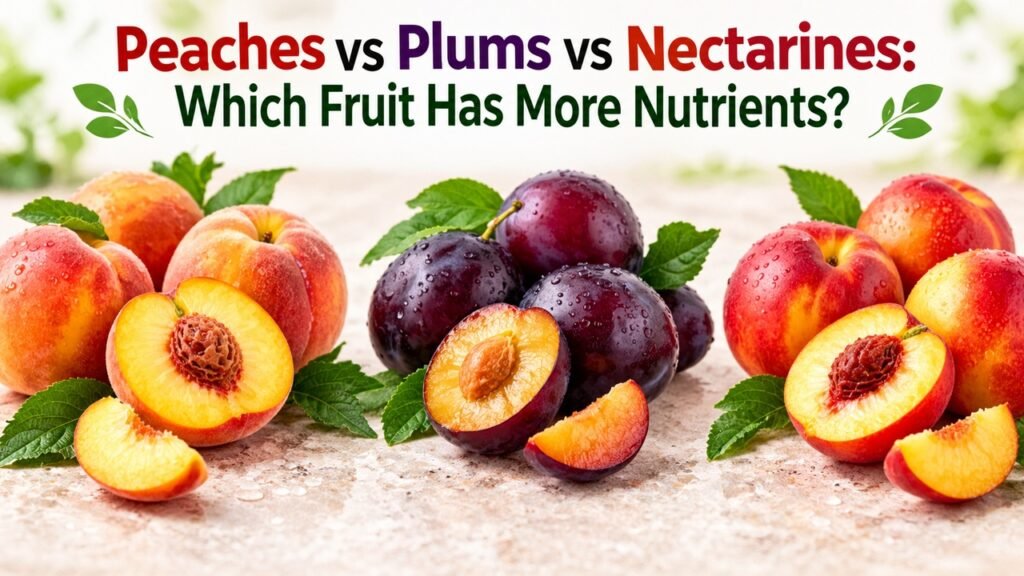
Peaches, plums, and nectarines are delicious summer fruits packed with vitamins, minerals, fiber, and beneficial plant compounds. Their sweet flavors and juicy textures make them popular choices for snacks, fruit salads, smoothies, and desserts. Although these fruits share several nutritional similarities, each offers a slightly different combination of nutrients.
But when comparing peaches vs plums vs nectarines, which fruit has more nutrients? The answer depends on what you want from your diet. Peaches provide beta-carotene, plums contain colorful antioxidant compounds, and nectarines offer vitamin C and other essential nutrients. Let’s compare their nutritional values and discover which fruit may be best for your health goals.
1. Peaches: A Great Source of Vitamin A Precursors
Peaches are known for their soft, fuzzy skin, juicy flesh, and refreshing sweetness. They are relatively low in calories and contain water, dietary fiber, vitamin C, and potassium.
One medium peach provides approximately 58 calories, around 2 grams of fiber, and about 10 milligrams of vitamin C. Peaches also contain beta-carotene, which the body can convert into vitamin A. Vitamin A supports normal vision, immune function, and healthy skin.
Their water content makes peaches a refreshing addition to warm-weather meals. The fiber they provide can contribute to digestive health, while their naturally sweet flavor makes them a useful alternative to desserts with large amounts of added sugar.
Peaches also contain polyphenols and other plant compounds with antioxidant properties. These compounds are being studied for their potential roles in protecting cells from oxidative stress.
Enjoy peaches fresh, sliced over oatmeal, mixed into yogurt, or blended into smoothies. Eating the skin, after washing it thoroughly, provides additional fiber.
Best for: Beta-carotene, hydration, a naturally sweet snack, and adding variety to a balanced diet.
2. Plums: Rich in Colorful Antioxidants
Plums stand out for their smooth skin, juicy flesh, and varieties ranging from deep purple to red and yellow. Dark-skinned plums are particularly notable for their anthocyanins, plant pigments that give certain fruits their red, blue, and purple colors.
One medium raw plum contains approximately 30 calories, about 1 gram of fiber, and around 7 milligrams of vitamin C. Although plums are small, they contribute useful nutrients without adding many calories.
Plums also contain polyphenols and other antioxidant compounds that researchers are studying for their potential benefits to cardiovascular and metabolic health. Their fiber and water content contribute to digestive health, although the effects vary with serving size and individual tolerance.
Fresh plums are convenient to carry as snacks and work well in fruit salads, breakfast bowls, and homemade sauces. Prunes, which are dried plums, are especially well known for their role in supporting bowel regularity, but their nutritional profile differs from that of fresh plums because drying concentrates their nutrients and natural sugars.
Best for: Low-calorie snacking, colorful plant compounds, and adding variety to your fruit intake.
3. Nectarines: A Smooth-Skinned Nutritional Choice
Nectarines resemble peaches but have smooth skin instead of the characteristic fuzz. They are closely related to peaches and offer a similar combination of vitamins, minerals, fiber, and antioxidants.
One medium nectarine provides approximately 60 calories, around 2 grams of fiber, and about 5 milligrams of vitamin C. Nectarines also supply potassium, which supports normal muscle function, nerve signaling, and fluid balance.
Their yellow or orange flesh can contain carotenoids, including beta-carotene. The amount varies according to the variety and ripeness. Nectarines also provide polyphenols that contribute to their nutritional value.
Like peaches, nectarines contain plenty of water and can be a refreshing snack. Their smooth skin makes them easy to eat without peeling, and leaving the skin on helps retain their fiber.
Try adding sliced nectarines to yogurt, salads, overnight oats, or whole-grain breakfast dishes. They can also be grilled for a naturally sweet dessert.
Best for: Vitamin C, potassium, carotenoids, and a convenient, juicy snack.
4. Peaches vs Plums vs Nectarines: Nutrition Comparison
The table below compares approximate nutrition values for one medium raw fruit.
| Nutrient | Peach | Plum | Nectarine |
|---|---|---|---|
| Calories | 58 | 30 | 60 |
| Fiber | 2 g | 1 g | 2 g |
| Vitamin C | 10 mg | 7 mg | 5 mg |
| Potassium | 285 mg | 104 mg | 285 mg |
| Natural sugars | 12.6 g | 6.5 g | 11.2 g |
Values are approximate and can vary depending on fruit size, variety, and ripeness. These are representative estimates, not a laboratory-controlled comparison.
Peaches and nectarines generally provide more potassium and fiber per medium fruit than plums, while plums tend to be lower in calories and natural sugars per fruit. Peaches and nectarines can also provide carotenoids, whereas darker plums are notable for anthocyanins.
Serving size matters: a larger fruit will usually provide more calories and nutrients than a smaller one.
5. Which Fruit Is Healthiest Overall?
There is no single winner for every nutritional category.
- Choose peaches if you want a juicy fruit that provides beta-carotene, vitamin C, and potassium.
- Choose plums if you prefer a lower-calorie snack and want to include colorful antioxidant compounds in your diet.
- Choose nectarines if you enjoy smooth-skinned fruit with fiber, potassium, and carotenoids.
All three fruits can fit into a healthy eating pattern. Fresh and frozen options can both be nutritious, while canned varieties are best chosen with little or no added sugar.
For the greatest variety, rotate these fruits throughout the week rather than relying on just one. Pairing them with yogurt, nuts, or oats can make a more satisfying snack or breakfast.
Final Verdict
So, which fruit has more nutrients: peaches, plums, or nectarines? Peaches offer beta-carotene and potassium, plums are a lower-calorie option rich in colorful plant compounds, and nectarines provide a similar nutritional profile to peaches with smooth, edible skin.
The healthiest choice is the fruit that you enjoy eating regularly as part of a balanced diet. Including all three gives you a broader range of nutrients, flavors, and beneficial plant compounds while making healthy eating more enjoyable.