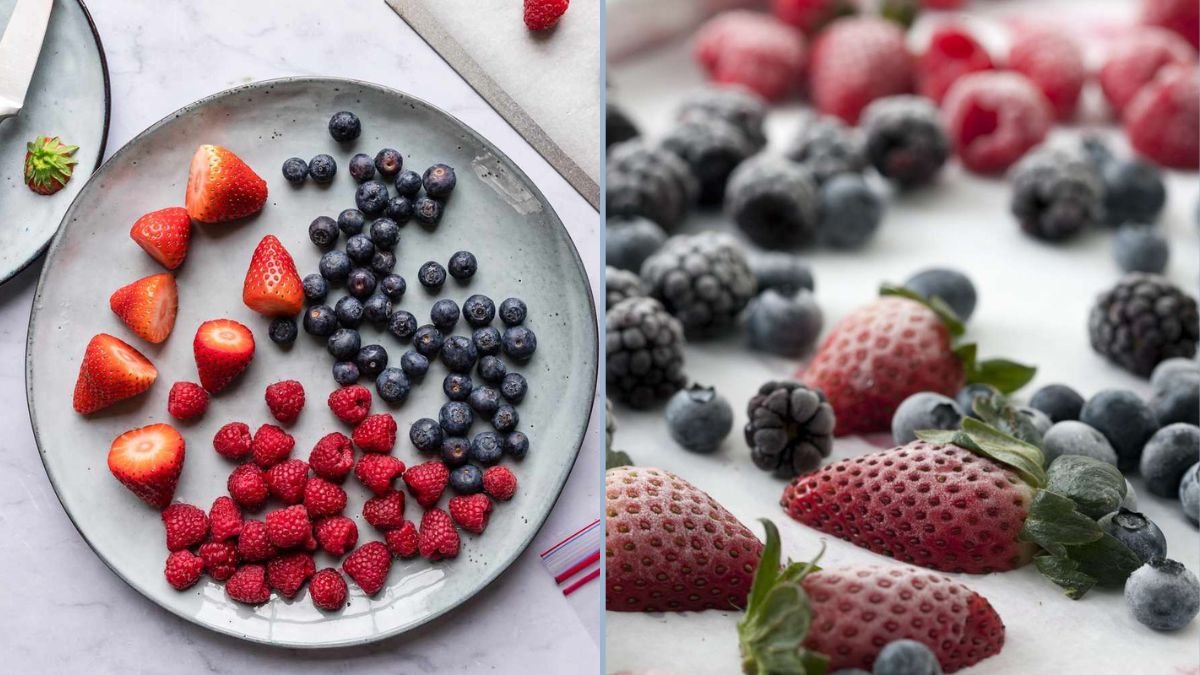
Berries—including strawberries, blueberries, raspberries, blackberries, and cranberries—are cherished for their vibrant colors, sweet-tart flavors, and impressive nutritional content. Rich in vitamins, minerals, fiber, and antioxidants such as anthocyanins and flavonoids, berries support heart health, cognitive function, and immune defense. However, their delicate structure and high water content make them highly perishable. Freezing is one of the most effective ways to extend their shelf life while preserving flavor, color, and nutrients.
This article explores techniques for freezing berries without losing color, focusing on proper selection, preparation, freezing methods, storage tips, and sustainable practices, all tailored for vegetarian-friendly use.
1. Selecting Berries for Freezing
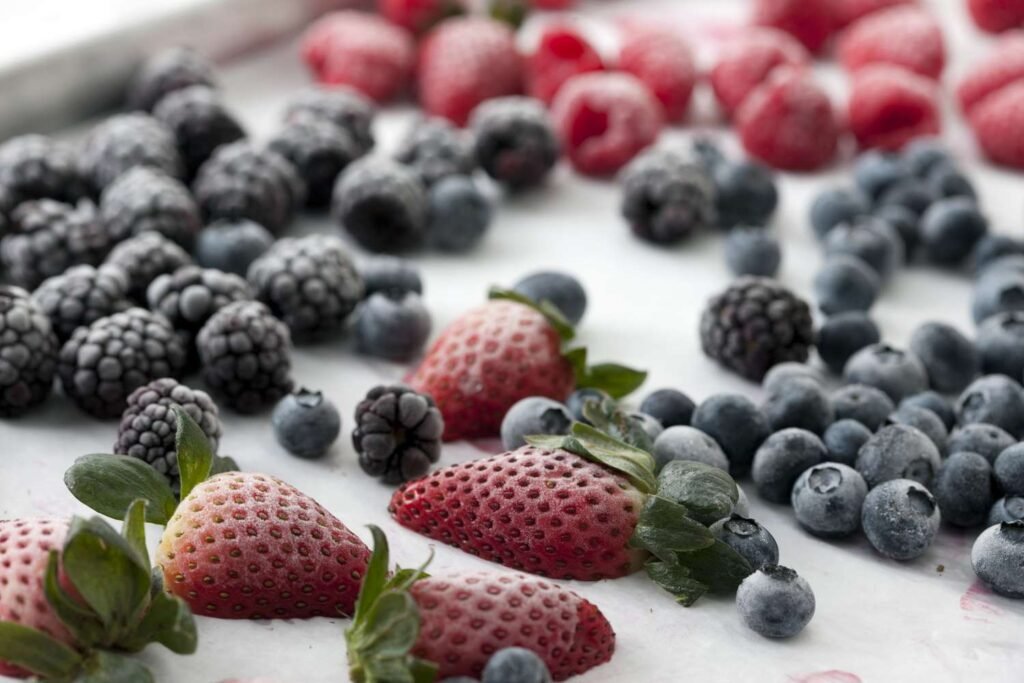
The foundation of successful freezing begins with selecting high-quality berries.
Tips for Selection
- Ripeness: Choose fully ripe berries for maximum flavor and nutrient content. Avoid overripe berries that are mushy or under-ripe ones that are sour.
- Color: Select berries with deep, vibrant color, as this indicates high antioxidant content.
- Condition: Avoid berries with mold, bruises, or cracks, which can spread during freezing.
- Size and Uniformity: Uniformly sized berries freeze more evenly. For example, small strawberries or similarly sized blueberries freeze faster and retain texture.
Selecting premium berries ensures a visually appealing, flavorful frozen product.
2. Handling Berries Properly
Berries are delicate and prone to damage, so careful handling is critical.
Handling Tips
- Gentle Washing: Rinse berries under cold water just before freezing. Avoid soaking, as water can damage the delicate structure.
- Drain and Dry: Pat dry with paper towels or let air dry. Excess moisture can create ice crystals that damage color and texture.
- Avoid Crushing: Handle berries gently to prevent bruising and juice leakage.
Proper handling preserves the natural color and firmness of berries for freezing.
3. Preparing Berries for Freezing
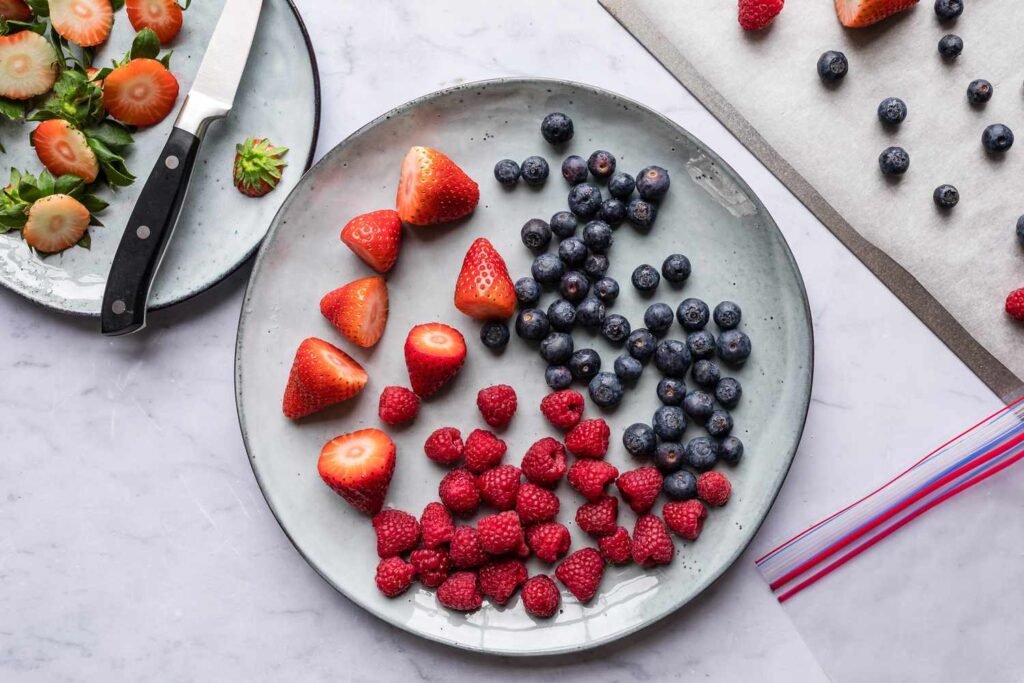
Preparation enhances color retention and prevents clumping during storage.
Step 1: Sorting
- Remove damaged or moldy berries.
- Separate berries by type and size for consistent freezing results.
Step 2: Optional Pre-Treatment
- Blanching (Rarely Used): Some berries, like cranberries, may benefit from a brief blanch to preserve color. Most soft berries do not require blanching.
- Sugar Coating (Optional): Lightly sprinkle sugar over berries to maintain shape, enhance sweetness, and preserve color.
Step 3: Flash Freezing
- Spread berries in a single layer on a baking sheet or tray.
- Freeze for 1–2 hours until firm.
- This prevents berries from sticking together during storage.
4. Freezing Methods for Optimal Color Retention
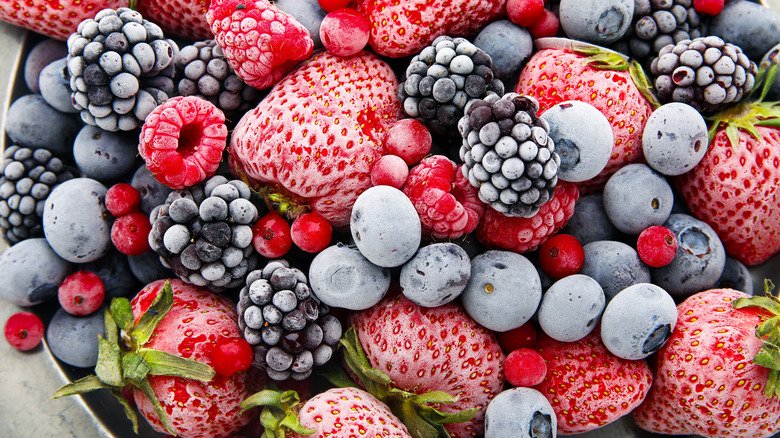
Proper freezing techniques are key to preserving vibrant colors.
A. Tray Freezing
- Arrange berries in a single layer on a tray.
- Freeze until solid.
- Transfer to airtight freezer bags or containers, removing excess air.
Advantages: Prevents clumping and preserves individual berry color.
B. Sugar or Syrup Packing
- Toss berries lightly with sugar or immerse in a light syrup before freezing.
- Reduces surface ice formation and enhances color stability.
- Ideal for dessert use, smoothies, or sauces.
C. Vacuum Sealing
- Place frozen berries in vacuum-sealed bags.
- Reduces oxidation and freezer burn.
- Maintains vibrant color and flavor for 8–12 months.
D. Freezing in Portions
- Freeze berries in small portions suitable for smoothies, baking, or cooking.
- Makes it easy to use only the needed amount while preserving the rest.
5. Packaging and Storage Tips
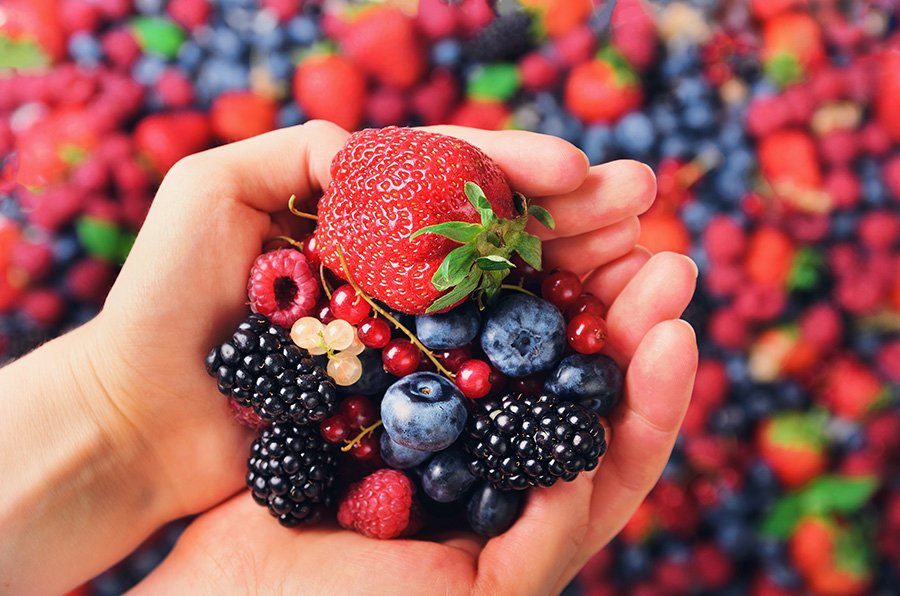
Proper packaging preserves color, flavor, and texture during storage.
Guidelines
- Use thick, airtight freezer bags or containers to prevent moisture loss and ice formation.
- Remove as much air as possible to reduce oxidation.
- Label containers with the type of berry and freezing date.
- Store in the coldest part of the freezer, avoiding frequent door opening.
Shelf Life: Most berries maintain quality for 8–12 months when frozen properly.
6. Thawing Berries Without Color Loss
Thawing methods impact color and texture significantly.
Tips
- Cook Directly From Frozen: For smoothies, sauces, or baked goods, use berries directly from the freezer.
- Slow Refrigerator Thaw: For fresh-like texture, thaw in a refrigerator overnight in a perforated container to allow drainage.
- Avoid Microwave Thawing: Rapid heating can release water, cause mushiness, and fade color.
- Gentle Handling: Minimize stirring or crushing during thawing to prevent juice leakage and discoloration.
7. Avoiding Common Freezing Mistakes
Mistakes can compromise color, texture, and flavor.
| Mistake | Effect | Solution |
|---|---|---|
| Freezing wet berries | Ice crystals form, damage structure | Dry thoroughly before freezing |
| Overcrowding tray | Berries stick together | Flash freeze in a single layer |
| Using thin plastic bags | Freezer burn, color loss | Use thick, airtight freezer bags or containers |
| Freezing overripe berries | Mushy texture, color degradation | Choose firm, ripe berries |
| Thawing at room temperature | Juice leakage, fading color | Thaw slowly in fridge or cook directly from frozen |
8. Nutrient Preservation in Frozen Berries
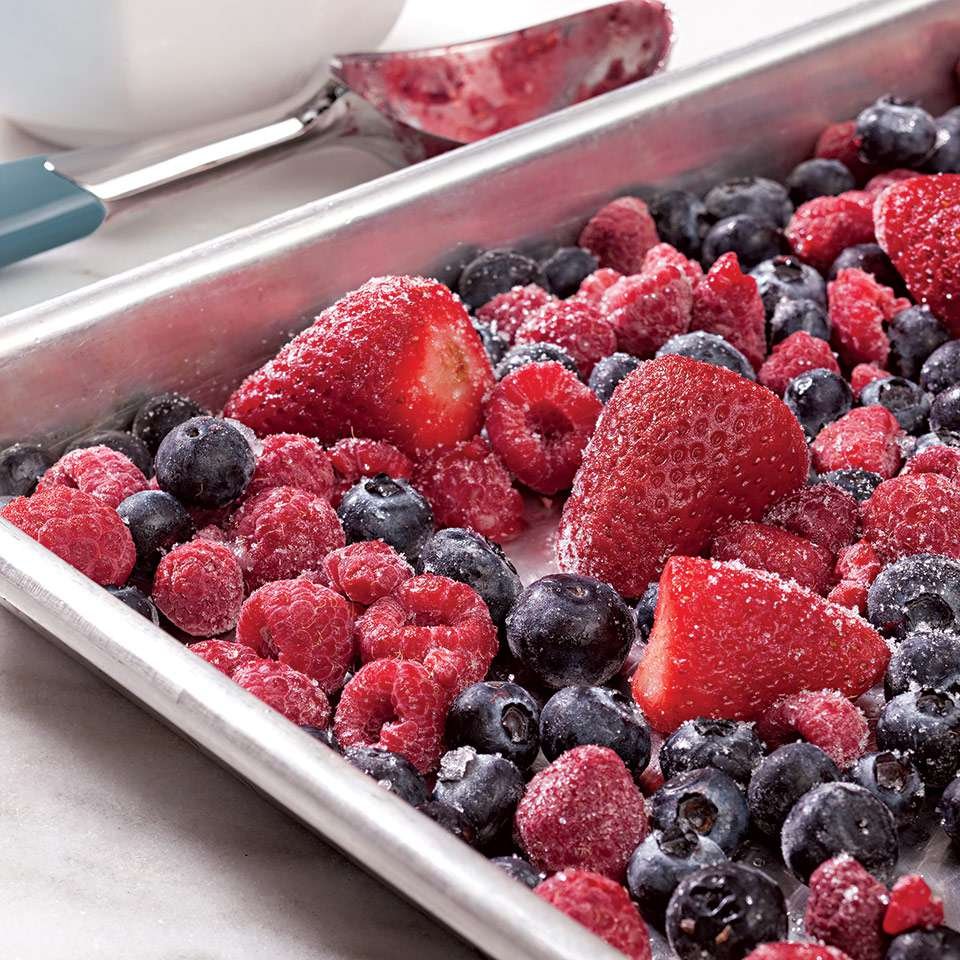
Berries are rich in vitamins, antioxidants, and flavonoids, which are sensitive to light, heat, and oxygen.
Tips for Nutrient Retention
- Freeze berries promptly after harvest or purchase.
- Minimize exposure to light and air during storage.
- Avoid repeated thawing and refreezing.
- Consider sugar or syrup coating for additional antioxidant stabilization if appropriate for recipes.
Proper storage preserves both the health benefits and vibrant appearance of berries.
9. Sustainable and Eco-Friendly Freezing Practices
Freezing berries can be done sustainably without creating excessive waste.
Suggestions
- Use reusable silicone or glass containers instead of disposable plastics.
- Compost any spoiled berries rather than discarding.
- Freeze only what you can realistically consume to avoid waste.
- Utilize freezer organization to minimize repeated door opening and energy loss.
Sustainable freezing practices maintain color, flavor, and environmental responsibility.
10. Culinary Uses of Frozen Berries
Frozen berries are versatile and can enhance vegetarian meals year-round.
Ideas
- Smoothies: Blend directly for nutritious drinks.
- Baking: Use in muffins, cakes, and pies without thawing.
- Sauces and Compotes: Create natural sweeteners for pancakes, waffles, or yogurt.
- Salad Toppings: Slightly thawed berries add color and tang to salads.
- Preserves and Jams: Use frozen berries for spreads with minimal sugar.
Maintaining color during freezing enhances the visual appeal and taste of dishes.
Conclusion
Freezing berries without losing color requires attention to selection, handling, preparation, freezing techniques, packaging, and storage conditions. Choose firm, vibrant berries, handle gently, and remove excess moisture before freezing. Flash freezing in a single layer, vacuum sealing, and careful thawing preserve both color and nutritional quality. By avoiding common mistakes and implementing sustainable practices, frozen berries remain a vibrant, nutritious, and versatile ingredient for vegetarian cooking throughout the year.
Following these methods ensures that berries retain their natural beauty, flavor, and health benefits, making them a reliable and convenient option for smoothies, baking, sauces, and more.