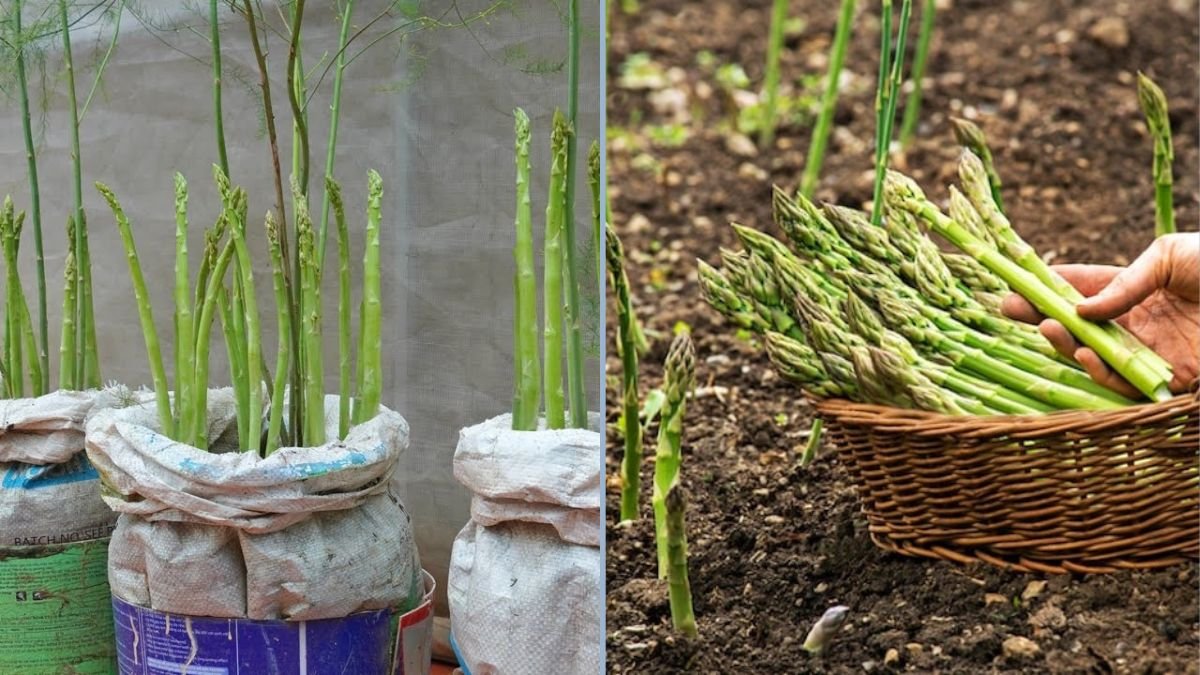
Asparagus is one of the most delicious and nutritious vegetables you can grow at home. Its tender, flavorful spears are packed with vitamins, minerals, and antioxidants, making it a favorite for healthy meals. However, many people shy away from growing asparagus because they believe it’s a difficult, long-term crop that takes years to yield.
The truth is, with a few smart techniques, you can grow asparagus once and harvest it all year round, even if you’re a beginner or have limited gardening space. In this guide, we’ll show you how to plant, care for, and maintain asparagus so that a single planting can supply fresh spears for months.
Why Grow Asparagus at Home
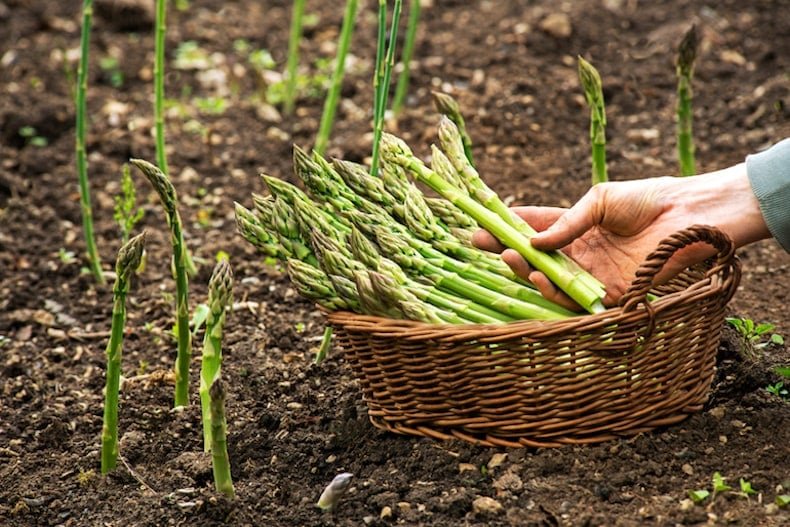
Growing asparagus at home comes with several benefits:
- Freshness and Flavor: Store-bought asparagus often loses its tenderness and flavor quickly. Homegrown asparagus is fresher and more flavorful.
- Nutritional Value: Asparagus is rich in vitamins A, C, E, K, folate, fiber, and antioxidants that support overall health.
- Cost Savings: Once established, asparagus plants produce for years, reducing the need to buy it from stores.
- Sustainable Gardening: Growing your own asparagus reduces packaging waste and transportation carbon footprint.
- Convenience: Harvest fresh spears as needed, straight from your garden.
Once planted, asparagus requires minimal effort to maintain, making it a perfect long-term investment in your garden.
Understanding Asparagus Growth
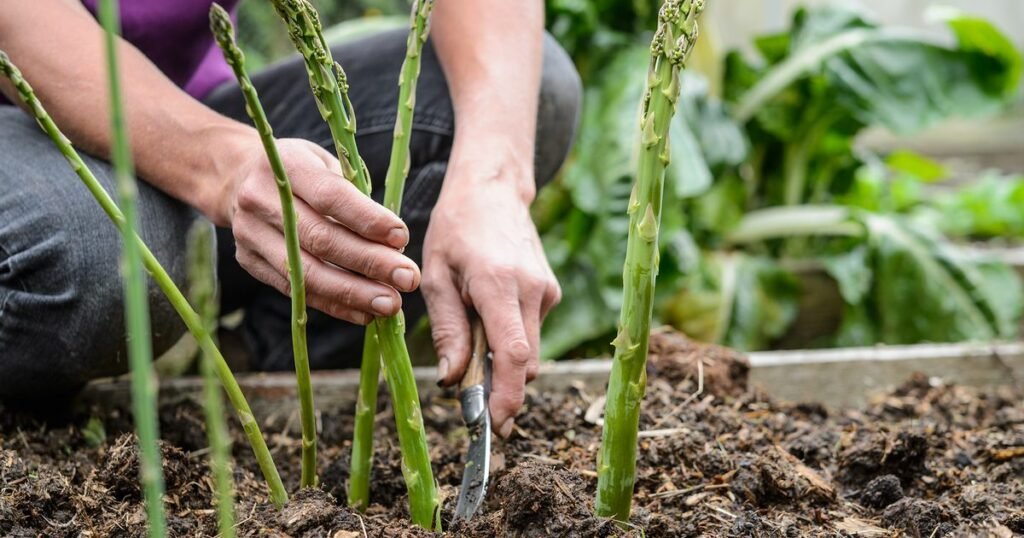
Before planting, it’s helpful to understand the growth habits of asparagus:
- Perennial Plant: Asparagus is a long-lived perennial, producing spears for 15–20 years from a single planting.
- Root System: It grows from crowns (1-year-old roots) that establish deep, strong roots over time.
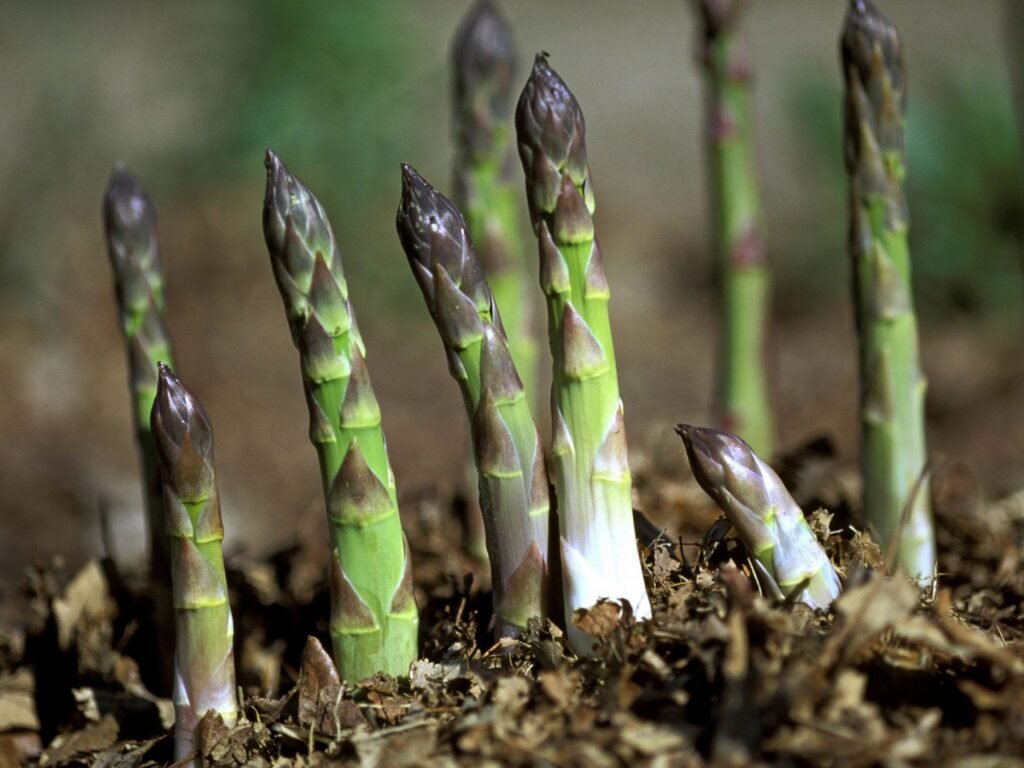
- Growth Cycle: In spring, spears emerge from the soil, grow rapidly, and are harvested when 6–10 inches tall.
- Maintenance: After harvest, spears develop fern-like foliage that nourishes the roots for the next season.
Knowing this cycle is key to harvesting asparagus all year round.
Step 1: Choosing the Right Variety
Selecting the right asparagus variety sets the stage for success:
- Jersey Knight: Produces high yields and disease-resistant spears.
- Mary Washington: Reliable, hardy, and widely available.
- Purple Passion: Produces sweeter, purple-tinted spears with a unique flavor.
Choose a variety suited to your climate and space. Crowns or 1-year-old seedlings are ideal for faster establishment.
Step 2: Preparing the Planting Area
Even a small garden bed or container can support asparagus growth if prepared correctly:
- Sunlight: Choose a location that receives 6–8 hours of full sun daily.
- Soil: Asparagus prefers well-draining, fertile soil with a pH of 6.5–7.5.
- Spacing: Prepare raised rows or beds, spacing crowns 12–18 inches apart. Rows should be 3–4 feet apart for easy access and airflow.
- Soil Enrichment: Add compost, aged manure, or organic fertilizer to boost fertility and promote healthy root development.
Proper site preparation ensures strong crowns and continuous spear production.
Step 3: Planting Asparagus Crowns
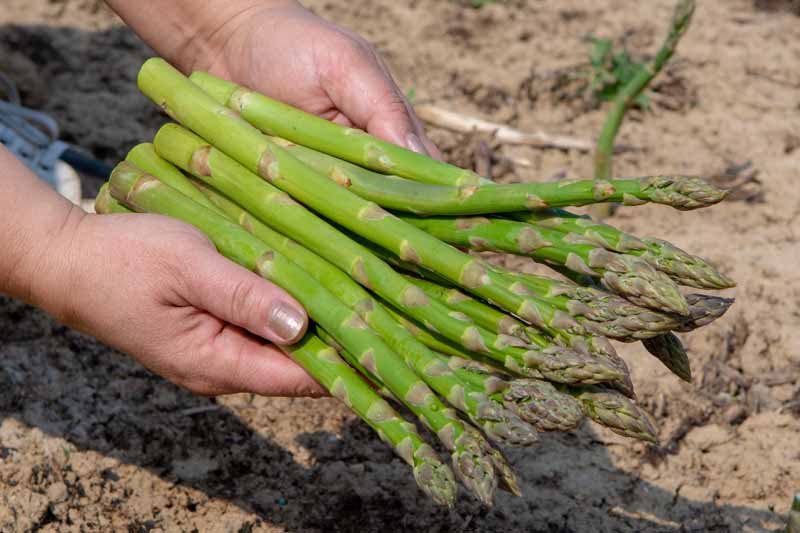
- Dig Trenches: Dig trenches 8–10 inches deep and 12 inches wide.
- Place Crowns: Spread out asparagus crowns in the trench with roots facing downward.
- Cover with Soil: Cover crowns with 2 inches of soil initially, gradually filling in the trench as shoots grow.
- Watering: Water thoroughly after planting to settle soil around the roots.
Starting crowns correctly is essential for long-term productivity and ensures the plants establish a deep, healthy root system.
Step 4: Watering and Fertilizing
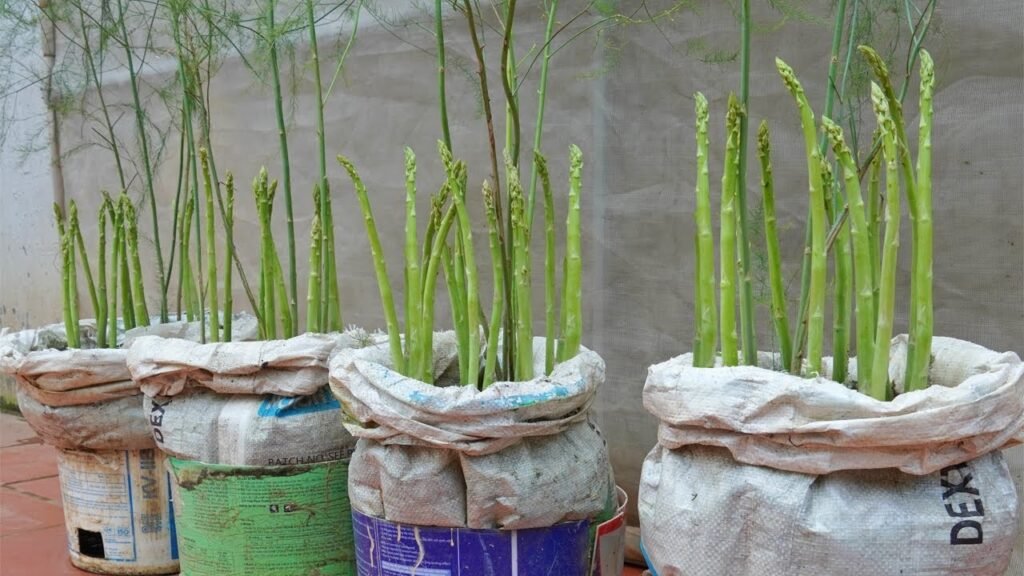
Once planted, asparagus requires consistent care:
- Watering: Keep the soil moist, especially during the first two years while roots establish. Avoid waterlogging, which can rot crowns.
- Fertilizing: Apply nitrogen-rich fertilizer in early spring to promote strong spear growth. Additional compost or organic fertilizer after harvest nourishes the roots for the next season.
- Mulching: Apply straw or shredded leaves around plants to conserve moisture, suppress weeds, and regulate soil temperature.
Proper watering and fertilization accelerate growth and lead to a continuous harvest.
Step 5: Extending the Harvest for Year-Round Production
The “simple tip” for harvesting asparagus year-round involves succession planting and staggered care:
- Plant in Phases: Plant asparagus crowns in small batches at 2–3 week intervals. This ensures some spears mature earlier while others are still developing.
- Lightly Harvest: During early growth, harvest only a portion of spears to allow the remaining plants to build energy in their ferns.
- Use Containers or Vertical Beds: If space is limited, planting asparagus in raised beds or large containers allows you to manipulate growth and harvest schedules.
- Protect from Cold: In colder climates, mulch heavily or use row covers to extend the growing season and produce spears beyond spring.
These techniques make it possible to enjoy fresh asparagus almost continuously from a single planting.
Step 6: Caring for Asparagus After Harvest
After harvesting spears, let the foliage grow into ferns:
- Foliage Growth: Ferns photosynthesize and feed the roots, strengthening crowns for future production.
- Pruning: Cut back dead or yellowing ferns in late fall to prevent disease.
- Pest Management: Watch for asparagus beetles or aphids and remove them promptly.
Maintaining healthy foliage ensures a sustainable, high-yield crop that can last decades.
Step 7: Maximizing Production
To get the most out of your asparagus planting:
- Rotate Beds: Avoid planting in the same spot every year if possible to reduce soil-borne disease.
- Fertilize Annually: Regular compost or organic fertilizer ensures healthy crowns.
- Mulch Consistently: Thick mulch preserves soil moisture and protects roots during extreme weather.
- Stagger Harvesting: Pick spears daily or every other day to encourage continuous growth.
- Avoid Overharvesting: Never harvest all spears at once; leave some to maintain root energy.
Following these tips allows even beginners to enjoy asparagus year-round with minimal effort.
Benefits of Growing Asparagus at Home
- Long-Term Harvest: A single planting can produce for 15–20 years.
- Nutritional Superfood: Rich in antioxidants, vitamins, and minerals.
- Cost Savings: Save money by growing instead of buying expensive store-bought spears.
- Sustainable Gardening: Reduces reliance on commercial produce and supports eco-friendly living.
- Convenience: Fresh spears are always available for cooking, salads, or juicing.
Asparagus is a high-reward crop that requires minimal care once established, making it ideal for home gardeners.
Culinary Uses for Homegrown Asparagus
Fresh asparagus can be enjoyed in countless ways:
- Steamed or Boiled: Serve as a side dish with olive oil, garlic, or lemon.
- Stir-Fried: Quickly sauté with vegetables, garlic, or shrimp for a nutritious meal.
- Roasted: Roast with herbs, spices, and a drizzle of olive oil for a flavorful dish.
- Soups and Salads: Add fresh spears to soups, pasta dishes, or salads.
- Pickled: Preserve surplus asparagus for later use in tangy pickles.
Having year-round asparagus makes cooking fresh, healthy meals effortless.
Final Thoughts
Asparagus is no longer a “difficult” vegetable to grow. With this simple method—planting crowns correctly, maintaining healthy soil, providing consistent water and fertilizer, and staggering harvests—you can enjoy fresh asparagus all year round. Even beginners or gardeners with limited space can achieve impressive results.
A single planting can supply your kitchen with tender, flavorful spears for years, making asparagus one of the most rewarding crops to cultivate at home.
Start today, follow these tips, and discover the joy of growing your own asparagus—fresh, nutritious, and ready to harvest all year long!