![[Home Gardening] New Method: Using Old Tires to Grow Peanuts at Home](https://maheshlunchhome.org/wp-content/uploads/2025/10/Big-Bucks-for-Change-One-Bicentennial-Quarter-Could-Fetch-5.7M—Plus-4-Coins-Worth-30M-2025-10-16T163657.918.jpg)
Peanuts are not only delicious but also highly nutritious, packed with protein, healthy fats, and essential vitamins and minerals. While many people buy peanuts from the store, growing them at home is a rewarding and cost-effective alternative. And what’s even better? You don’t need a traditional garden to do it. With a new method that repurposes old tires, you can cultivate peanuts in small spaces, even in your backyard, balcony, or patio.
In this guide, we’ll explore this innovative approach, step-by-step, so you can enjoy a homegrown peanut harvest while giving new life to discarded tires.
Why Grow Peanuts at Home
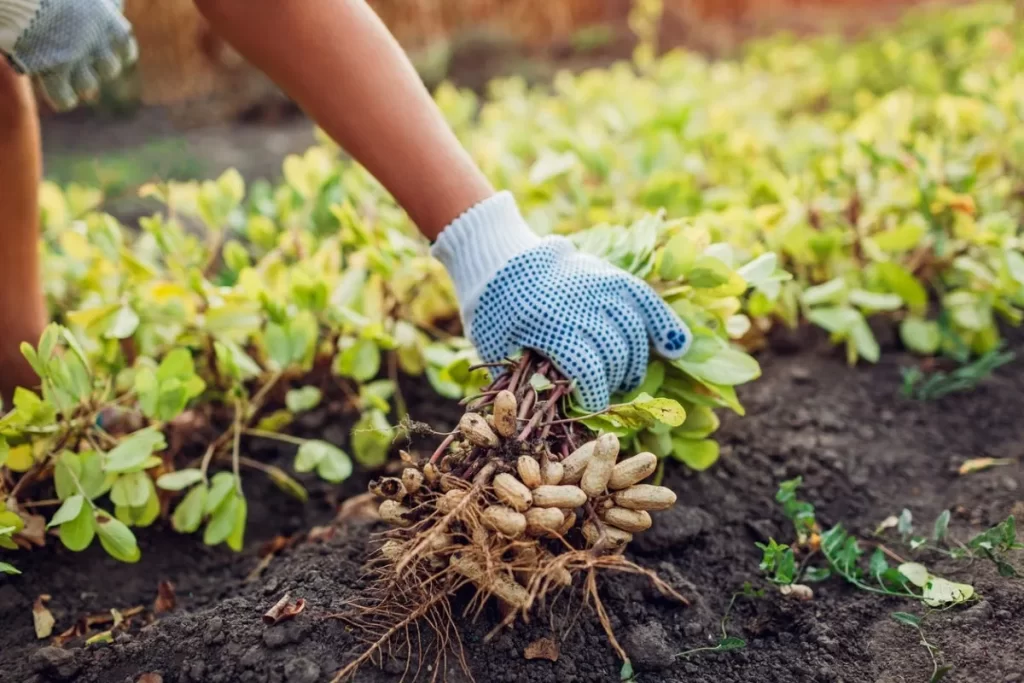
Growing peanuts at home offers several advantages:
- Freshness and Flavor: Homegrown peanuts taste richer and fresher than store-bought varieties.
- Nutritional Benefits: Peanuts are rich in protein, healthy fats, vitamin E, magnesium, and fiber.
- Cost Savings: Seeds are inexpensive, and a small batch can produce a significant yield.
- Sustainability: Repurposing old tires reduces waste while producing nutritious food.
- Educational and Fun: Growing peanuts at home is a fascinating experience for adults and children alike.
This approach allows anyone, even without a traditional garden, to cultivate peanuts efficiently.
Understanding Peanut Growth
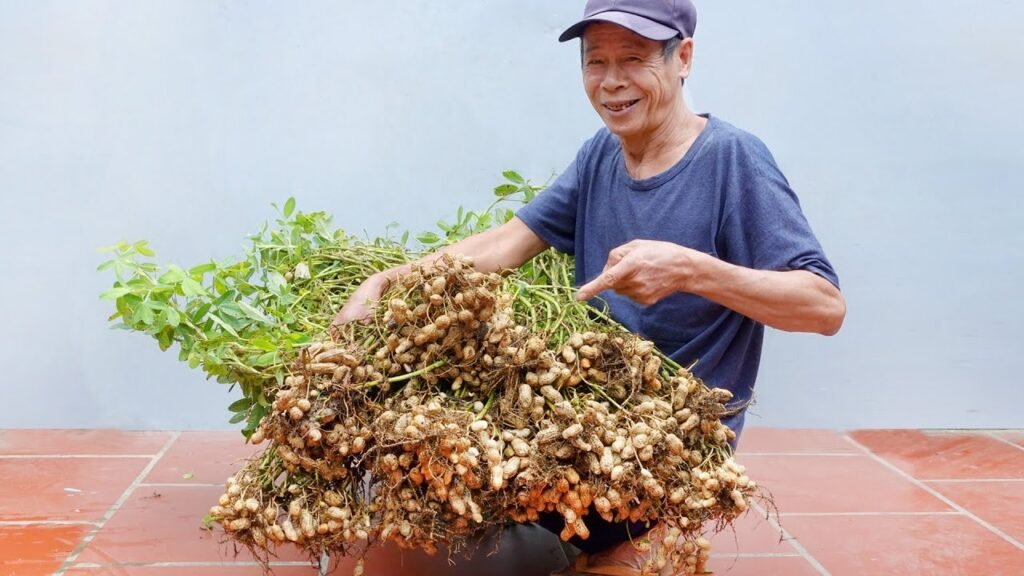
Peanuts are unique among nuts because they grow underground. Understanding their growth habits is essential for a successful harvest:
- Peanut Plant: A low-growing legume that produces yellow flowers above ground.
- Peg Formation: After pollination, flowers form pegs that grow downward into the soil to develop the peanut pods.
- Soil Requirement: Loose, sandy, well-draining soil is crucial for proper pod development.
- Sunlight Needs: Peanuts require full sun—at least 6 hours per day—for healthy growth.
- Harvest Time: Peanuts typically take 4–5 months from planting to harvest, depending on the variety and growing conditions.
Knowing these basics ensures proper care and maximizes yield.
Step 1: Choosing the Right Tires
Not all tires are suitable for planting, so selecting the right type is important:
- Size: Medium to large tires work best, as they provide enough space for soil and root development.
- Condition: Choose tires that are clean, intact, and free from harmful chemicals or heavy debris.
- Type: Car or truck tires are ideal. Avoid tires with cracked or brittle rubber, as they may degrade quickly outdoors.
Repurposing tires is a creative and eco-friendly way to create a self-contained planting bed for peanuts.
Step 2: Preparing the Tires
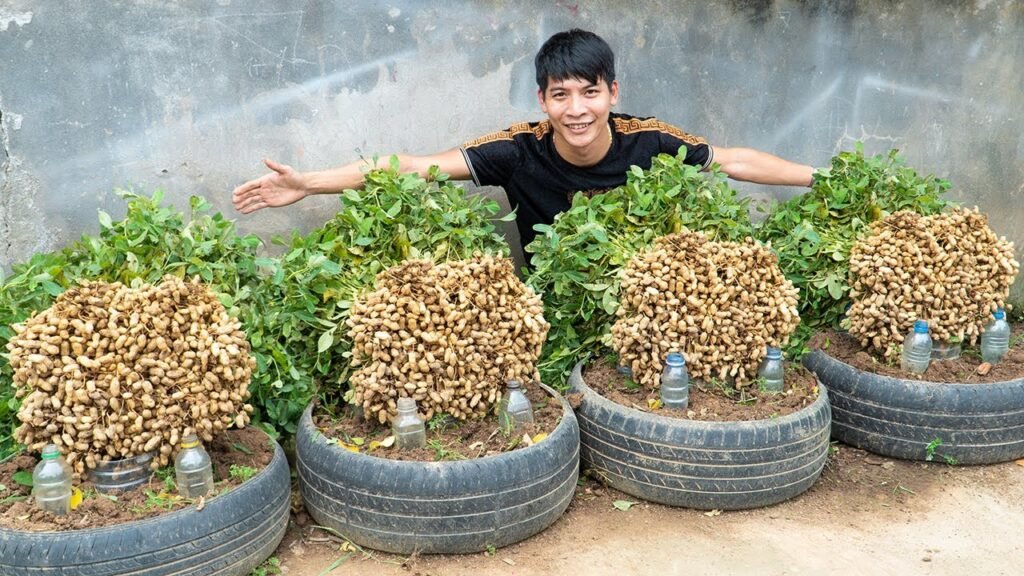
Before planting, tires need to be prepared properly:
- Cleaning: Wash tires thoroughly with water to remove dirt and residues.
- Draining: Drill several holes in the bottom for drainage to prevent waterlogging and root rot.
- Layering: Place gravel or small stones at the bottom of the tire to improve drainage.
These steps ensure a healthy environment for peanut growth and prevent water-related issues.
Step 3: Filling Tires with Soil
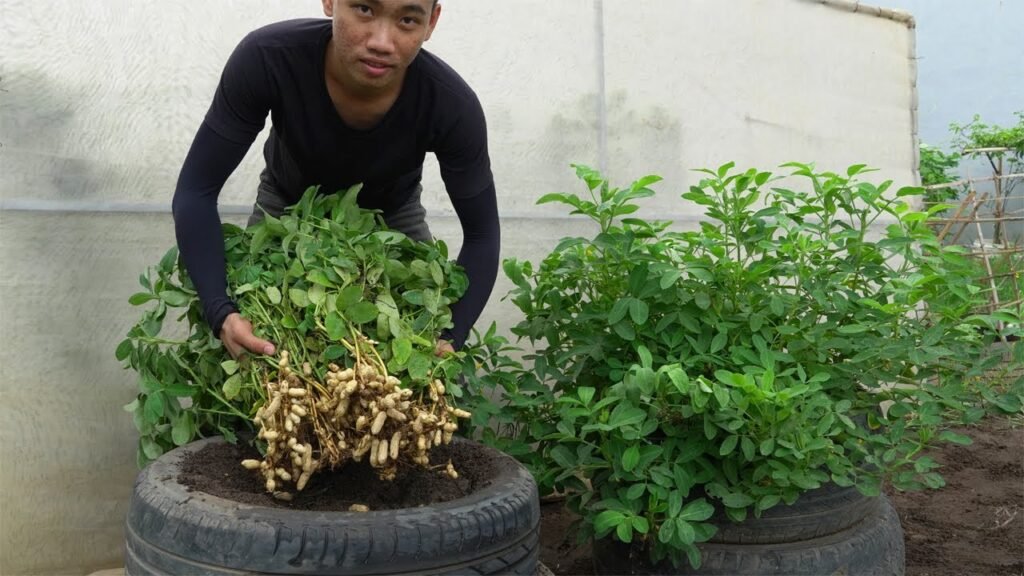
Peanuts need loose, fertile soil to develop underground pods:
- Soil Mix: Combine garden soil, compost, and sand to create a light, well-draining medium.
- Filling the Tire: Fill the tire about 3/4 full with this soil mix.
- Leveling: Smooth the soil surface, ensuring it’s loose enough for pegs to penetrate.
Well-prepared soil supports healthy root development and larger yields.
Step 4: Planting Peanut Seeds
Peanuts are usually grown from raw or untreated seeds:
- Seed Selection: Use fresh, raw peanuts with intact shells. Avoid roasted or salted peanuts.
- Planting Depth: Plant seeds 1–2 inches deep, spacing them about 4–6 inches apart in a circular or grid pattern within the tire.
- Orientation: Place seeds with the pointed end facing downward to encourage optimal growth.
- Watering: Lightly water the soil after planting to settle seeds in place.
Starting with healthy seeds is crucial for fast germination and strong plants.
Step 5: Watering and Care
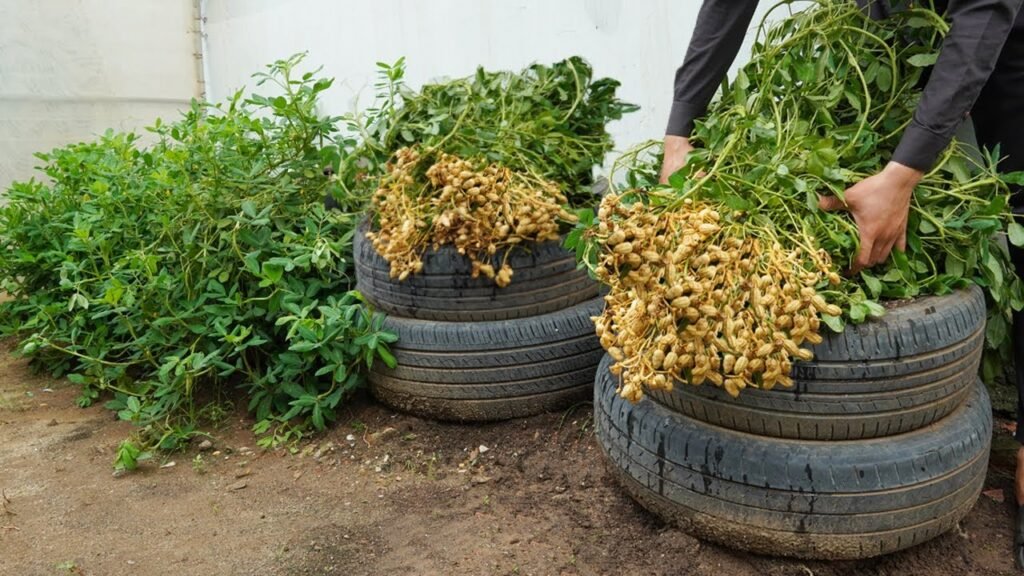
Peanut plants need regular care for optimal growth:
- Watering: Keep the soil consistently moist, especially during flowering and peg development. Avoid overwatering, which can cause rot.
- Fertilizing: Peanuts are legumes and fix nitrogen naturally, but applying organic fertilizer or compost boosts growth. Focus on phosphorus and potassium to support flowering and pod formation.
- Mulching: Add a thin layer of mulch to conserve moisture, regulate temperature, and suppress weeds.
Proper care ensures a healthy, productive peanut plant.
Step 6: Supporting Flower and Peg Development
Peanuts develop underground pods through a fascinating process:
- Flowering: Yellow flowers bloom above ground and are self-pollinating.
- Peg Formation: After pollination, flowers form pegs that grow down into the soil, where peanuts develop.
- Monitoring: Lightly loosen the soil around the base to aid peg penetration without damaging them.
Understanding this process helps ensure maximum pod production.
Step 7: Harvesting Peanuts
Timing is crucial for harvesting peanuts at peak quality:
- Maturity Check: Leaves may start to yellow, and the plant begins to dry when peanuts are ready.
- Harvest Method: Gently lift the tire, loosen soil, and pull out the entire plant to access underground pods.
- Drying: Brush off excess soil and allow peanuts to dry in a warm, ventilated area for a few days before storing.
Proper harvesting ensures flavorful, fully matured peanuts.
Tips for Maximizing Yield
- Succession Planting: Plant peanuts in multiple tires at intervals to enjoy a longer harvest period.
- Sunlight Optimization: Position tires in a location with full sun exposure for the best growth.
- Pest Management: Watch for aphids or leaf spot diseases; handpick or use mild organic sprays.
- Soil Maintenance: After harvest, add compost to replenish soil nutrients for future crops.
- Reusing Tires: You can reuse tires for subsequent plantings by refreshing the soil and ensuring proper drainage.
Following these tips helps you achieve a high-yield peanut harvest from just a few tires.
Benefits of Growing Peanuts in Tires
- Space-Saving: Perfect for small backyards, balconies, or patios.
- Recycling: Old tires are repurposed, reducing environmental waste.
- Ease of Access: Elevated planting makes care and harvesting easier.
- Controlled Growth: Tires keep soil contained and provide consistent conditions for roots.
- Cost-Effective: Minimal investment with a high return of fresh, homegrown peanuts.
This method combines sustainability, efficiency, and convenience for home gardeners.
Culinary Uses for Homegrown Peanuts
Freshly harvested peanuts can be used in a variety of ways:
- Roasting: Dry roast for snacks or toppings.
- Peanut Butter: Blend roasted peanuts for homemade peanut butter.
- Cooking: Use in stir-fries, sauces, soups, and desserts.
- Snacking: Eat raw, roasted, or salted for a healthy snack.
- Garnishes: Crush peanuts for salads, noodles, and confections.
Having a continuous supply of homegrown peanuts enhances both flavor and nutrition in your kitchen.
Final Thoughts
Growing peanuts at home doesn’t require a garden or expensive equipment. By repurposing old tires, you can create an effective and sustainable planting system that produces fresh peanuts with minimal space and effort. From preparing the soil to planting, caring, and harvesting, this method allows anyone—even beginners—to enjoy a bountiful peanut harvest.
Not only do you save money and reduce trips to the store, but you also contribute to recycling and sustainable living by giving new life to old tires. With regular care and attention, your homegrown peanuts can provide delicious, nutritious rewards for months to come.
Start today by gathering a few old tires, preparing the soil, and planting seeds. Watch your homegrown peanut garden flourish and enjoy the satisfaction of producing your own fresh, flavorful peanuts—all from repurposed materials!