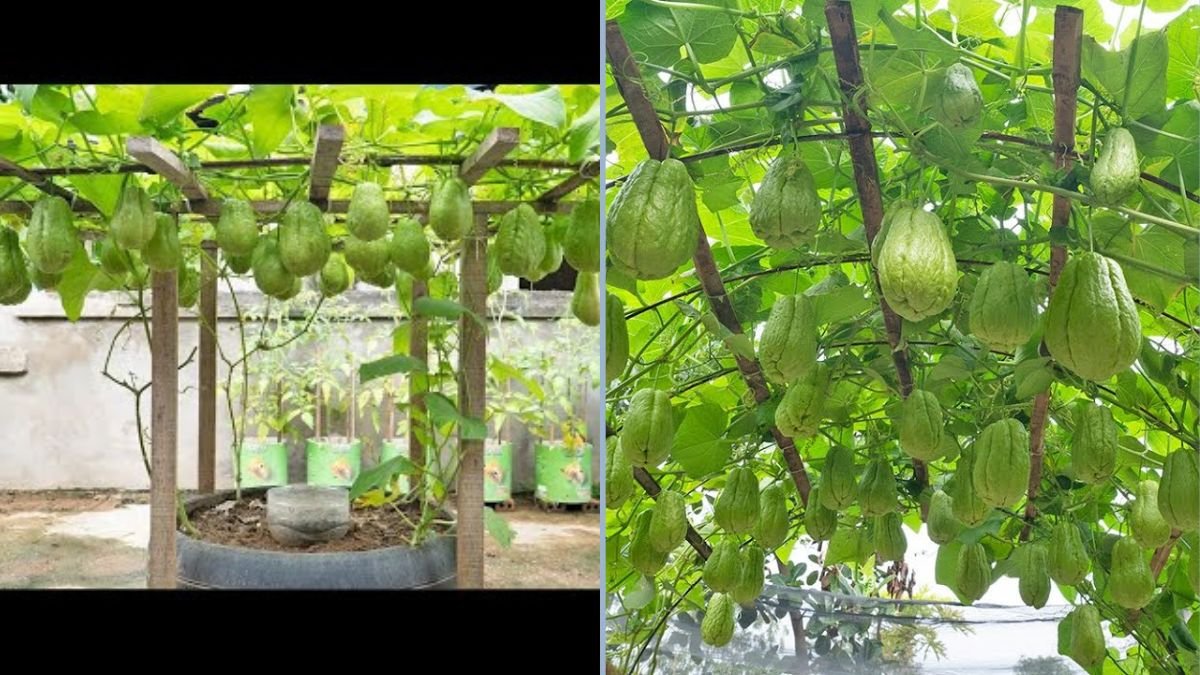
Chayote (Sechium edule), also known as vegetable pear or mirliton, is a versatile and nutrient-rich vegetable popular in tropical and subtropical regions. Its crisp, mild flavor makes it perfect for soups, stir-fries, and salads. However, many gardeners shy away from growing chayote at home, thinking it requires a large space, high costs, or complicated care.
Here’s the exciting truth: growing chayote can be inexpensive and highly productive if you follow the right techniques. With a few smart tricks, you can enjoy abundant chayote harvests at home without spending much money. In this guide, we’ll reveal the secrets to high-yield, low-cost chayote cultivation, from planting to care and harvesting.
Why Grow Chayote at Home?
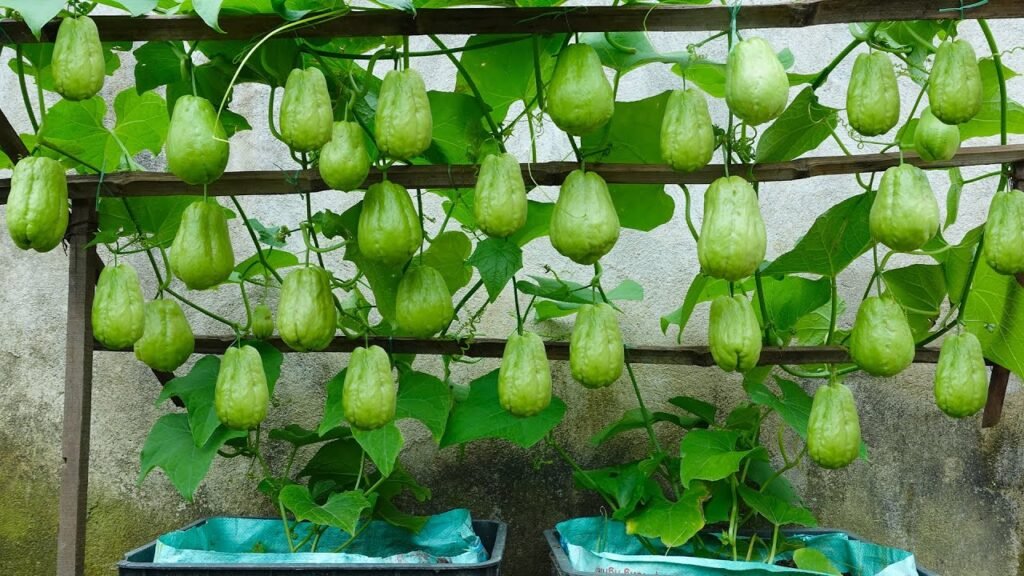
- Abundant Yield: One vine can produce multiple fruits per season.
- Low Maintenance: Chayote is resilient and thrives with minimal inputs.
- Cost-Effective: Grow from chayote fruits you already have; no need for expensive seeds or seedlings.
- Nutritional Benefits: Chayote is rich in fiber, vitamins, and antioxidants.
- Versatility: Can grow in containers, trellises, or garden beds, making it ideal for small or urban spaces.
Step 1: Selecting Chayote Fruits for Planting
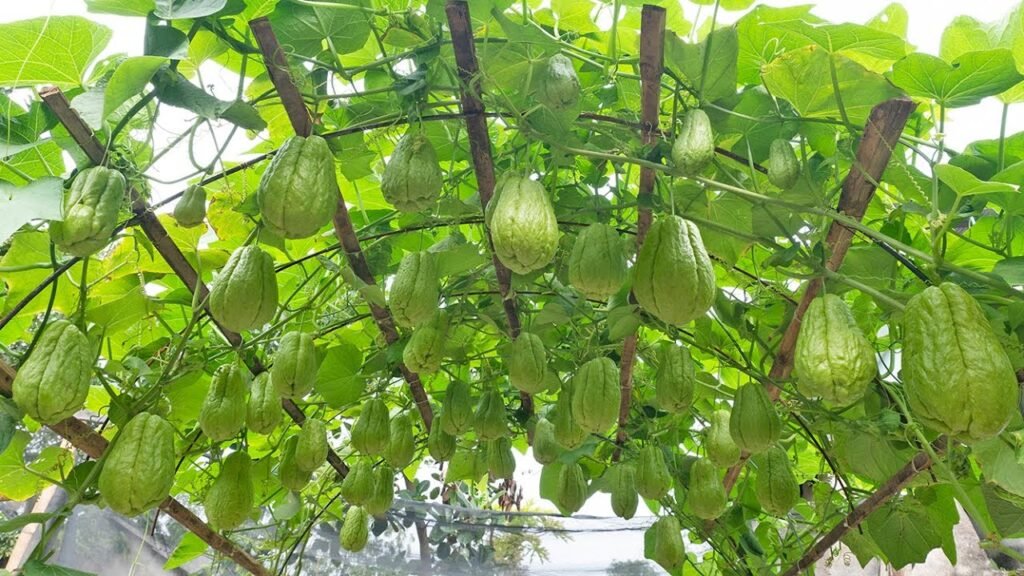
- Choose Healthy Fruits:
- Pick mature, firm chayote fruits without cracks or blemishes.
- Ideally, select larger fruits, as they often produce stronger vines.
- Preparation for Planting:
- Wash the fruit thoroughly.
- You can plant the whole fruit or cut it into halves or quarters for faster sprouting.
Pro Tip: Chayote fruits contain a single large seed inside; planting the whole fruit often yields quicker results and healthier vines.
Step 2: Preparing the Planting Site
Chayote is a vigorous climbing vine and needs proper support and space to thrive.
- Sunlight:
- Full sun for at least 6–8 hours a day.
- More sunlight ensures faster growth and abundant flowering.
- Soil Requirements:
- Well-draining, loamy soil with rich organic matter.
- Slightly acidic to neutral pH (6.0–7.0) is ideal.
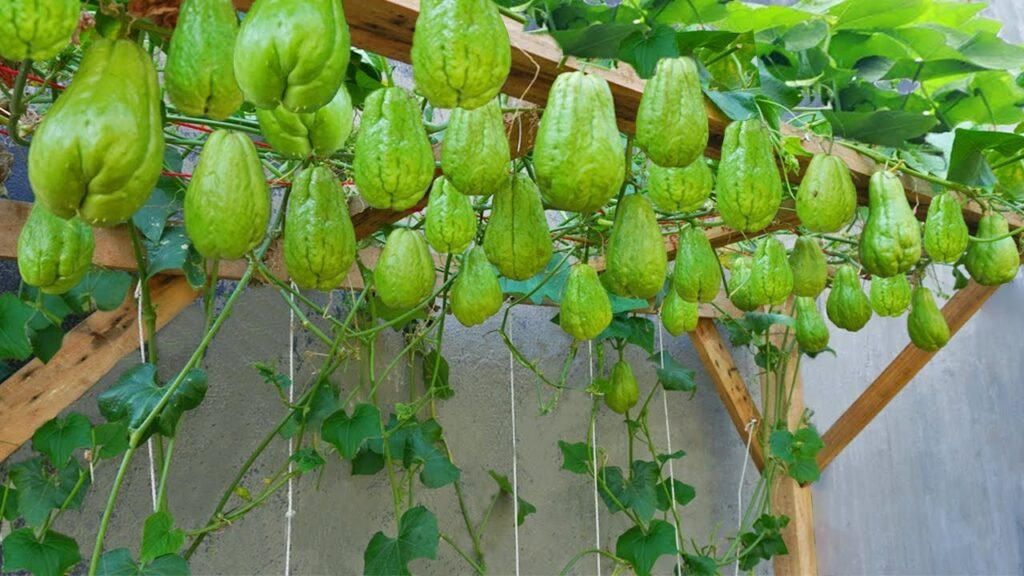
- Trellis or Support:
- Chayote vines can grow 4–12 meters long.
- Use sturdy trellises, poles, or fences to support climbing.
Pro Tip: Vertical growth saves ground space and increases yield while making harvesting easier.
Step 3: Planting Chayote Fruits
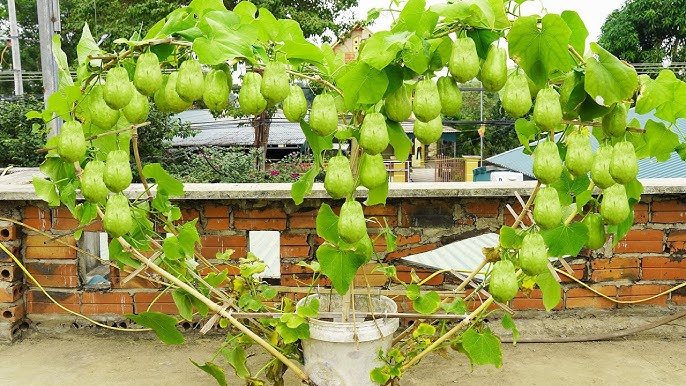
- Planting Directly in Soil:
- Dig a hole 15–20 cm deep.
- Place the fruit with the pointed end slightly facing down.
- Cover lightly with soil and water gently.
- Planting in Containers (Optional):
- Use large containers with good drainage.
- Fill with nutrient-rich soil mixed with compost.
- Plant the fruit the same way as in the garden.
- Spacing:
- If planting multiple fruits, leave at least 1.5–2 meters between them.
Pro Tip: Planting in the rainy season or during the warm season accelerates sprouting and vine growth.
Step 4: Watering and Mulching
- Watering:
- Keep soil consistently moist, especially during germination and flowering.
- Avoid waterlogging, as it can cause root rot.
- Mulching:
- Use straw, dried leaves, or grass clippings around the base of the vine.
- Mulching retains soil moisture, regulates temperature, and suppresses weeds.
Pro Tip: Mulching reduces costs and labor while improving soil fertility over time.
Step 5: Fertilization and Low-Cost Nutrition
Chayote grows well with minimal inputs, but organic fertilization boosts fruiting:
- Compost or Manure:
- Mix compost or well-rotted manure into the soil before planting.
- Add additional organic matter during the growing season.
- Homemade Fertilizers:
- Banana peels, vegetable scraps, or fish emulsion provide nutrients at low cost.
- Fertilizer Schedule:
- Apply nitrogen-rich fertilizer during vine growth.
- Switch to potassium and phosphorus-rich fertilizer when flowers start appearing.
Pro Tip: Using organic, homemade fertilizers reduces costs and promotes healthier, pesticide-free fruits.
Step 6: Supporting the Vine for Maximum Yield
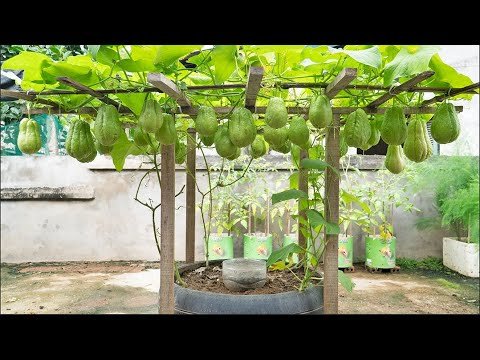
Chayote vines produce more fruits when properly supported and pruned:
- Trellising Tips:
- Train the main vine upward, twisting gently around poles.
- Allow lateral shoots to spread along the trellis.
- Pruning:
- Remove weak, damaged, or overcrowded stems.
- Focus energy on main vines and flowering branches.
- Fruit Support:
- Large fruits can be supported with slings or nets to prevent damage.
Pro Tip: Well-supported vines produce more flowers and larger fruits, increasing overall yield.
Step 7: Flowering and Pollination
Chayote is mostly self-pollinating, but insect activity increases fruit set:
- Encourage bees and beneficial insects by planting flowering companion plants nearby.
- In indoor or low-insect areas, gently shake flowers to assist pollination.
Pro Tip: Flowering occurs 3–4 months after planting; proper pollination ensures more fruits per vine.
Step 8: Pest and Disease Management
Chayote is hardy but can face minor pests:
- Common Pests: Aphids, mites, or fruit flies.
- Use neem oil, garlic sprays, or insecticidal soap as low-cost solutions.
- Diseases: Powdery mildew or root rot.
- Ensure proper spacing, airflow, and avoid overwatering.
- Remove affected leaves immediately.
Pro Tip: Healthy, well-fed vines with good sunlight rarely suffer serious pest problems.
Step 9: Harvesting Chayote Fruits
- Timing:
- Harvest fruits when they are green, firm, and 12–20 cm long, usually 4–6 months after planting.
- Avoid letting them overripe; older fruits become tough and less tasty.
- Harvesting Technique:
- Cut fruits gently with a knife or scissors, leaving a small stem attached.
- Avoid pulling fruits, which can damage vines.
- Continuous Harvest:
- Chayote vines can produce 10–20 fruits per season, sometimes more with proper care.
Pro Tip: Regular harvesting encourages new flowering and prolongs fruiting.
Step 10: Low-Cost Tricks for High Yield
- Reuse Household Waste:
- Banana peels, coffee grounds, and vegetable scraps as fertilizers.
- Old containers for growing seedlings or companion plants.
- Companion Planting:
- Plant legumes nearby to naturally enrich the soil with nitrogen.
- Vertical Gardening:
- Use fences, trellises, or recycled poles to save space and increase yield.
- Organic Mulching:
- Reduces watering frequency and soil maintenance costs.
Pro Tip: Small, inexpensive changes make a big difference in fruit quantity and quality.
Benefits of Growing Chayote at Home
- High Yield: Properly trained vines can produce dozens of fruits per season.
- Low Cost: Minimal investment in seeds, fertilizer, and space.
- Sustainable Gardening: Reuse household waste and organic fertilizers.
- Nutritional Value: Rich in vitamins, antioxidants, and fiber.
- Easy Care: Hardy plants that adapt well to various growing conditions.
Conclusion
Chayote is an incredibly rewarding vegetable to grow at home, offering high yield with low input costs. By following these steps—choosing healthy fruits, planting in nutrient-rich soil, providing support, watering properly, and using low-cost fertilizers—you can enjoy abundant, delicious, and organic chayote straight from your garden.
With proper care and attention, even small gardens or balcony setups can produce impressive results. Start planting today, and discover the secret to high-yield, low-cost chayote cultivation that will keep your kitchen stocked with fresh, nutritious vegetables season after season.