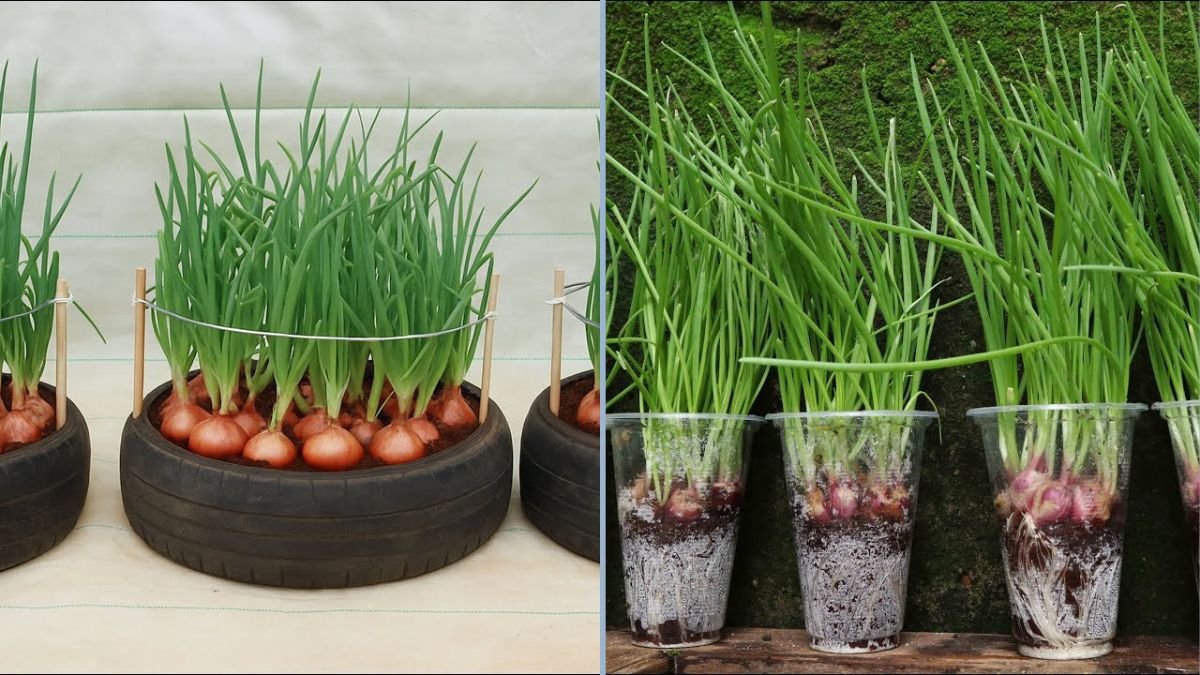
Onions are a kitchen staple around the world, adding flavor, aroma, and nutrition to countless dishes. Growing onions at home can be incredibly rewarding, but many gardeners face challenges such as limited space, poor soil, or high costs of planting materials. Interestingly, there’s a creative, eco-friendly solution that’s been gaining popularity: using old tires as planting containers. Not only does this method recycle materials that would otherwise go to waste, but it also creates an effective, space-saving system for growing healthy, productive onions. In this guide, we’ll walk you through everything you need to know to grow onions in old tires successfully.
Why Use Old Tires for Growing Onions
Using old tires in gardening is part of a broader trend called “upcycled gardening,” which combines sustainability with practicality. Here’s why tires are perfect for onion cultivation:
- Recycling: Tires are difficult to dispose of and often end up in landfills. Using them as planters gives them a new life.
- Space efficiency: Stacking tires vertically creates multi-level planting systems, ideal for small spaces or balconies.
- Soil retention: Tires hold soil and moisture well, providing a stable environment for onions to grow.
- Temperature control: Black tires absorb heat, which can slightly warm the soil and promote faster growth, especially in cooler climates.
- Mobility: Tires can be moved easily if needed, allowing you to adjust for sunlight or protection from harsh weather.
With proper care, old tires become durable, cost-effective containers for a thriving onion garden.
Choosing the Right Onions
The type of onion you choose affects growth, yield, and flavor. Consider the following options:
- Bulb onions: Ideal for large, mature onions. Varieties include yellow, red, and white onions.
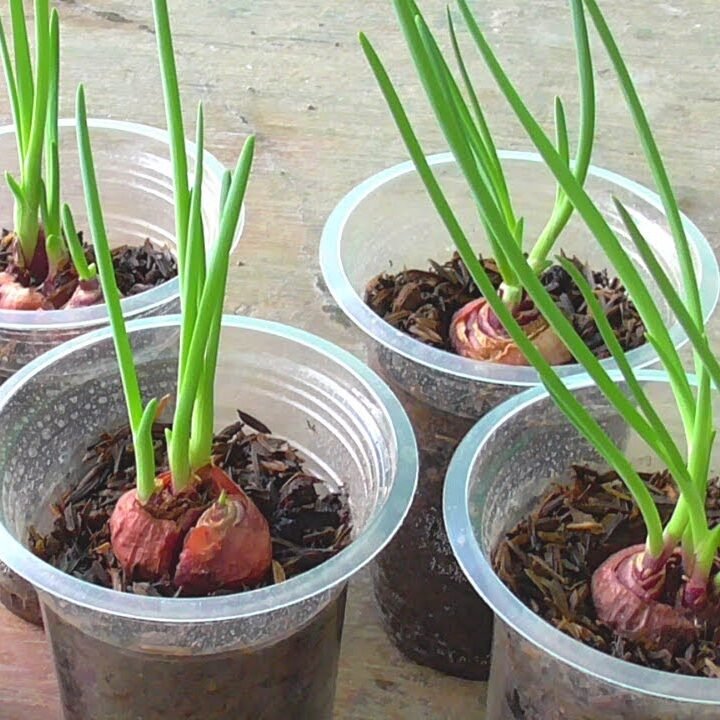
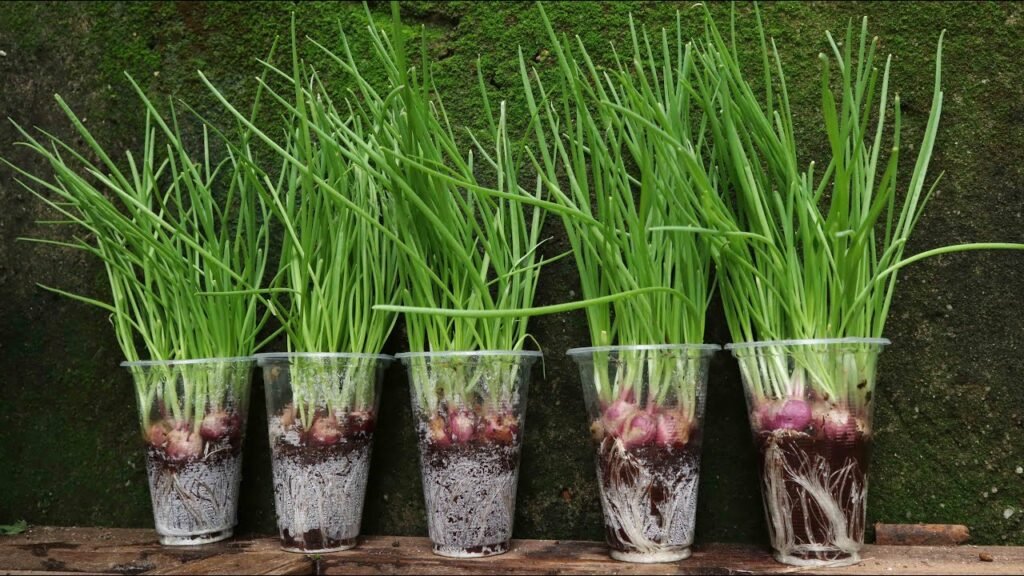
- Green onions (spring onions): Fast-growing, harvested for tender stems rather than bulbs.
- Shallots: Small, flavorful onions suitable for gourmet cooking.
Select onion varieties suited to your local climate and intended use to maximize growth and harvest.
Preparing the Tires
Before planting, preparation is key to ensuring the tires provide a safe and productive environment:
- Clean tires: Remove dirt and debris. Scrubbing with a mild soap solution is recommended.
- Drill drainage holes: Punch 4–6 small holes in the bottom of each tire to prevent waterlogging and root rot.
- Stacking options: For multi-level planting, tires can be stacked and filled with soil to create a vertical garden.
- Positioning: Place tires in a sunny area where onions will receive at least 6 hours of sunlight per day.
Proper preparation creates a healthy foundation for onion growth and prevents common planting issues.
Soil and Fertilization
Onions thrive in nutrient-rich, well-draining soil. Using the right medium ensures strong growth:
- Soil mix: Combine garden soil with compost and sand or perlite in a 2:1:1 ratio for aeration and fertility.
- Fertilizer: Incorporate organic fertilizers like compost or vermicompost. Onions benefit from nitrogen-rich fertilizers during the early growth stage.
- pH level: Onions prefer slightly acidic to neutral soil (pH 6.0–7.0). Test soil if necessary to ensure optimal conditions.
Nourishing soil promotes larger bulbs, healthier plants, and higher yields.
Planting Onions in Tires
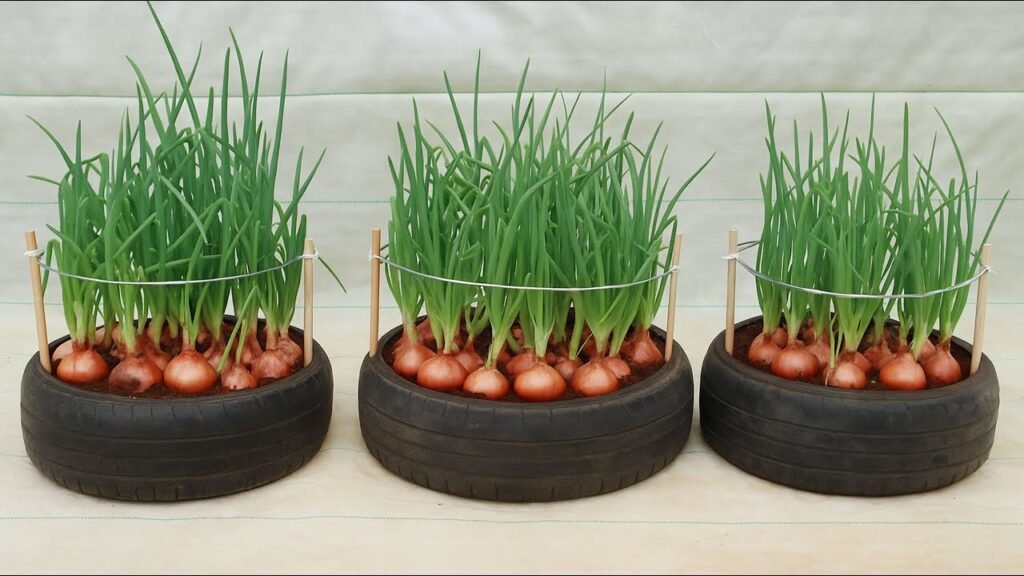
Once the tires and soil are ready, it’s time to plant:
- Seed or bulb selection: You can start with onion sets (small bulbs) or seeds, depending on availability and desired results.
- Depth: Plant onion sets about 2–3 cm deep, with pointed ends facing up. For seeds, sow 1–2 cm deep.
- Spacing: Allow 8–10 cm between onions to prevent overcrowding and ensure sufficient nutrient access.
- Watering: Water lightly after planting to settle soil around bulbs or seeds.
Correct planting ensures strong root development and minimizes competition between plants.
Watering and Care
Onions require regular care to produce healthy bulbs:
- Consistent moisture: Keep soil evenly moist, especially during bulb formation. Avoid overwatering to prevent rot.
- Mulching: Apply straw, dried leaves, or grass clippings around onions to retain moisture and suppress weeds.
- Fertilization: Side-dress with nitrogen-rich fertilizer every 3–4 weeks during the growing season for optimal growth.
- Weeding: Remove competing weeds regularly to reduce nutrient competition.
Proper maintenance ensures vigorous growth and larger, sweeter onions.
Controlling Pests and Diseases
Onions are susceptible to a few pests and diseases, but proactive measures can minimize problems:
- Common pests: Onion maggots, thrips, and aphids. Use natural solutions like neem oil or insecticidal soap for treatment.
- Common diseases: Downy mildew, pink root, and neck rot. Ensure proper drainage, air circulation, and avoid overwatering.
- Preventive measures: Rotate crops and avoid planting onions in the same tire consecutively to reduce disease build-up.
Early detection and management are crucial for a healthy onion crop.
Harvesting Onions
Knowing when and how to harvest ensures maximum flavor and storage life:
- Green onions: Can be harvested 6–8 weeks after planting when stems reach 15–20 cm. Snip individual stems as needed.
- Bulb onions: Ready when tops start to yellow and fall over, typically 90–120 days after planting. Gently lift bulbs from the soil and allow them to cure in a dry, ventilated area.
- Storage: Store cured onions in a cool, dry place. Properly cured bulbs can last for months.
Regular harvesting encourages continued production, especially for green onions.
Advantages of Tire Gardening
Using old tires as planters offers several unique advantages:
- Eco-friendly: Reduces waste by reusing materials that are otherwise difficult to dispose of.
- Cost-effective: Saves money on traditional pots or raised beds.
- Space optimization: Vertical stacking allows more plants in limited areas.
- Temperature regulation: Tires absorb and retain heat, helping onions grow faster in cooler climates.
- Mobility: Tires can be moved to adjust for sunlight, protection from harsh weather, or garden redesign.
This innovative method blends sustainability with practicality, producing healthy onions with minimal space and cost.
Tips for Maximum Success
- Stack wisely: If stacking tires, ensure the bottom tires are stable and drainage is maintained.
- Use high-quality soil: Nutrient-rich soil is crucial for bulb development.
- Regular inspection: Check for pests, diseases, and water levels frequently.
- Rotate crops: Avoid planting onions in the same tire consecutively to maintain soil health.
- Mulch consistently: Mulching conserves moisture and suppresses weeds, which is especially important in container setups.
Following these tips ensures a thriving onion crop that produces large, flavorful bulbs.
Conclusion
Recycling old tires to grow onions at home is a practical, creative, and sustainable gardening method. Not only does it help reduce waste, but it also provides a space-saving solution for growing a highly rewarding crop. With proper soil preparation, planting, watering, care, and pest management, old tires can become a productive onion garden, providing fresh, flavorful onions for your kitchen.
This method is perfect for urban gardeners, balcony growers, and anyone looking for an eco-friendly way to cultivate vegetables. By following the steps outlined—preparing tires, planting onions, managing water and nutrients, providing sunlight, and harvesting correctly—you can enjoy a bountiful onion harvest right at home.
Old tires don’t have to be trash—they can be transformed into thriving, productive gardens. Start today and experience the satisfaction of growing your own onions in a unique and sustainable way!