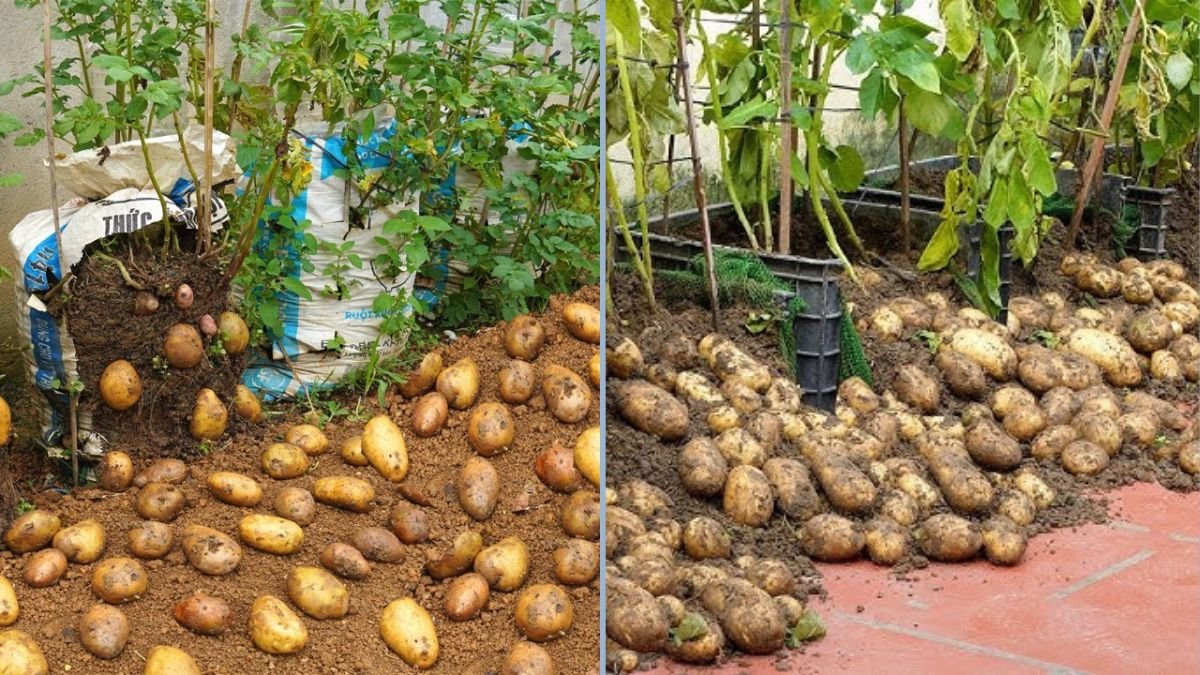
Potatoes are one of the most popular and versatile vegetables in the world. They are easy to cook, store, and enjoy in a wide variety of dishes—from mashed potatoes and fries to stews and soups. For beginner gardeners, growing potatoes can seem intimidating, but it doesn’t have to be. With the right methods, anyone can cultivate a healthy, productive potato crop, even with limited space or experience.
In this guide, we’ll explore two simple potato growing methods for beginners, including the traditional soil planting method and a creative container-based approach. By following these techniques, you’ll be able to grow your own potatoes successfully and enjoy fresh, homegrown harvests.
Why Grow Potatoes at Home?
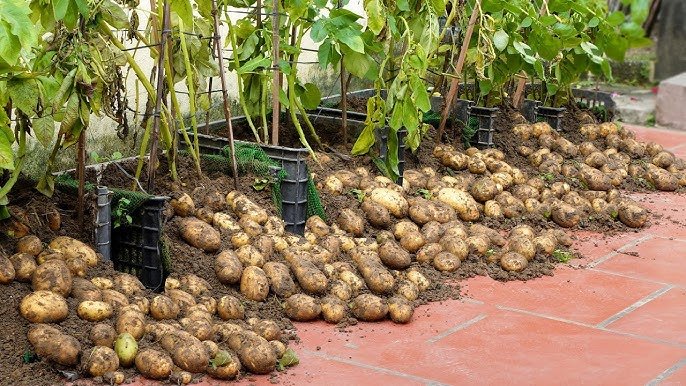
Homegrown potatoes offer several advantages:
- Freshness: Nothing beats the taste of freshly harvested potatoes.
- Chemical-Free: Growing your own potatoes ensures you control pesticides and fertilizers.
- Cost Savings: Seed potatoes can yield a bountiful harvest, reducing grocery costs.
- Satisfaction: Watching potatoes grow from seed to harvest is rewarding and educational.
- Year-Round Gardening: Potatoes can be grown in containers or raised beds, allowing for flexibility in different climates.
Whether you have a backyard garden, a balcony, or just a small space, potatoes are a beginner-friendly crop that can provide a satisfying harvest.
Materials Needed for Both Methods
Before starting, gather the following materials:
- Seed potatoes (small potatoes or potato pieces with eyes)
- Garden soil or potting mix
- Compost or organic fertilizer
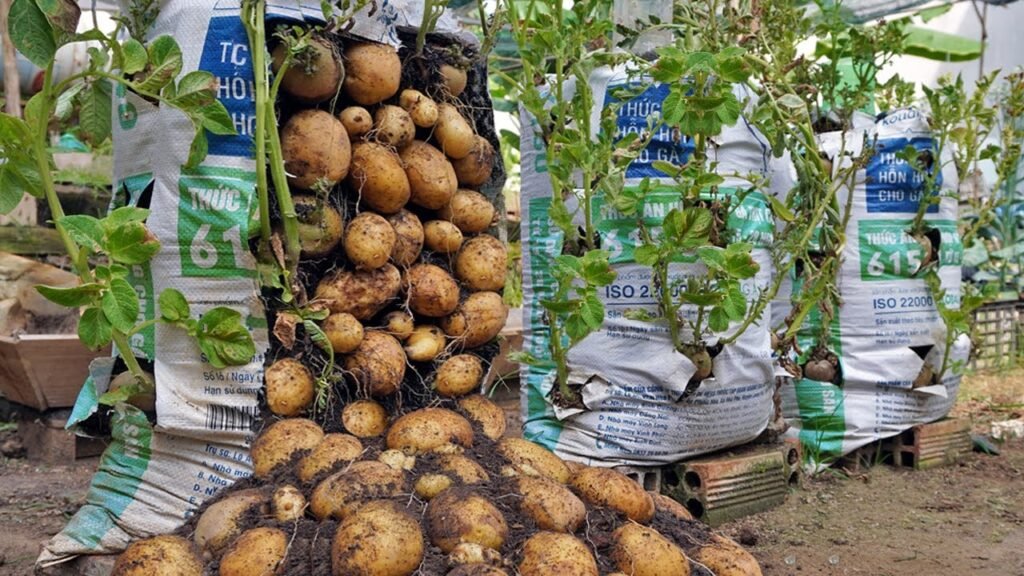
- Containers, grow bags, or raised beds (for container method)
- Gardening tools: spade, trowel, watering can
- Mulch (straw or leaves)
Optional: trellis or stakes if you plan to train potato vines for vertical growth in containers.
Method 1: Traditional Soil Planting
This method is ideal for beginners with a garden or outdoor space. Planting potatoes directly in the soil allows them to grow naturally and produce large yields.
Step 1: Preparing Seed Potatoes
- Choose healthy seed potatoes free from rot or disease.
- Cut larger seed potatoes into pieces, making sure each piece has at least one or two “eyes” (growth buds).
- Let the cut pieces air dry for 1–2 days to form a callus, reducing the risk of rotting after planting.
Pro Tip: Small seed potatoes can be planted whole.
Step 2: Preparing the Soil
Potatoes thrive in loose, fertile, and well-draining soil.
- Choose a sunny location that receives 6–8 hours of sunlight daily.
- Loosen the soil to a depth of 12–15 inches to allow tubers to expand.
- Mix in compost or well-rotted manure to enrich the soil.
- Ensure soil pH is slightly acidic (5.5–6.5) for optimal growth.
Tip: Avoid planting potatoes in the same soil consecutively to reduce disease risk.
Step 3: Planting Seed Potatoes
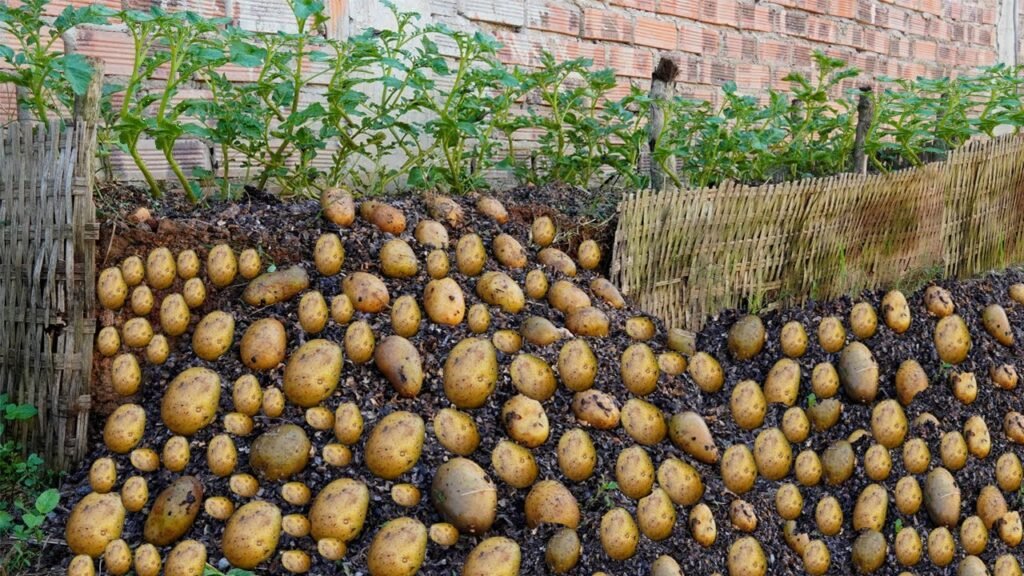
- Dig trenches 6–8 inches deep and 12 inches apart.
- Place the seed potato pieces with the eyes facing up.
- Cover with 3–4 inches of soil.
- Space rows 2–3 feet apart for airflow and easy maintenance.
Pro Tip: Planting in trenches allows for hilling (covering growing plants with soil) later to encourage more tuber development.
Step 4: Caring for Soil-Planted Potatoes
Watering: Keep soil consistently moist, especially during flowering, when tubers begin forming. Avoid overwatering, which can lead to rot.
Hilling: When plants reach 6–8 inches tall, mound soil around the base to cover stems and encourage more tubers. Repeat every few weeks.
Fertilizing: Apply a balanced fertilizer or compost every 3–4 weeks for strong growth.
Pest Control: Watch for potato beetles, aphids, and fungal diseases. Use organic pesticides or remove pests manually.
Step 5: Harvesting Soil-Grown Potatoes
- Potatoes are usually ready 2–3 months after planting for baby potatoes and 3–4 months for mature tubers.
- Carefully dig around the plant with a trowel or fork to avoid damaging tubers.
- Brush off excess soil and allow potatoes to dry for a few hours before storage.
Pro Tip: Harvest regularly to prevent overgrown tubers, which may become tough or sprout prematurely.
Method 2: Growing Potatoes in Containers
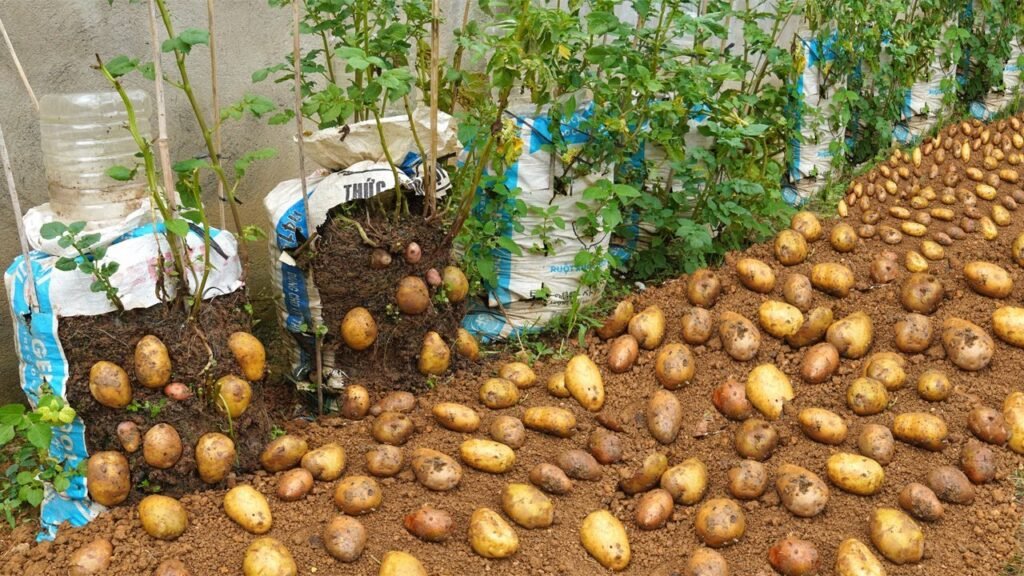
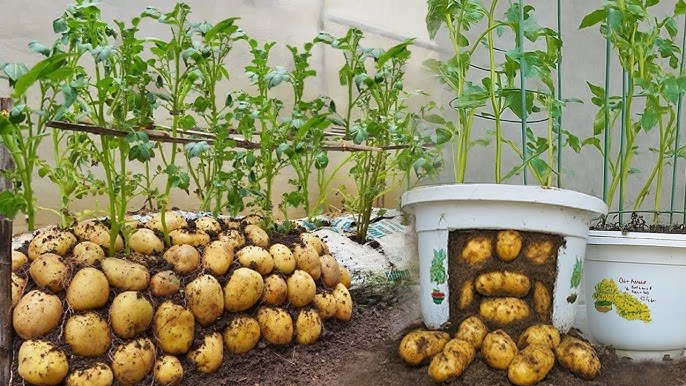
Container gardening is perfect for beginners with limited space, balconies, or urban gardens. It’s easier to manage soil quality, watering, and pests in a controlled environment.
Step 1: Choosing a Container
- Select a large container with a minimum depth of 12 inches and a diameter of 16–20 inches.
- Ensure good drainage by adding holes at the bottom.
- Grow bags or buckets work well and allow for vertical growth by adding soil progressively.
Step 2: Preparing Seed Potatoes
- Choose small, healthy seed potatoes.
- Cut larger potatoes into pieces with at least one eye per piece.
- Let them dry for 1–2 days to form a callus.
Pro Tip: In containers, smaller seed pieces reduce overcrowding and allow for better tuber growth.
Step 3: Planting in Containers
- Add 3–4 inches of nutrient-rich soil at the bottom of the container.
- Place seed potatoes on the soil with eyes facing up.
- Cover with 3–4 inches of soil.
- As plants grow, add more soil gradually to cover stems, leaving the top leaves exposed. This is known as “layering” and encourages more tuber production.
Tip: Vertical container gardening maximizes yield in small spaces.
Step 4: Caring for Container-Grown Potatoes
Watering: Containers dry out faster than garden soil, so water consistently to keep the soil evenly moist.
Fertilizing: Use liquid organic fertilizer every 2–3 weeks or add compost as you layer soil.
Sunlight: Place containers in a sunny location with 6–8 hours of direct sunlight daily.
Support: If using tall containers, support stems with stakes to prevent toppling.
Step 5: Pest and Disease Management
Container gardening reduces many soil-borne diseases, but pests can still appear:
- Inspect plants regularly for aphids, spider mites, and potato beetles.
- Use organic pesticides or remove pests by hand.
- Ensure proper ventilation and avoid overwatering to prevent fungal infections.
Step 6: Harvesting Container Potatoes
- Container potatoes are typically ready 2–3 months after planting for baby potatoes.
- For mature tubers, wait 3–4 months until foliage starts yellowing and wilting.
- Simply tip the container over or dig carefully to collect potatoes.
Pro Tip: Keep adding soil as plants grow to maximize tuber formation throughout the season.
Advantages of These Two Beginner-Friendly Methods
- Accessibility: Both methods are suitable for beginners with minimal gardening experience.
- Flexibility: Choose soil planting for large outdoor spaces or containers for limited areas.
- High Yield Potential: Proper care in either method results in abundant, healthy potatoes.
- Pest Management: Containers and raised soil beds reduce common potato pests and diseases.
- Year-Round Gardening: Containers can even be used indoors or in greenhouses to extend the growing season.
By understanding the strengths of each method, beginners can choose the approach that best fits their space, resources, and preferences.
Tips for Beginner Potato Gardeners
- Start Small: Begin with a few seed potatoes before expanding your garden.
- Use Certified Seed Potatoes: Reduces the risk of disease.
- Monitor Watering: Consistent moisture is key to healthy tubers.
- Practice Crop Rotation: Prevents disease buildup in soil-grown potatoes.
- Harvest Carefully: Avoid damaging tubers for longer storage life.
- Experiment with Varieties: Try different potato types to discover your favorites.
Following these tips ensures a successful potato harvest, whether you’re planting in soil or containers.
Conclusion
Potatoes are one of the most rewarding crops for beginner gardeners. With these two simple methods—traditional soil planting and container growing—you can enjoy fresh, homegrown potatoes without being overwhelmed by complexity. Soil planting is ideal for those with outdoor space, while containers offer flexibility for small spaces and urban gardens.
By preparing seed potatoes carefully, maintaining proper soil, watering consistently, and practicing pest management, beginners can achieve a bountiful harvest. With minimal effort and patience, your garden can yield a steady supply of delicious, nutritious potatoes that enhance any meal.
Whether you’re a novice gardener or just exploring homegrown vegetables, these methods make growing potatoes easy, practical, and satisfying. Start small, follow the steps, and soon you’ll be enjoying the taste and satisfaction of freshly harvested potatoes from your own garden.