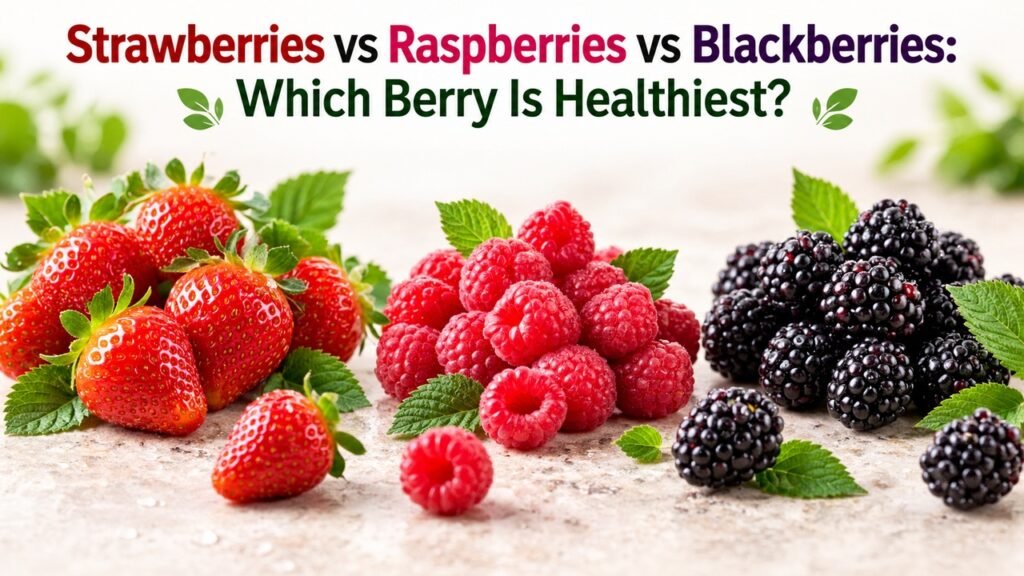
Berries are among the most nutritious fruits you can add to your daily diet. Packed with vitamins, minerals, fiber, and antioxidants, they offer numerous health benefits while adding natural sweetness to meals and snacks. But when comparing strawberries, raspberries, and blackberries, which berry is the healthiest?
Although all three are excellent choices, each has a slightly different nutritional profile. The best option depends on your health goals, whether you want more vitamin C, extra fiber, or a greater variety of beneficial plant compounds. Let’s compare these popular berries and discover which one deserves a place on your plate.
1. Strawberries: The Vitamin C Champion
Strawberries are sweet, refreshing, and surprisingly rich in essential nutrients. They are particularly well known for their high vitamin C content, which supports immune function, collagen production, and healthy skin.
One cup of sliced strawberries contains approximately 49 calories, 3 grams of fiber, and 89 milligrams of vitamin C. That’s roughly the recommended daily amount for many adults, although individual requirements vary.
Strawberries also contain anthocyanins and other antioxidant compounds that help protect cells from oxidative stress. Research suggests that regularly eating strawberries may support heart health and healthy blood sugar regulation when included in a balanced diet.
Another advantage is their high water content, which helps keep you hydrated. Their naturally sweet flavor makes them a great addition to smoothies, oatmeal, yogurt, and fruit salads.
Best for: Vitamin C intake, hydration, healthy skin, and a low-calorie snack.
2. Raspberries: The Fiber Powerhouse
If fiber is your priority, raspberries are an outstanding choice. They provide more dietary fiber per cup than either strawberries or blackberries, making them particularly useful for supporting digestive health.
One cup of raspberries contains approximately 64 calories, 8 grams of fiber, and 32 milligrams of vitamin C. Their fiber content helps promote regular bowel movements, supports a healthy gut, and contributes to feelings of fullness.
Raspberries also contain ellagitannins, anthocyanins, and other plant compounds being studied for their potential antioxidant and anti-inflammatory effects. However, more research is needed to establish the specific health effects of these compounds in humans.
Because raspberries contain substantial fiber relative to their calories, they can be a helpful addition to a balanced eating pattern focused on weight management. Their fiber may also help moderate how quickly carbohydrates are digested.
Enjoy raspberries fresh or frozen in breakfast bowls, smoothies, salads, or homemade sauces. Their slightly tart flavor pairs especially well with nuts, oats, and plain yogurt.
Best for: Digestive health, fiber intake, feeling full, and supporting healthy eating habits.
3. Blackberries: The Antioxidant-Rich Choice
Blackberries stand out for their deep purple-black color, which comes partly from anthocyanins. These plant pigments have antioxidant properties and are associated with several potential health benefits.
One cup of blackberries contains approximately 62 calories, 8 grams of fiber, and 30 milligrams of vitamin C. They also provide vitamin K and manganese, nutrients involved in normal blood clotting, bone health, and other important bodily functions.
Like strawberries and raspberries, blackberries contain a variety of polyphenols that researchers are investigating for their roles in cardiovascular health and protection against oxidative stress.
Their combination of fiber and relatively low calorie content makes blackberries a satisfying snack. They can also add color and texture to salads, overnight oats, yogurt, and whole-grain breakfast dishes.
Although their antioxidant content is impressive, it is important to remember that no single berry can prevent disease on its own. Overall diet quality, lifestyle, and individual health factors matter much more.
Best for: Fiber, vitamin K, manganese, and a varied intake of antioxidant plant compounds.
4. Strawberries vs Raspberries vs Blackberries: Nutrition Comparison
Here’s a quick comparison of the approximate nutrition in one cup of raw berries.
| Nutrient | Strawberries | Raspberries | Blackberries |
|---|---|---|---|
| Calories | 49 | 64 | 62 |
| Fiber | 3 g | 8 g | 8 g |
| Vitamin C | 89 mg | 32 mg | 30 mg |
| Vitamin K | 4 mcg | 10 mcg | 29 mcg |
| Manganese | 0.6 mg | 0.8 mg | 0.9 mg |
Values are approximate and can vary with berry size, variety, and serving measurement.
Strawberries lead in vitamin C, while raspberries and blackberries provide considerably more fiber. Blackberries offer the most vitamin K among these three in this comparison.
All three are naturally low in fat and provide beneficial plant compounds. None is universally superior in every nutritional category.
5. Which Berry Is Healthiest Overall?
The healthiest berry depends on what you want from your diet.
Choose strawberries if you’re looking to increase vitamin C intake while keeping calories low. Choose raspberries if you want to maximize fiber and support digestive health. Choose blackberries if you want plenty of fiber alongside vitamin K, manganese, and dark-colored antioxidant compounds.
However, you don’t have to choose just one. Eating a variety of berries provides a broader range of nutrients and plant compounds. Fresh and frozen berries can both be nutritious options, provided you choose products without unnecessary added sugar.
Try adding mixed berries to breakfast, enjoying them as an afternoon snack, or blending them into a smoothie with yogurt and oats. A varied diet that includes fruits, vegetables, whole grains, legumes, and healthy fats offers more benefits than relying on any single so-called superfood.
Final Verdict
So, which berry wins the nutrition battle? Strawberries are the vitamin C champion, raspberries excel in fiber, and blackberries combine high fiber with useful amounts of vitamin K and manganese.
The real winner is variety. Each berry brings something valuable to the table, and enjoying all three is an easy, delicious way to support a balanced diet. Rather than searching for one perfect berry, choose the ones you enjoy and make them a regular part of your meals.