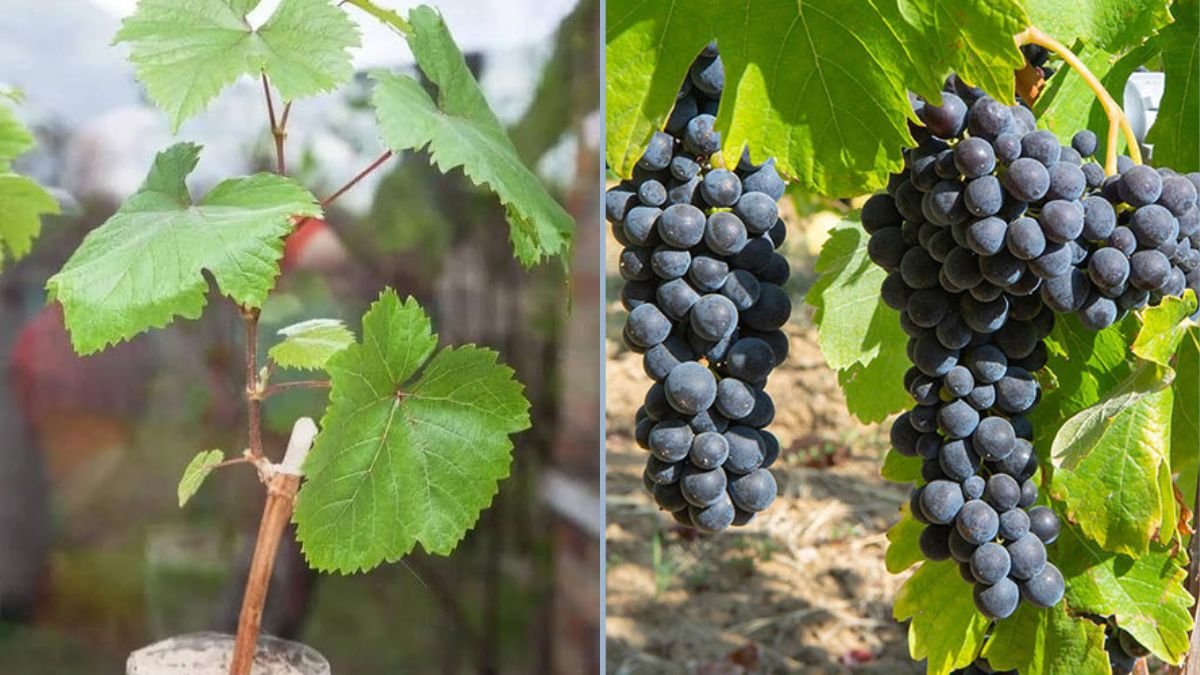
If you’ve ever dreamed of plucking your own fresh grapes from a vine on your rooftop, you’re in for a treat. Growing grapes in pots is not only possible—it’s immensely rewarding. In this blog post, we’ll walk step-by-step through how to grow the Indian variety Arka Trishna on your roof garden, using an easy potting method. Whether you’re a beginner gardener or simply want to utilize your balcony or terrace, this method will work beautifully for you.
Why Choose Arka Trishna?
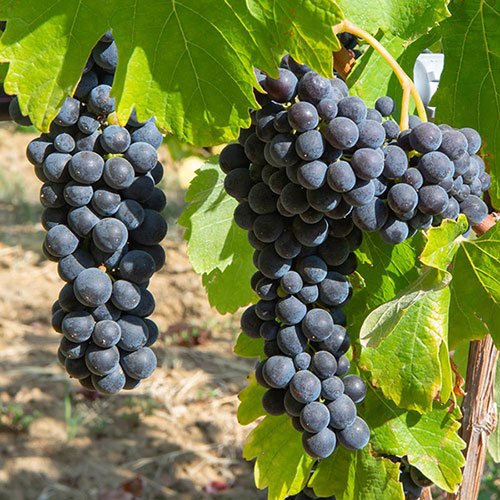
The variety Arka Trishna is specially suited for Indian conditions and offers some great benefits:
- It is a hybrid of Bangalore Blue × Convent Large Black.
- The berries are deep tan to blackish, round-to-ovoid with good sugar levels (around 22-23 °Brix), which makes them sweet and flavourful.
- It is resistant to anthracnose and tolerant to downy mildew—important disease resistances for Indian growing conditions.
- Though typically grown in fields, it is adaptable and can be grown in containers with careful attention.
In short: for a rooftop pot method, you want a grape variety that can tolerate some stress, has good disease resistance, and gives appealing fruit. Arka Trishna ticks all those boxes.
Planning Your Roof Garden Grape Setup
Location & Sunlight
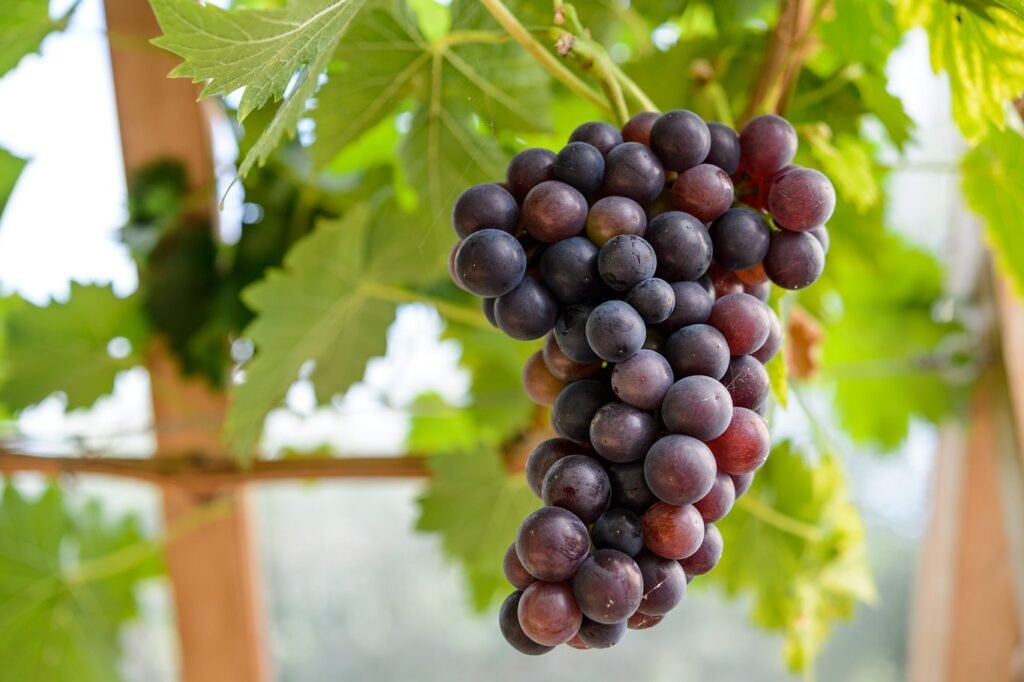
Grapevines thrive on sunlight. On your roof or terrace, look for a spot that gets at least 6-8 hours of direct sun daily. Grapes love warmth and light, which help sugar build-up in the berries.
Pot Size & Material
Since you’ll train a vine, pick a large container—minimum 60-70 cm in diameter and depth (around a 50-litre bucket or bigger). Ensure there are drainage holes. Terracotta or thick plastic pots both work; the key is good drainage and stable support.
Soil Mix
Use a loose, well-draining potting mix. A good mixture is equal parts topsoil, coco peat or peat moss, and coarse sand or perlite. You can add some well-rotted compost. Aim for a slightly acidic to neutral pH (6.0-7.0).
Support & Trellis
Even in a pot, your vine will need a trellis or stake to climb. Install a sturdy vertical rod or wooden post (around 2-2.5 m high) plus horizontal wires or strings at intervals. This gives you room to train the vine and manage pruning effectively.
Step-by-Step: Potting and Planting the Vine
1. Prepare the Pot
- Place a layer of broken pot shards or coarse stones at the bottom for drainage.
- Fill the pot about three-quarters full with your soil mix.
- Mix in a slow‐release organic fertiliser or compost at planting time.
2. Planting
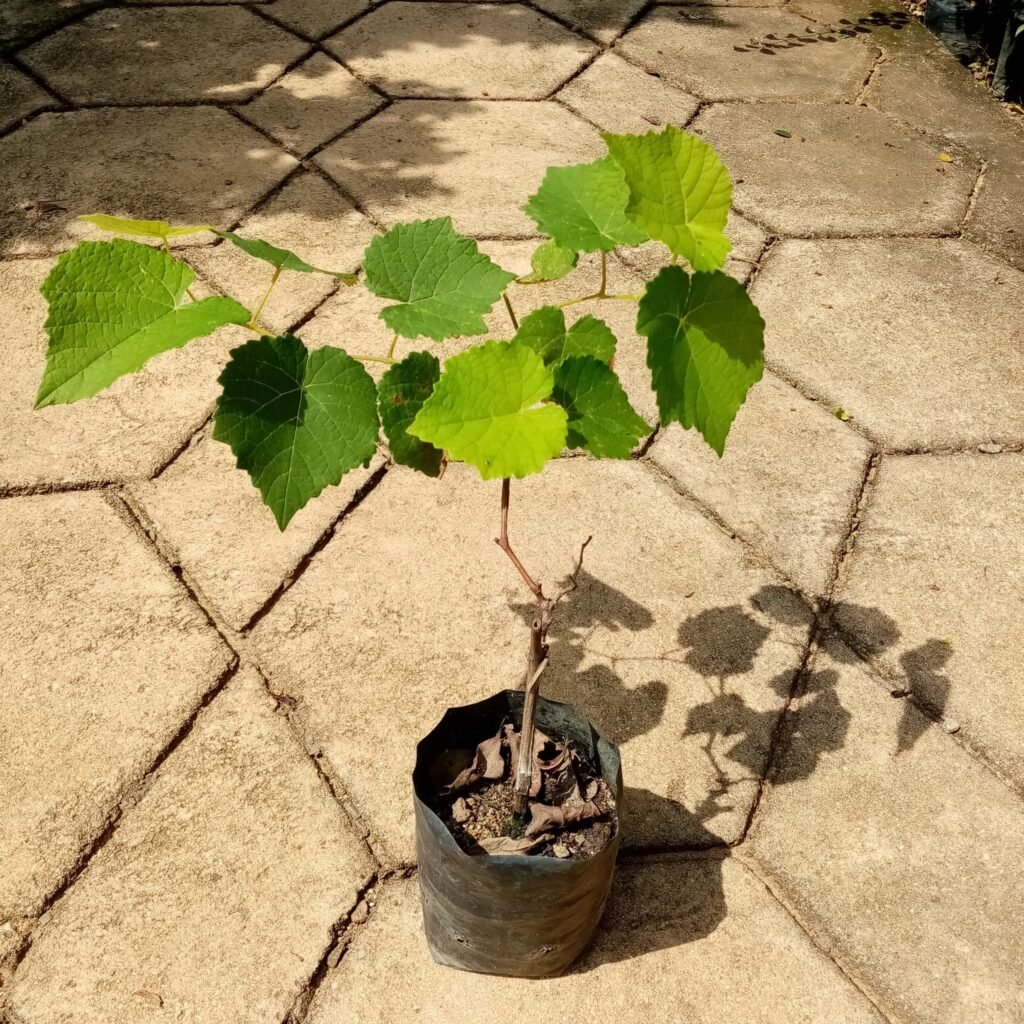
- Take your vine (either a container‐grown plant or healthy rooted cutting).
- Make a planting hole slightly deeper than the root ball.
- Place the vine so that its graft union (if any) is just above soil level or slightly buried.
- Back-fill gently, firm the soil around the roots, and water thoroughly to settle the soil.
3. Initial Watering and Care
- For the first few weeks, keep the soil evenly moist (not waterlogged).
- Avoid letting it dry out completely until the vine establishes.
- Place the pot in a sunny area, and ensure the trellis or stake is already in place so the vine can be tied as it grows.
Training, Pruning & Vine Management
Training the Vine
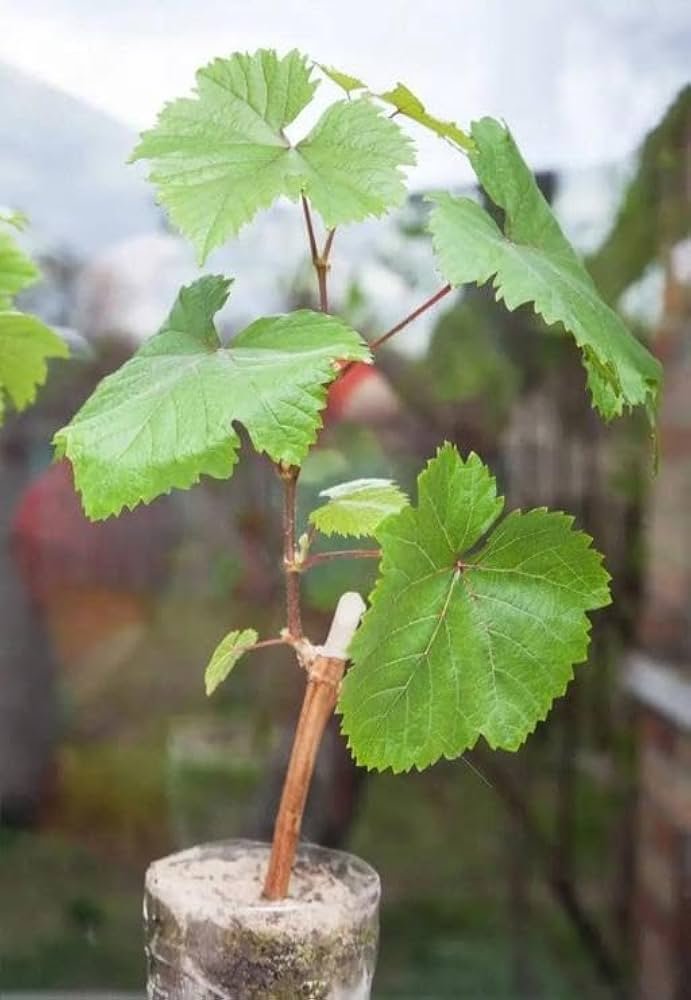
From the first season, train the main shoot upward to the first trellis wire. Once it reaches that height, pinch off the tip to encourage side shoots (laterals) that will form the fruiting arms.
Tie the main stem loosely with soft string so it doesn’t rub or strangle.
Pruning Schedule
- First year: Focus on establishment. Let the vine develop one main shoot and a few laterals. Remove any weak or diseased shoots.
- Second year and beyond: After harvesting, prune back the fruiting arms to 2-3 nodes, leaving 2-3 healthy buds on each arm for next year’s crop. Remove old, unproductive wood.
Fruit Thinning & Bunch Management
If your vine produces a large number of bunches, thin them so that there’s space between clusters. This improves berry size and sugar concentration. Also remove any damaged or sunburnt bunches.
Nutrition, Watering & Roof-Specific Tips
Fertilising
- Use a balanced fertiliser (e.g., NPK 10-10-10) in early growing season.
- Once flowering begins, switch to a formulation higher in potassium (to support fruit development).
- Every 6-8 weeks apply compost or well‐rotted manure as a top-dress.
- On a roof garden, pots heat up and dry out faster—so nutrients can leach quickly. Regular checking is critical.
Watering
Because the pot is exposed, soil will dry out faster than in the ground.
- In summer, water deeply when the top 2-3 cm of soil is dry.
- Ensure excess water drains freely (to avoid root rot).
- In monsoon or heavy rainfall, shelter the pot or ensure it’s raised above the roof surface so it drains well.
Roof Garden Challenges & Solutions
- Heat stress: Pots can overheat under direct sun. If your roof is very hot, keep the pot slightly shaded during midday or use a light-coloured container to reflect heat.
- Wind damage: Roofs can be windy—strong gusts may damage shoots. Provide a windbreak (e.g., mesh, shade cloth) or place the pot near a wall.
- Weight considerations: A large pot full of soil, vine, and water is heavy. Check your roof load capacity or use a raised platform with drainage.
- Maintenance access: Ensure you can reach the pot safely for tying, pruning, and harvesting. Avoid risky placements near edges.
- Birds and pests: Birds love ripe grapes. Consider using netting over the bunches near ripening time.
Harvesting & Post-Harvest Care
When to Harvest
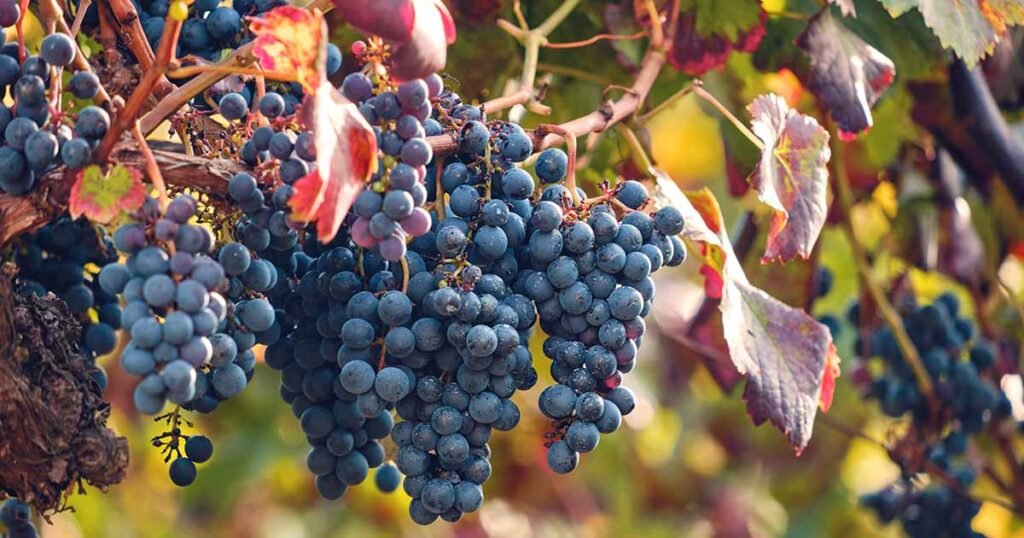
For Arka Trishna, sugar content around 22-23 °Brix indicates full ripeness. The berries should be well-coloured (deep tan to black) and firm. Taste a few—if they’re sweet and full-flavoured, they’re ready.
How to Harvest
Use clean, sharp scissors or pruners. Cut the bunch with a short stem attached and avoid damaging other bunches.
Post-Harvest
- Store grapes in a cool, dry place or in the refrigerator.
- Avoid stacking heavy items on the fruit.
- Use the grapes fresh, or for juice or wine—Arka Trishna is known to be excellent for wine making as well.
Troubleshooting Common Issues
| Problem | Likely Cause | Solution |
|---|---|---|
| Leaves yellowing | Nutrient deficiency (especially nitrogen) or over-watering | Check soil moisture, apply nitrogen-rich fertiliser |
| Powdery or downy mildew | High humidity, poor air circulation | Improve airflow, remove infected leaves, apply organic fungicide |
| Sun-burned berries | Excessive direct heat | Provide partial midday shade in hot months |
| Poor fruit set | Too much shade or overly vigorous growth | Thin leaves, ensure full sunlight, prune excess shoots |
| Root bound pot | Vine too old or large for the container | Repot into larger pot or transplant to a bigger space |
Timeline: From Planting to Harvest
- Month 0 – Plant the vine in a large pot with prepared soil mix.
- Months 1-3 – Vine establishes, main shoot grows; tie to stake or trellis.
- Months 4-6 – Side shoots develop; start feeding and watering regularly.
- Months 7-12 – Flowering, fruit set, and bunch development begin (depending on season).
- After 145-150 days from pruning, you may harvest Arka Trishna in typical Indian conditions.
- Year 2 onward – Follow regular vine cycles: prune, train, feed, harvest.
Final Thoughts
Growing a grapevine like Arka Trishna on your rooftop is a deeply satisfying experience. You’ll enjoy fresh, home-grown grapes, a lovely green aesthetic, and the pride of producing something special right above your home. With good sunlight, the right pot and soil mix, and consistent care, your rooftop can yield beautiful bunches of sweet, black grapes year after year.
If you’re in a warm region like coastal Maharashtra or southern India, start your planting just before or during the monsoon so the vine can establish before the peak summer heat. Keep drainage in mind, monitor watering carefully, and train your vine neatly on a trellis for best results.
Soon, your rooftop garden won’t just be a green retreat—it will be a vineyard in miniature.