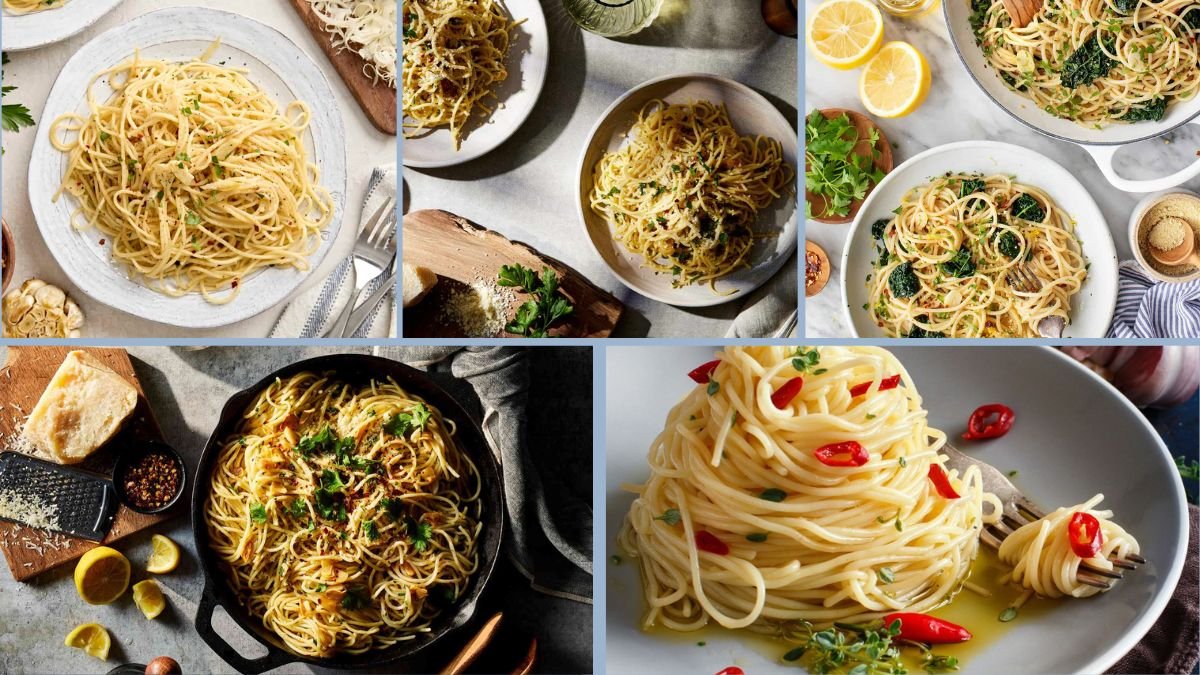
Spaghetti Aglio e Olio is a hallmark of Italian cuisine—simple, elegant, and incredibly satisfying. Originating from Naples, this dish relies on just a few pantry staples: spaghetti, garlic, olive oil, chili flakes, and parsley. Despite its simplicity, achieving the perfect balance of flavors and textures requires attention to detail and proper technique.
A well-executed Aglio e Olio is aromatic, silky, and slightly spicy, with al dente spaghetti coated evenly in a garlicky, flavorful oil. Here are six essential tips to help you craft this classic Italian dish at home, entirely vegetarian and bursting with authentic taste.
Tip 1: Choose the Right Spaghetti
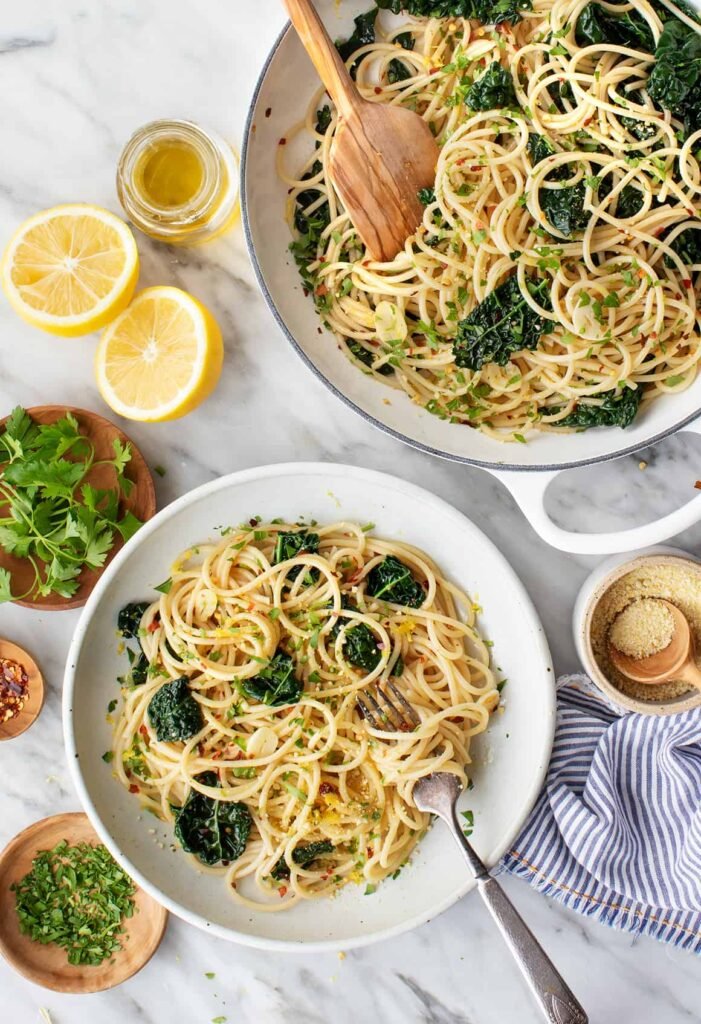
The foundation of Aglio e Olio is the pasta itself.
- Type of Pasta: Traditional Italian spaghetti or spaghettoni (thicker spaghetti) works best.
- Cooking Method: Boil pasta in generously salted water to enhance flavor.
- Al Dente Texture: Cook slightly firm to retain bite and allow the sauce to cling properly.
Pro Tip: Reserve ½–1 cup of pasta water before draining. The starchy water helps emulsify the oil and bind it to the pasta for a silkier texture.
Science Insight: Salted water seasons pasta internally, while starch from cooking water aids in creating a cohesive sauce without added fat.
Tip 2: Use High-Quality Olive Oil
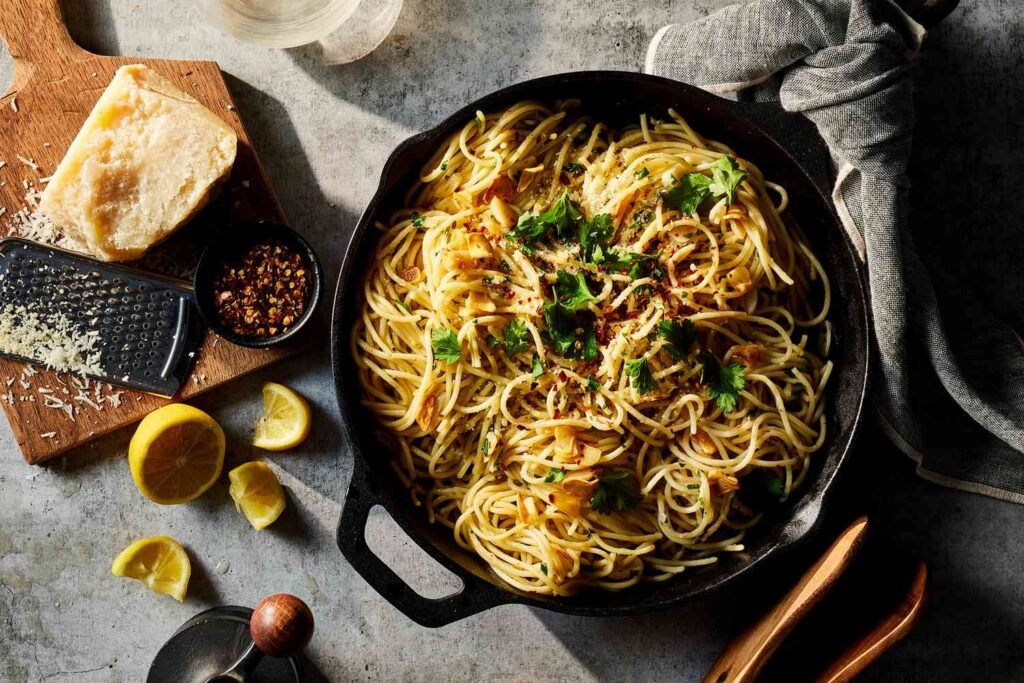
Olive oil is not just a cooking medium—it is the main flavor component.
- Extra-Virgin Olive Oil: Use high-quality extra-virgin olive oil for rich, fruity aroma.
- Heat Control: Gently heat oil to infuse garlic without burning. Overheating can make the oil bitter.
Pro Tip: Pour oil into a cold pan and gradually warm it with garlic to extract flavor evenly.
Culinary Insight: Slow infusion of aromatics releases essential oils from garlic, blending their flavor seamlessly into the olive oil.
Tip 3: Perfect the Garlic
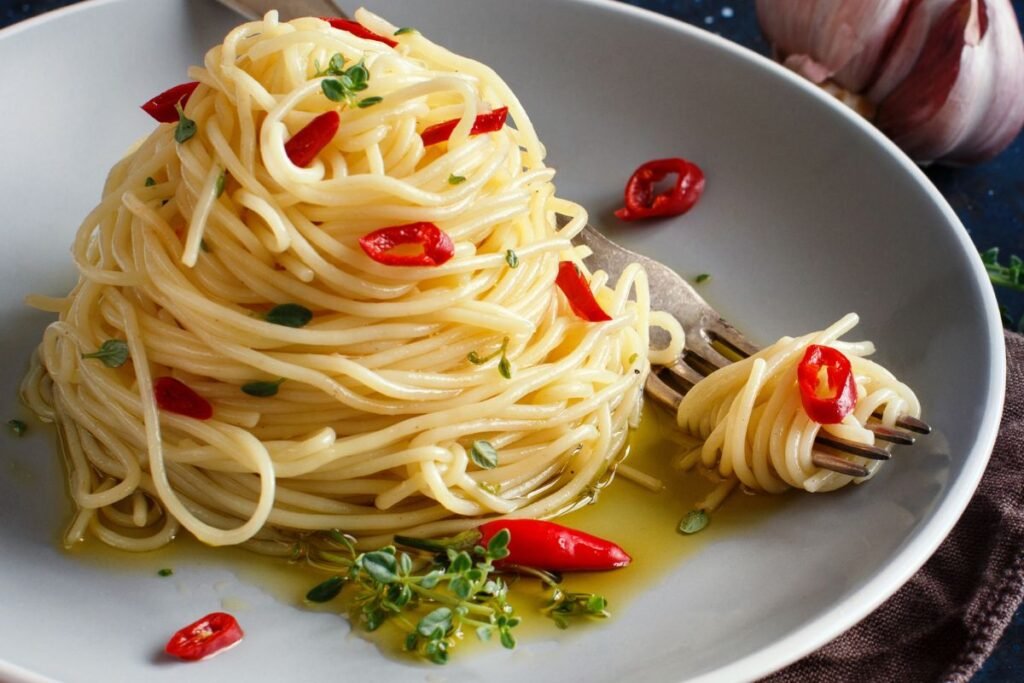
Garlic is the star of Aglio e Olio, but handling it incorrectly can ruin the dish.
- Slicing vs. Crushing: Thinly slice garlic for a mellow flavor; crush for more intense heat.
- Gentle Sauté: Cook garlic on low to medium heat until golden, not browned. Browning can create bitterness.
- Even Distribution: Stir continuously to ensure garlic infuses the oil uniformly.
Pro Tip: Remove garlic if it starts to brown too quickly; residual oil retains the flavor.
Science Insight: Garlic releases sulfur compounds when cooked, which are responsible for its signature aroma. Gentle heat preserves these compounds while preventing bitterness.
Tip 4: Balance Heat with Chili Flakes
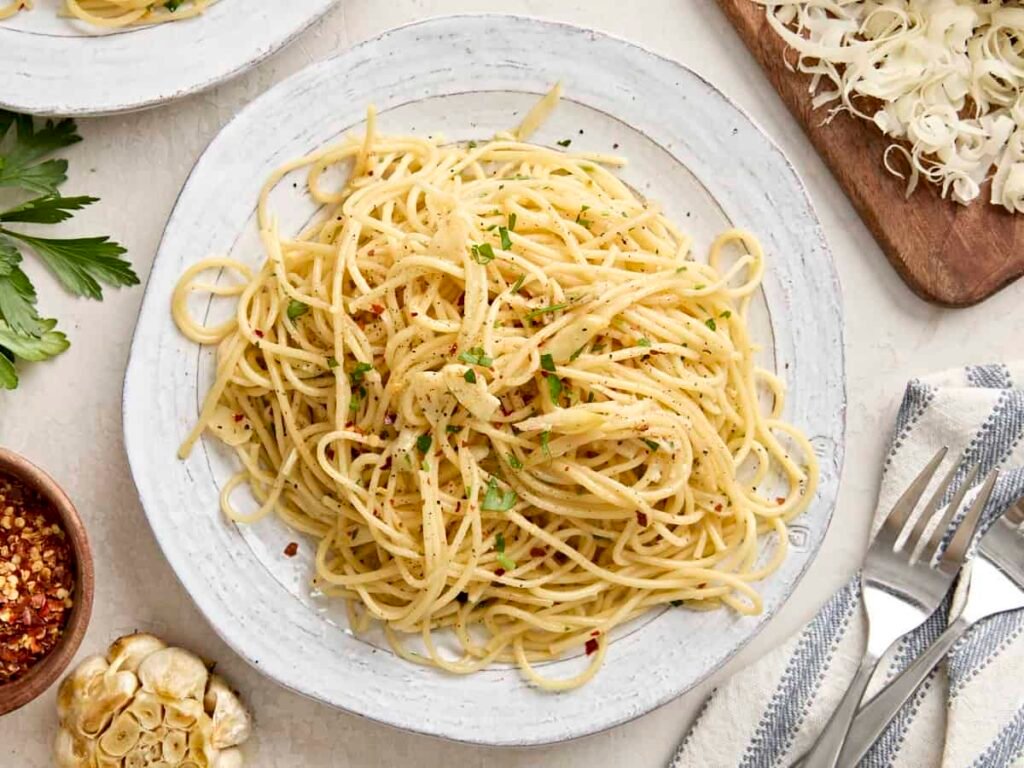
Chili flakes add a subtle kick, giving Aglio e Olio its characteristic warmth.
- Quantity: Adjust to taste; a small amount can enhance flavor without overpowering.
- Infusion: Add chili flakes to the oil along with garlic to extract flavor.
Pro Tip: Toast chili flakes lightly in the oil for 30–60 seconds to intensify their aroma without burning.
Culinary Insight: Capsaicin in chili flakes dissolves in oil, allowing heat to be evenly distributed across the pasta.
Tip 5: Combine Pasta and Sauce Thoughtfully
Properly integrating pasta and sauce ensures every strand is coated and flavorful.
- Technique: Toss hot, drained pasta with garlic-chili-infused oil over low heat.
- Add Pasta Water: Gradually add reserved water to create a silky emulsion that clings to the spaghetti.
- Gentle Tossing: Stir carefully to avoid breaking pasta, ensuring uniform sauce coating.
Pro Tip: Finish cooking the pasta in the sauce for 1–2 minutes to allow flavors to meld.
Science Insight: Starch in pasta water binds with olive oil, creating an emulsion that thickens the sauce naturally and coats each strand evenly.
Tip 6: Finish with Fresh Ingredients
Fresh ingredients elevate Aglio e Olio, adding brightness and aroma.
- Herbs: Finely chopped fresh parsley adds color, freshness, and subtle flavor.
- Optional Additions: Lemon zest or a squeeze of lemon juice can enhance brightness.
- Final Touch: Drizzle a little extra-virgin olive oil just before serving for shine and richness.
Pro Tip: Add herbs at the very end to preserve their flavor and vibrant green color.
Serving Insight: Fresh finishing elements complement the warm, garlicky pasta and provide a layered, complex flavor profile.
Bonus Tips for Next-Level Aglio e Olio
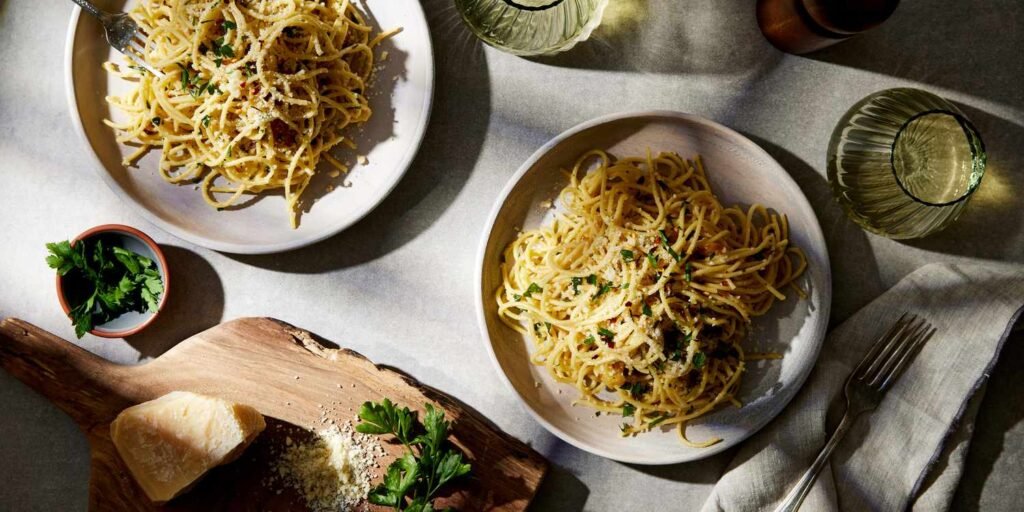
- Timing Matters: Prepare all ingredients before starting to cook; the dish comes together quickly.
- Garlic Variations: Use roasted garlic for a sweeter, milder flavor if desired.
- Add Texture: Lightly toasted breadcrumbs sprinkled on top add crunch.
- Experiment with Vegetables: Zucchini ribbons, cherry tomatoes, or spinach can be added without overpowering the classic flavors.
- Serve Immediately: Aglio e Olio is best enjoyed hot; letting it sit can reduce the vibrant aroma and texture.
Common Mistakes to Avoid
- Overcooking Pasta: Results in mushy spaghetti that cannot hold sauce.
- Burning Garlic: Imparts bitterness, overpowering other flavors.
- Too Much Oil: Creates a greasy dish; balance is essential.
- Skipping Pasta Water: Sauce will not emulsify properly and may feel cloying.
Correcting these common mistakes ensures that your Aglio e Olio retains its light, silky, and aromatic qualities.
Conclusion
Spaghetti Aglio e Olio exemplifies the beauty of simple, high-quality ingredients prepared with care. By following these six tips—selecting the right pasta, using quality olive oil, perfecting garlic, balancing chili heat, combining pasta and sauce thoughtfully, and finishing with fresh ingredients—you can create a classic Italian dish that is flavorful, aromatic, and satisfying.
This vegetarian pasta demonstrates that elegance in cooking doesn’t require complex techniques or numerous ingredients. Proper technique, careful timing, and attention to flavor balance elevate a few simple pantry items into a dish that is both comforting and sophisticated.
Whether for a weeknight dinner, a casual gathering, or a refined meal, mastering Spaghetti Aglio e Olio allows you to enjoy the authentic taste of Italian cuisine at home. The dish’s simplicity is its charm, offering aromatic garlic, subtly spicy chili, and silky pasta, all balanced perfectly with fresh herbs and olive oil.
By understanding the science behind pasta, oil, and emulsification, you can consistently produce a restaurant-quality Aglio e Olio that delights both the palate and the senses.