
Few dishes can stir as much excitement in Indian households as a steaming plate of Gobi Manchurian. A fusion born in the Indo-Chinese kitchens of India, this dish combines crispy fried cauliflower florets with a tangy, spicy, and umami-rich sauce. Whether served as a snack, appetizer, or paired with fried rice and noodles, it has become a staple in restaurants, street food stalls, and homes alike.
Despite its restaurant-like appeal, preparing Gobi Manchurian at home is not complicated. By mastering the right techniques, you can recreate the same crispy texture and balanced flavors without compromising on health. In this guide, we’ll walk you through 7 simple steps to prepare this vegetarian favorite easily in your kitchen.
Step 1: Selecting and Prepping Fresh Cauliflower

The star of Gobi Manchurian is cauliflower (gobi). For the best results, always start with fresh, firm, and tightly packed cauliflower.
- Cleaning: Separate cauliflower into medium-sized florets. Avoid cutting too small, as they may turn soggy after frying.
- Soaking: Wash florets thoroughly in warm salted water for 10 minutes. This not only cleans but also removes hidden insects, a common practice in Indian households.
- Blanching (Optional): To ensure even cooking, blanch the florets in hot water for 2–3 minutes, then pat them dry.
Pro Tip: Drying is crucial—moist florets won’t coat well in batter and may splatter during frying.
Step 2: Preparing the Batter for Crispiness

The batter is what gives Gobi Manchurian its irresistible crunch.
Ingredients for Batter:
- All-purpose flour (maida): ½ cup
- Cornflour: ¼ cup
- Rice flour (optional, for extra crispness): 2 tablespoons
- Ginger-garlic paste: 1 teaspoon
- Salt and pepper: to taste
- Water: enough to make a medium-thick batter
Method:
- Mix flours, salt, and pepper in a bowl.
- Add ginger-garlic paste for flavor.
- Gradually add water to form a smooth batter that coats the florets evenly but is not runny.
Pro Tip: For a healthier version, air-fry or bake the florets instead of deep frying.
Step 3: Frying the Cauliflower Florets
This step ensures your gobi has the perfect crisp bite.
- Heat oil in a deep pan or kadhai.
- Dip each floret into the batter, shake off excess, and gently slide into hot oil.
- Fry in batches until golden brown and crisp.
- Drain on tissue paper to remove excess oil.
Alternative: For a low-oil version, coat florets with little oil and bake at 200°C (400°F) for 25–30 minutes, flipping halfway.
Pro Tip: Don’t overcrowd the pan—this lowers oil temperature and makes florets soggy.
Step 4: Making the Base Sauce
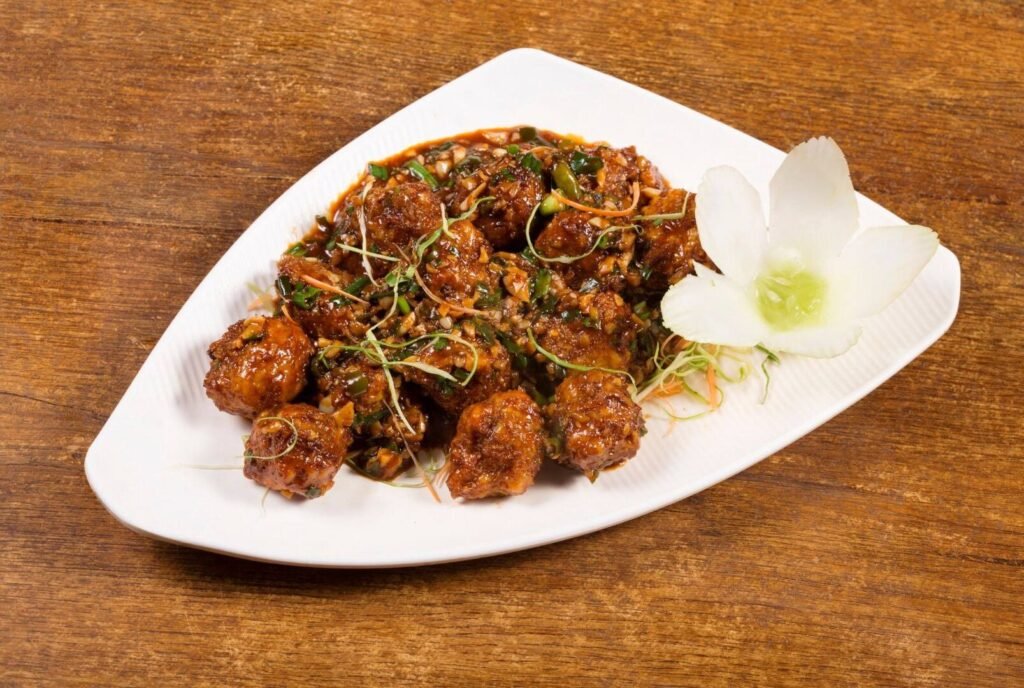
The magic of Gobi Manchurian lies in its tangy, spicy, and slightly sweet sauce.
Ingredients for Sauce:
- Oil: 2 tablespoons
- Garlic (finely chopped): 1 tablespoon
- Ginger (finely chopped): 1 tablespoon
- Green chilies: 2 (slit or chopped)
- Onion: 1 small, diced
- Capsicum (bell pepper): ½ cup, diced
- Soy sauce: 2 tablespoons
- Tomato ketchup: 2 tablespoons
- Red chili sauce: 1 tablespoon
- Vinegar: 1 teaspoon
- Cornflour slurry (cornflour + water): 1 tablespoon (optional for thickness)
- Salt and pepper: to taste
Method:
- Heat oil in a wok or deep pan.
- Add garlic, ginger, and chilies. Sauté until fragrant.
- Add onion and capsicum; stir-fry on high heat for 2 minutes (they should stay crunchy).
- Stir in soy sauce, chili sauce, and ketchup. Mix well.
- Add vinegar for a tangy punch.
- If you like gravy-style Manchurian, add 1 cup water/stock and thicken with cornflour slurry.
Pro Tip: Balance is key—sauce should be spicy, tangy, and slightly sweet without overpowering the gobi.
Step 5: Combining the Fried Cauliflower and Sauce
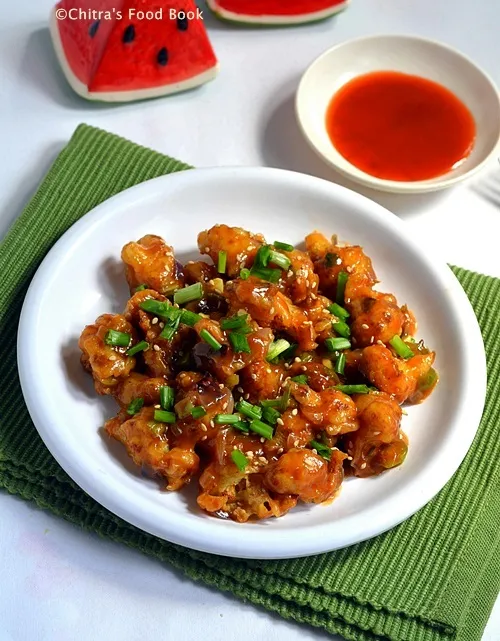
Now comes the step where the crisp cauliflower meets the bold sauce.
- For dry Gobi Manchurian (snack-style): Add fried florets to the sauce, toss quickly on high flame, and serve immediately.
- For gravy-style Gobi Manchurian (to pair with rice/noodles): Prepare sauce with extra water or stock, thicken slightly, then add florets and simmer for 1–2 minutes.
Pro Tip: Always toss gobi in sauce just before serving; letting it sit too long makes it soggy.
Step 6: Garnishing and Serving
Presentation is as important as taste.
- Garnish with freshly chopped spring onion greens.
- Sprinkle a few sesame seeds for texture (optional).
- Serve hot and sizzling, straight from the wok.
Serving Suggestions:
- Pair dry Gobi Manchurian with noodles, fried rice, or as a party starter.
- Pair gravy Gobi Manchurian with steamed rice, jeera rice, or veg pulao.
Pro Tip: If preparing for guests, keep the sauce and fried florets separate and combine only before serving.
Step 7: Making it Healthier at Home
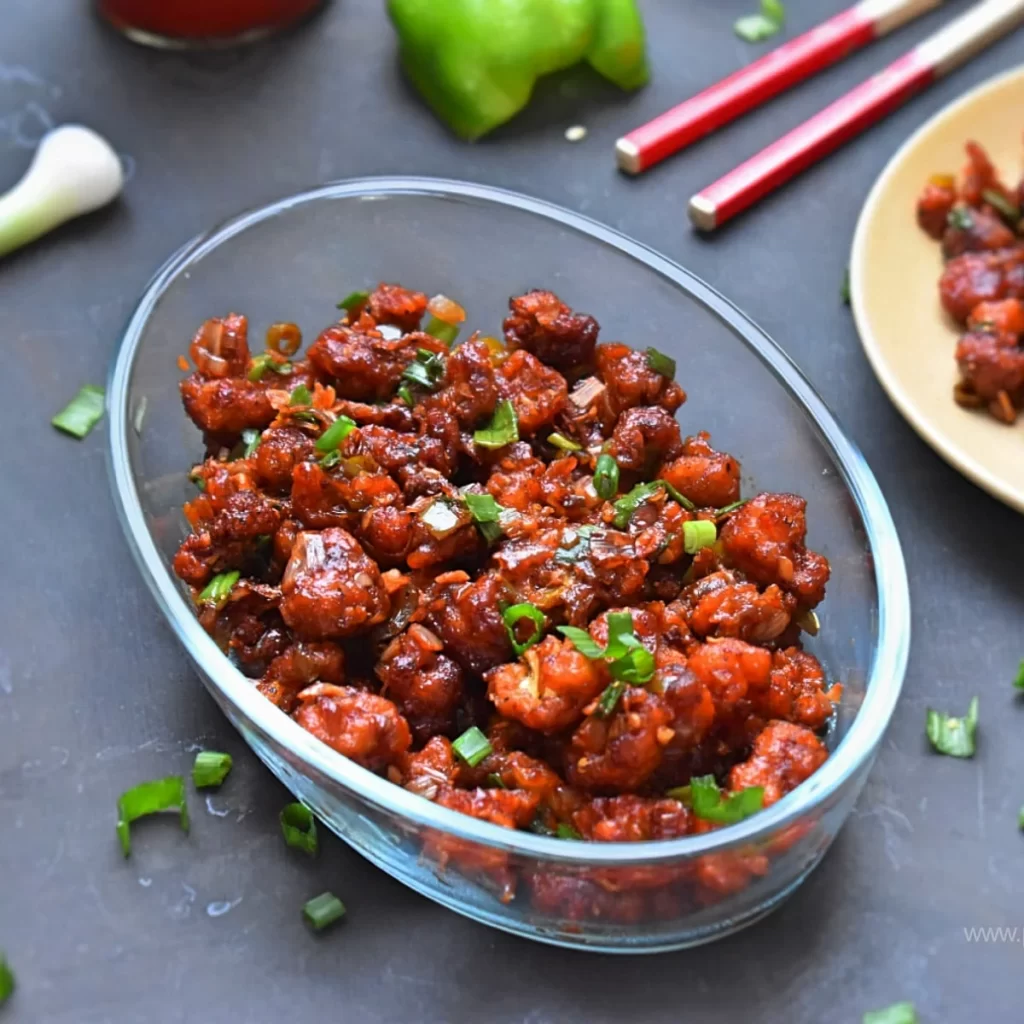
While restaurant versions can be heavy, homemade Gobi Manchurian can be nutritious and lighter.
- Air-fry or bake florets instead of deep frying.
- Use whole wheat flour or a mix of multigrain flours for batter.
- Reduce sauce oils—just 1 tablespoon is enough for home cooking.
- Add more veggies like carrots, broccoli, and beans for nutrition.
- Control sodium—use low-sodium soy sauce and homemade ketchup if possible.
This way, you can enjoy the indulgence of Gobi Manchurian without guilt.
Nutritional Value
A well-prepared Gobi Manchurian offers:
- Cauliflower: Rich in fiber, vitamin C, and antioxidants.
- Ginger & garlic: Boost immunity and digestion.
- Capsicum: Adds vitamin A and crunch.
- Homemade sauces: Controlled sugar and sodium content compared to restaurant versions.
When air-fried or baked, this dish becomes a wholesome vegetarian snack suitable even for kids.
Common Mistakes to Avoid
- Runny batter: Too thin batter won’t stick; too thick makes florets doughy.
- Overcrowding during frying: Leads to soggy and unevenly fried gobi.
- Overcooking sauce: Makes vegetables lose crunch and flavors turn bitter.
- Adding florets too early: They’ll soak up sauce and lose crispiness.
- Excess salt: Remember soy sauce already contains salt—adjust accordingly.
Conclusion
Gobi Manchurian is more than just a dish; it’s a celebration of flavors that define Indo-Chinese cuisine in India. By following this 7-step guide—prepping gobi, making batter, frying florets, preparing sauce, combining carefully, garnishing, and making it healthier—you can recreate the magic of restaurant-style Gobi Manchurian at home with ease.
Whether you prefer the dry version for a crispy starter or the gravy version as a main dish, homemade Gobi Manchurian is versatile, budget-friendly, and customizable to your taste.
So, the next time you crave Indo-Chinese flavors, skip the takeout and bring the sizzling delight of Gobi Manchurian straight from your kitchen to your table. With the right balance of spice, tang, and crispness, every bite will remind you why this dish has earned such a loyal place in Indian hearts.