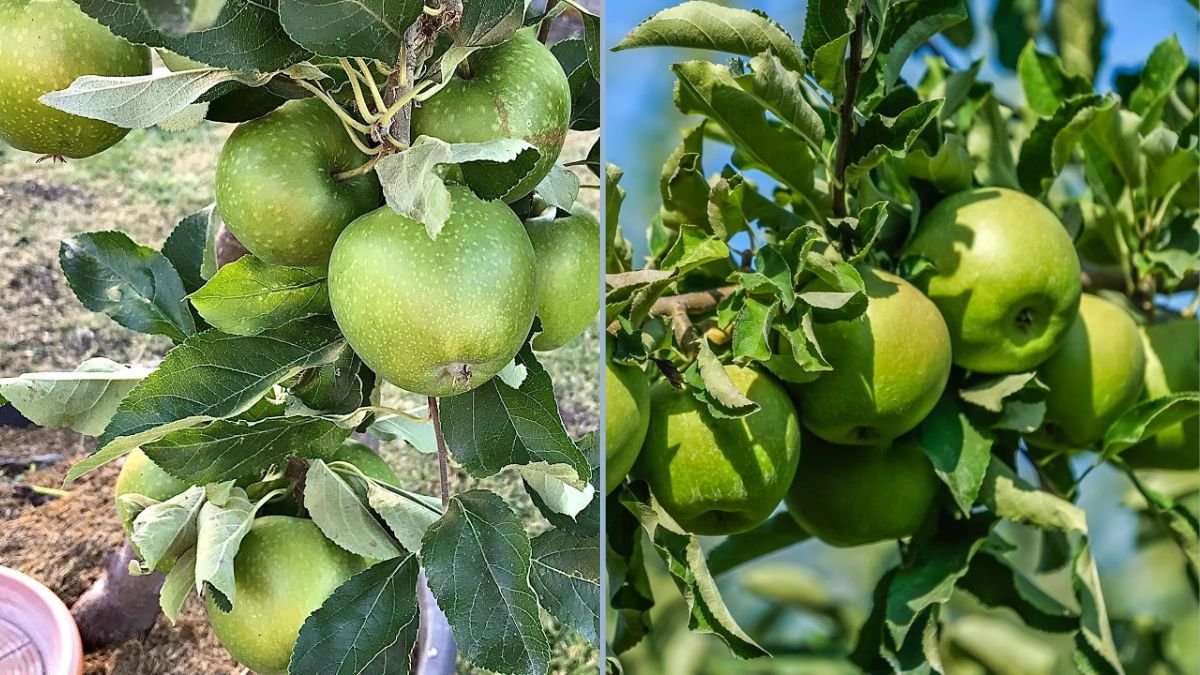
Growing fruit trees in your backyard is a rewarding hobby, but what if you don’t have enough space for a full orchard? Container gardening provides an excellent solution — allowing gardeners to cultivate fruit trees on patios, balconies, or small yards. In this post, we explore the 4-year journey of growing Granny Smith apple trees in containers, sharing tips, challenges, and insights to help you successfully produce crisp, green apples right at home.
Whether you’re a beginner gardener or a seasoned horticulturist, this guide will help you understand the essentials of container apple gardening, from selecting the right tree and pot to pruning, fertilization, and long-term care.
Why Grow Granny Smith Apples in Containers?
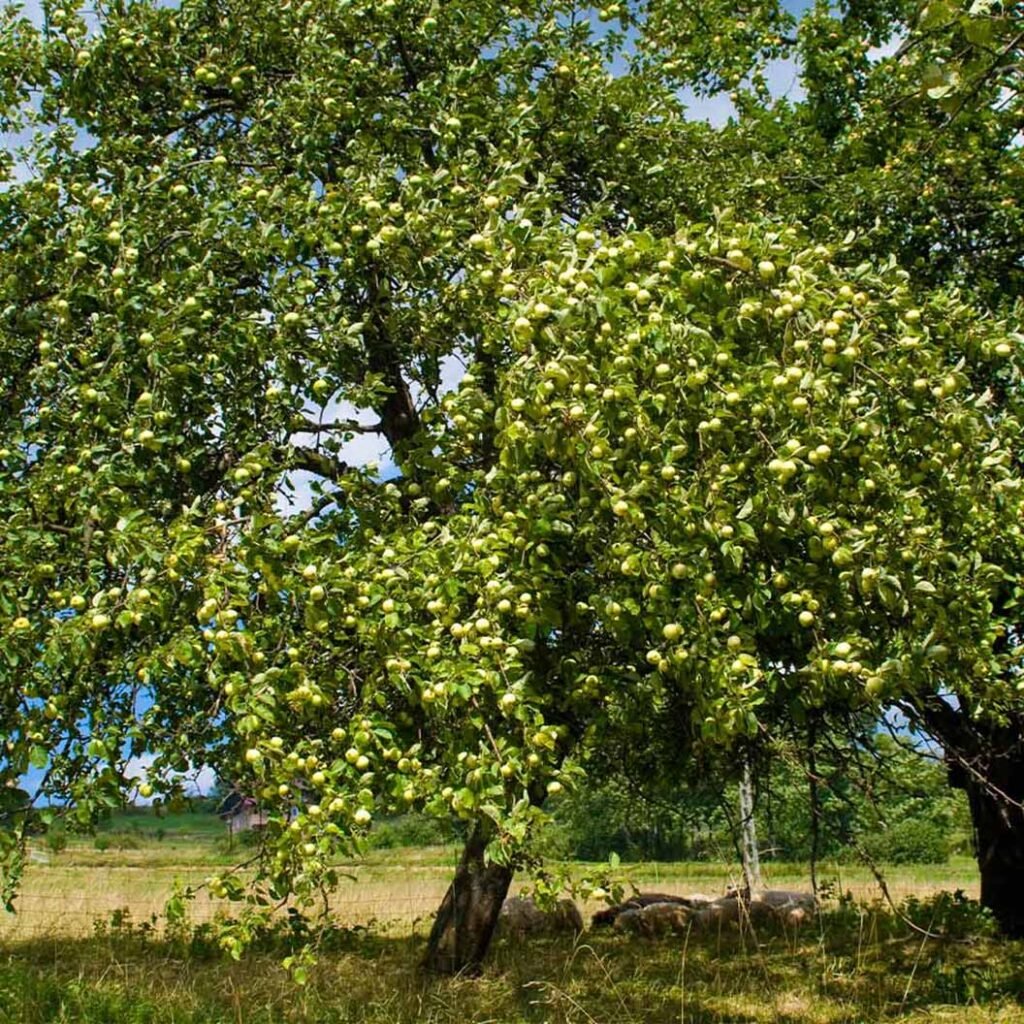
Granny Smith apples are among the most popular green apple varieties worldwide. Originating in Australia in the 1860s, these apples are known for their tart, crisp flavor, and versatility, making them perfect for eating fresh, baking, or juicing.
Container gardening offers several advantages:
- Space-saving: Perfect for small yards, balconies, or patios.
- Mobility: Move trees to catch sunlight or protect them from frost.
- Control over soil quality: You can tailor soil and drainage for optimal growth.
- Pest and disease management: Easier to monitor and protect container-grown trees.
Over four years, a Granny Smith apple tree in a container can grow strong, produce fruit, and even thrive in climates that aren’t ideal for in-ground cultivation.
Year 1: Choosing the Right Container and Tree
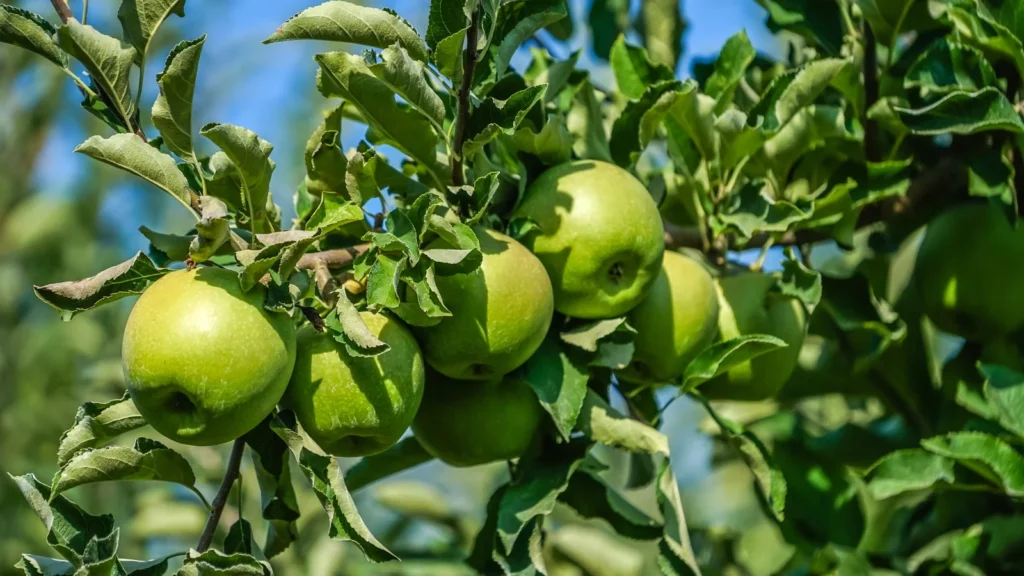
The first year is all about selection and preparation. Container-grown apples require careful attention to size, soil, and tree type.
Selecting a Tree
- Opt for dwarf or semi-dwarf varieties, as standard apple trees can outgrow containers.
- Granny Smith is naturally vigorous, so choose dwarf rootstocks such as M.9 or M.26 for container growth.
- Purchase healthy saplings from reputable nurseries.
Choosing the Right Container
- Use a container with a minimum of 18–24 inches in diameter for young trees; larger pots (30–36 inches) are ideal as trees mature.
- Ensure proper drainage holes at the bottom to prevent waterlogging.
- Heavy-duty materials like ceramic, wood, or reinforced plastic provide stability for growing trees.
Soil Preparation
- Granny Smith apples thrive in well-draining, loamy soil.
- Mix organic compost, garden soil, and perlite to improve drainage and nutrient content.
- Avoid heavy clay soils, which retain too much water and promote root rot.
Once your container is ready, plant your tree carefully, keeping the graft union above soil level, and water thoroughly.
Year 2: Establishing Roots and Encouraging Growth
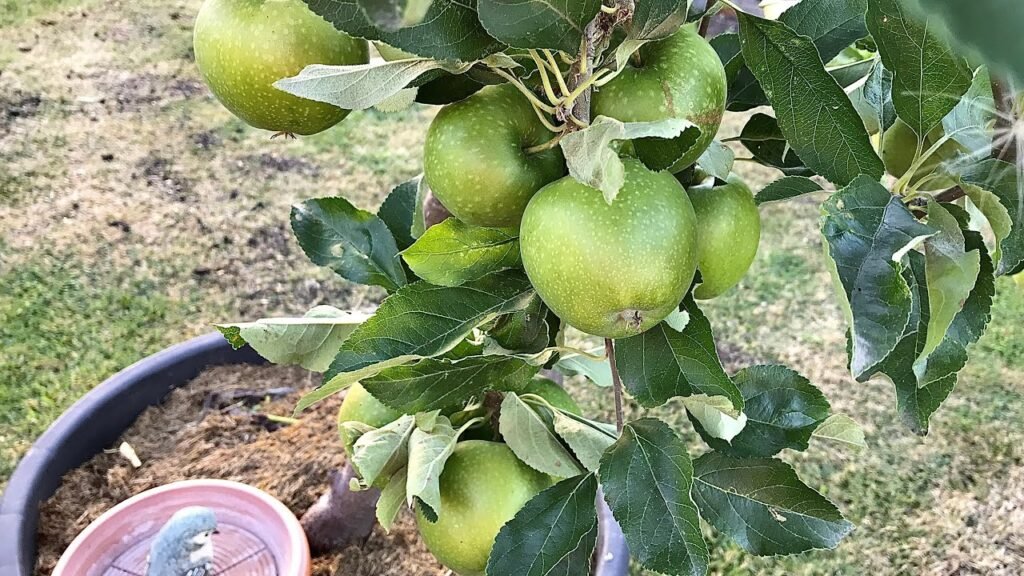
The second year focuses on root development and healthy foliage. A well-established root system is crucial for fruit production in container-grown apples.
Watering
- Water consistently to keep the soil evenly moist.
- Deep watering is better than frequent shallow watering, encouraging roots to grow downward.
Fertilization
- Use a balanced slow-release fertilizer or organic alternatives like composted manure.
- Apply fertilizer every 6–8 weeks during the growing season, but avoid overfeeding, which promotes excessive leafy growth at the expense of roots and flowers.
Pruning
- Prune dead or damaged branches to maintain tree health.
- For container trees, prune vertically vigorous shoots to prevent overcrowding and encourage lateral growth, which bears more fruit.
By the end of the second year, your Granny Smith should have a solid framework of branches and a strong root system, ready for flowering in the following years.
Year 3: Flowering and Fruit Set
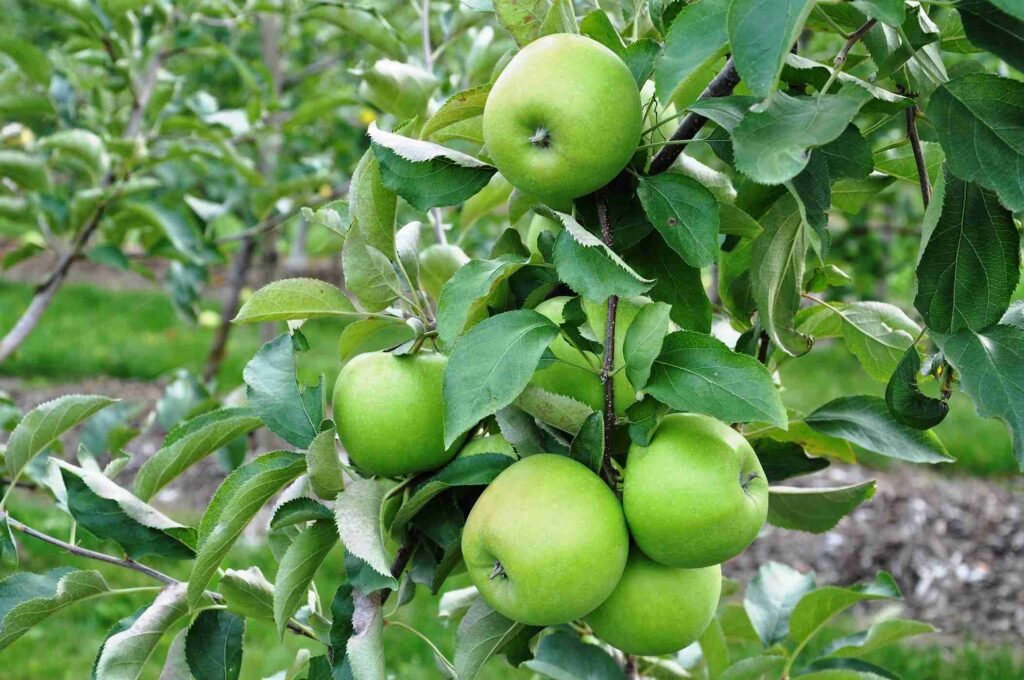
The third year is when container-grown apple trees start showing blossoms and initial fruit formation, especially if grown from a dwarf rootstock.
Pollination
- Granny Smith apple trees are not self-pollinating, so ensure a pollination partner is nearby.
- Companion apple trees or crabapples within 50 feet can improve fruit set.
- Bees and other pollinators will do the heavy lifting, transferring pollen from blossom to blossom.
Flower Care
- Remove excess blossoms if the tree produces a heavy crop.
- Thinning blossoms or young fruits reduces stress on branches and ensures larger, higher-quality apples later.
Fertilization and Soil Health
- Continue regular feeding with nitrogen-rich fertilizer early in the season.
- Switch to a phosphorus and potassium-rich fertilizer after flowers appear to support fruit development.
Challenges
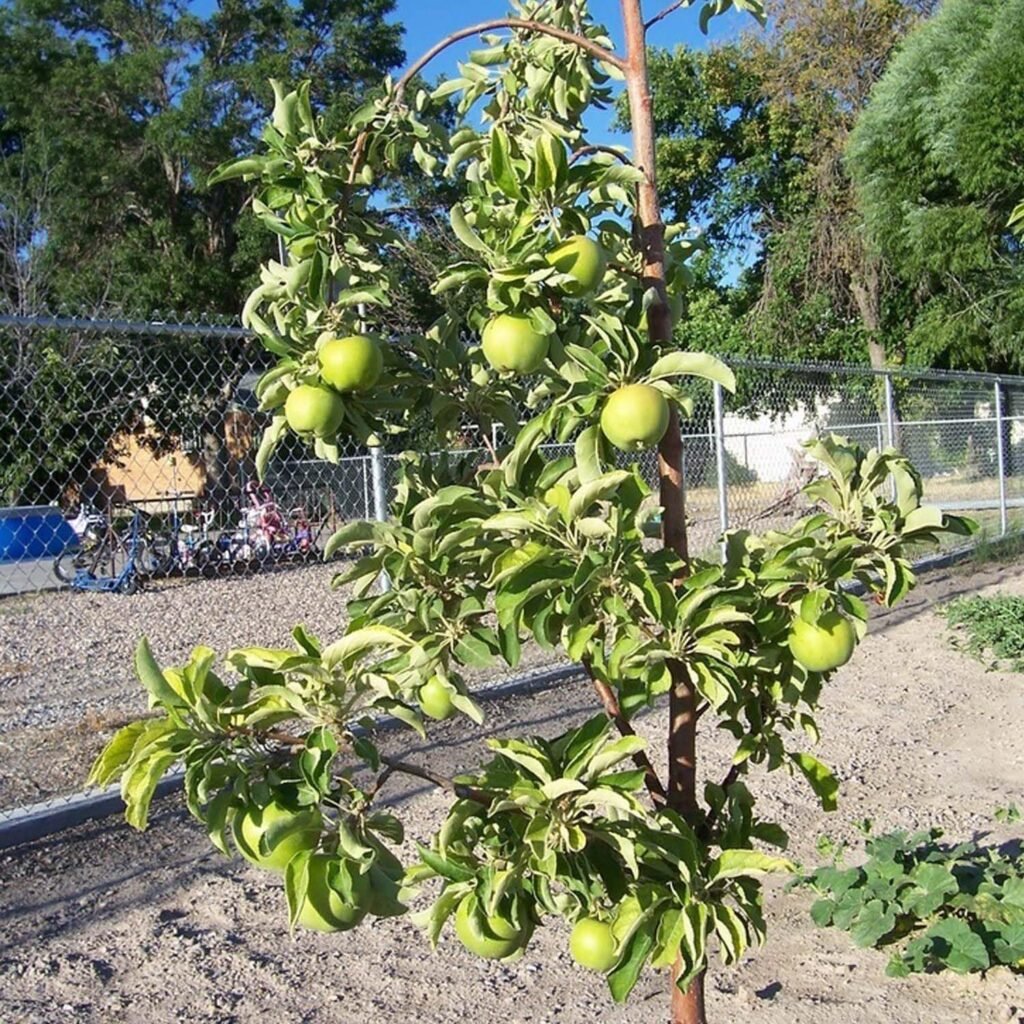
- Container trees may experience stress from wind or inconsistent watering.
- Consider staking the tree for stability and moving containers to more sheltered areas if needed.
By the end of year three, you may see a handful of small green apples, signaling that your container-grown Granny Smith is on the path to becoming a productive fruit tree.
Year 4: Fruit Maturity and Ongoing Care
By the fourth year, a properly cared-for container-grown Granny Smith tree can produce a more substantial fruit yield.
Harvesting
- Granny Smith apples are usually harvested in late summer to early fall, depending on local climate.
- Look for apples that are firm, green, and slightly tart, which are ready to pick.
- Avoid leaving overripe fruit on the tree to prevent pests and disease.
Pruning and Maintenance
- Prune immediately after harvest to maintain shape and remove overcrowded branches.
- Remove any diseased or damaged fruit and foliage to keep the tree healthy.
- Consider replacing some of the potting soil with fresh compost to replenish nutrients annually.
Watering
- As fruit develops, container trees require more consistent watering.
- Check soil moisture daily, especially during hot weather, to prevent water stress.
Tips for Growing Granny Smith Apples in Containers
- Choose the right rootstock: Dwarf or semi-dwarf rootstocks are essential for container success.
- Fertilize wisely: Young trees need nitrogen; fruiting trees benefit from phosphorus and potassium.
- Water consistently: Container soil dries faster than ground soil.
- Thin fruit: Remove excess fruit to ensure larger apples and prevent branch damage.
- Support your tree: Use stakes or cages for stability, especially during windy conditions.
- Monitor pests and diseases: Container trees are easier to inspect, so take advantage of early intervention.
- Sunlight: Ensure the tree gets at least 6–8 hours of direct sunlight daily.
Benefits of Container Apple Gardening
Container apple gardening offers a rewarding experience for both beginner and experienced gardeners:
- Flexibility: Move the tree to protect it from extreme weather.
- Space-saving: Grow fruit in small yards, patios, or balconies.
- Faster troubleshooting: Easier to manage soil, nutrients, and pests.
- Aesthetic value: A container apple tree adds greenery and blossoms, enhancing outdoor spaces.
- Educational: Learn the full apple lifecycle, from roots to fruit, in a compact setting.
Common Challenges and Solutions
1. Limited Root Space
- Use large containers to avoid root-bound conditions.
- Repot every 2–3 years if roots become cramped.
2. Nutrient Depletion
- Replace or amend soil yearly with compost or organic fertilizer.
3. Fruit Overload
- Thin fruit early to prevent broken branches and promote better apple size.
4. Pest Issues
- Watch for aphids, mites, and apple maggots.
- Introduce beneficial insects or use organic treatments to maintain balance.
Looking Ahead: Beyond Year Four
After four years, your container-grown Granny Smith apple tree should be established, healthy, and producing fruit. Over the next several years, you can expect:
- Increased fruit yield and quality
- Stronger, more resilient root and branch systems
- Continued enjoyment of green apple harvests directly from your patio or garden
Remember, container-grown apple trees can remain productive for decades if given proper care, making them a long-term, sustainable gardening investment.
Conclusion: Growing Granny Smith Apples in Containers
Growing Granny Smith apples in containers is a rewarding journey of patience, care, and observation. From planting the dwarf tree in year one to harvesting crisp green apples by year four, each stage teaches valuable lessons about horticulture, pollination, and the nurturing power of gardening.
By selecting the right tree, providing proper soil and nutrients, managing pollination, and pruning effectively, you can enjoy fresh, homegrown Granny Smith apples — even in a limited space. Container gardening proves that you don’t need a full orchard to grow your own fruit; with dedication and care, a single pot can yield a bounty of delicious apples year after year.